“Nimeangalia AI na imesema hivi.” — “I checked AI, and this is what it said.”
A teacher shared this observation during our AI Mtaani Educators Edition. Learners were already consulting AI, bringing its answers into class and, sometimes, challenging what they had been taught. The question was no longer whether AI had entered the classroom. It was whether teachers had the knowledge and support to help learners engage with it critically.
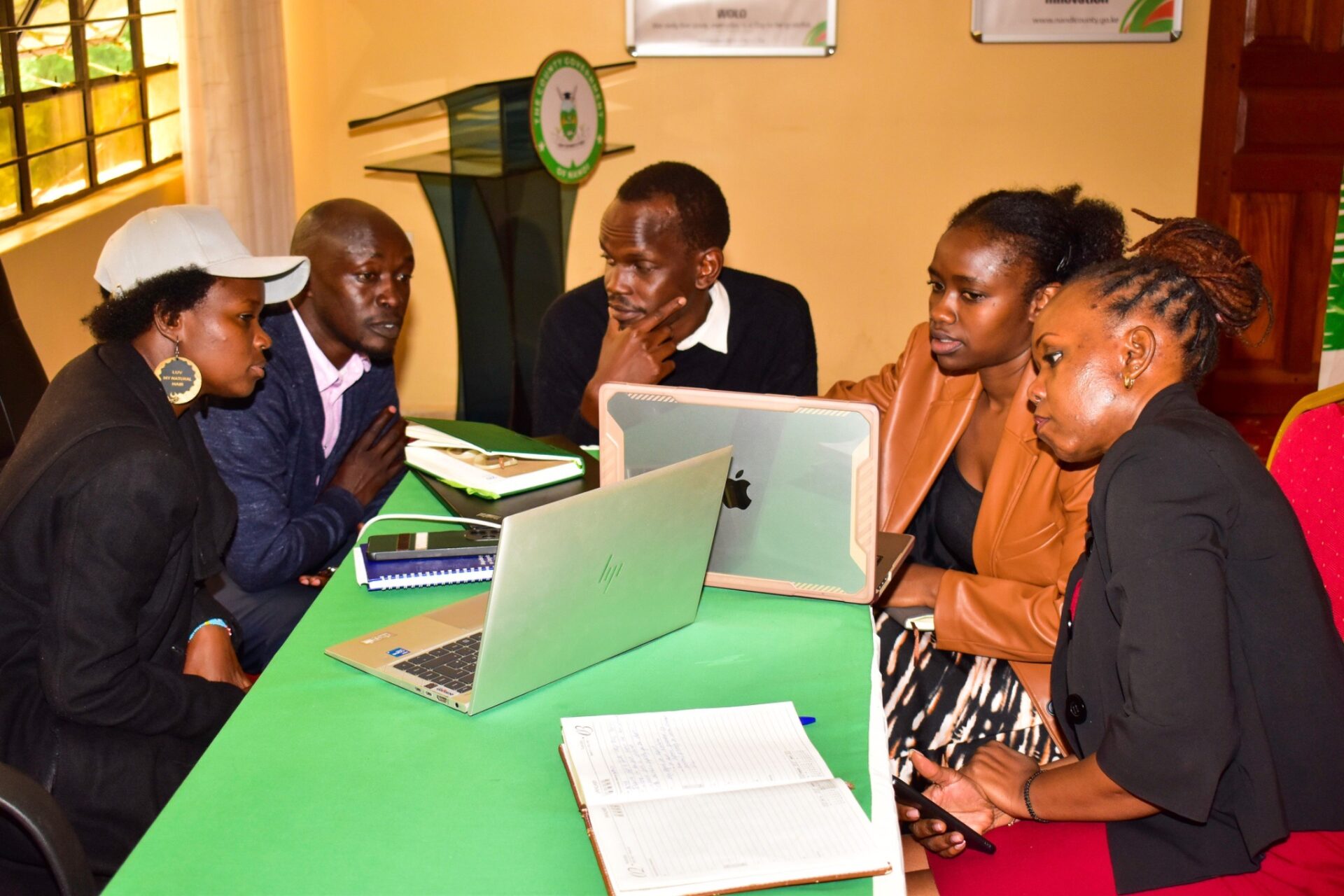
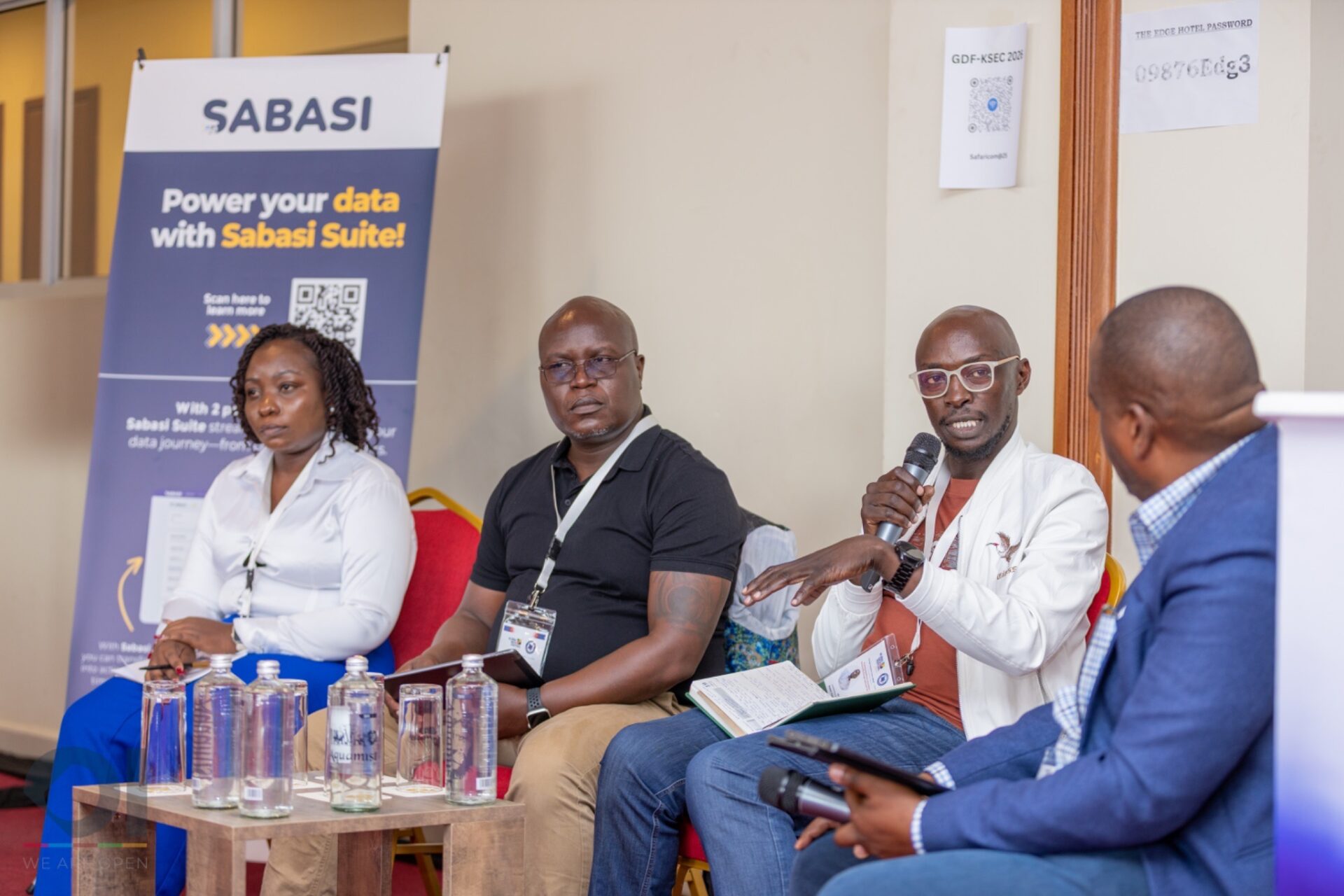
Between September and October 2026, Open Institute, with support from the Hanns Seidel Foundation, brought AI Mtaani to two education settings in Kilifi County: 68 teachers in the Educators Edition and 181 students from 11 TVET institutions in the Learners Edition. The latter was mobilised with support from the Office of the Kilifi County Director of Vocational Education and Training.
These experiences brought us back to a broader question: when AI spreads through education, what makes its adoption meaningful?
How technology spreads, and why AI is different
Rogers (2003), in Diffusion of Innovations, describes diffusion as the process through which an innovation is communicated through particular channels, over time, among members of a social system. Whether people adopt an innovation is influenced by how useful, compatible, complex, testable and observable they perceive it to be. Diffusion of innovation is also impacted by network effects, whereby the value and appeal of an innovation increase as more people within a network adopt and use it, encouraging further adoption.
AI follows these familiar processes of diffusion. People encounter it, learn about it through different channels, experiment with it and decide whether it is useful enough to incorporate into their work. But generative AI introduces characteristics that make its diffusion distinct from that of many earlier educational technologies. Unlike a computer or a digital platform that primarily provides access to existing information and resources, generative AI produces answers, explanations and other content in response to prompts. This means that adoption is not only about learning to operate a tool; it also requires people to assess the accuracy, relevance and limitations of what it produces.
There is another important distinction. Access to generative AI through personal devices means that learners may begin experimenting with it outside formal institutional arrangements. They can bring AI-generated material into classrooms before teachers or schools have developed the knowledge, guidance and structures to respond. Institutional adoption and everyday, peer-driven use can therefore happen alongside one another. This does not mean AI escapes the usual processes of diffusion, but those processes may unfold through more routes, and at different speeds, within the same learning environment.
Research on ICT integration in Kenyan primary and secondary schools points to conditions that remain relevant. Studies have documented gaps between the availability of technology and its meaningful integration into teaching. These include inadequate facilities, limited teacher preparation, insufficient pedagogical support and the practical challenges of using technology within existing school conditions (Murithi & Yoo, 2021; Masingila et al., 2019). A systematic review of ICT integration in secondary education similarly identifies teacher capacity, infrastructure, technical support and institutional conditions as important to sustained use (Msafiri et al., 2023).
The lesson is that the presence of devices does not change teaching and learning. What matters is whether educators can use them purposefully, with the time, skills and institutional support to integrate them into practice. AI does not remove these conditions. It makes the need to address them more urgent.
Throughout, our programme presents AI to teachers as a tool: one that supports their professional judgement rather than replacing it. Teachers remain the experts in their classrooms, and AI is something they choose to use, adapt or set aside depending on what serves their learners. Our aim is not to make AI the centre of teaching, but to help educators and TVET students use it critically and confidently as they go about their existing tasks.
Our main takeaways…
1. Understanding comes first; relevance makes learning stick.
Teachers wanted to understand what AI is, where it gets information/data, how it works and whether it can be trusted. As the sessions progressed, they explored applications such as preparing lesson plans, schemes of work and assessments. TVET students were interested in using AI to understand course concepts, revise for examinations and prepare CVs. They also asked about 3D simulations, which tools to use for different tasks and why AI sometimes refuses certain requests.
AI is not new to education, and neither are the principles underpinning it. The field dates back to the 1950s, while educational applications such as intelligent tutoring systems, spell-checkers, machine translation and plagiarism detection have been used in education for decades. Much of modern machine learning builds on longstanding mathematical and computational ideas to identify patterns, process information, and establish relationships between different forms of data.
For example, AI systems can represent words, images and learner information in numerical forms that allow them to identify patterns and relationships. In language models, words and phrases used in similar contexts are represented in ways that capture their relationships to one another. This is how systems can generate responses that are coherent and contextually relevant, although identifying patterns in language is not the same as understanding meaning in the human sense.
What generative AI has changed is the scale at which these capabilities operate, their fluency and accessibility. Since ChatGPT’s release in November 2022, anyone who can write a sentence can interact with these systems in natural language. For teachers, this means they are not starting from zero: the underlying ideas are long established, and what is new is the conversational interface, the pace of change and the breadth of tasks AI can now attempt.
The quest to understand the technology before applying it to real tasks is important. The UNESCO AI Competency Framework for Teachers (2024) similarly identifies progression from acquiring knowledge to deepening and creating with AI. Training should therefore connect foundational understanding to practical, subject-specific applications rather than treat tool demonstrations as the end goal.
2. Access is not the same as readiness.
The TVET cohort included 20 students with hearing impairment from Gede Vocational Training Institute, who took part with the support of an interpreter. For some participants, the sessions were their first encounter with AI tools. Facilitators had to make room for the practical steps of accessing tools, navigating browsers and understanding how to interact with them. This was a reminder that participation cannot be assumed simply because a device or tool is available. What this means is training must account for different starting points, accessibility needs and the support people require to practise from the beginning.

3. Language is both a barrier and an opportunity.
At the Learners edition, a student asked: could AI respond if someone spoke to it in Mijikenda?
That question moved the conversation from using a tool to asking who it is built for. Research on Kenya’s natural language processing landscape highlights the underrepresentation of indigenous languages in AI development, identifying gaps in the availability of language technologies for Kenyan languages, including Mijikenda. For a learner, language shapes how easily they can ask questions, seek clarification and engage with unfamiliar concepts. If AI cannot understand or respond reliably in a language a learner is comfortable using, that learner may face an additional barrier to accessing and using the technology for learning. In Kilifi, language therefore shapes who can find information, express an idea and take part in digital spaces.
The question also invited trainees to see themselves as potential contributors to AI, not only its users. That is an opportunity, but it is not a simple one. If communities contribute language resources, then consent, privacy, and responsible data stewardship must be settled from the beginning. Language belongs in AI literacy as a design consideration, not only as a topic of discussion.
4. Responsible use must travel with the tool.
Teachers asked what information they should avoid uploading/capturing into AI tools. Students questioned why ChatGPT refused certain requests. These questions opened up practical conversations about privacy, reliability, safeguards and the limits of AI. Participants needed to understand that personal, confidential or sensitive information, such as identification details, passwords, private records and information about other people, should not be entered into AI tools without clear, appropriate safeguards. They also needed to understand that AI tools have safety restrictions designed to prevent assistance with harmful, unsafe or inappropriate requests. A refusal is not necessarily a technical failure; sometimes it is a safeguard at work.
These are not issues to address after people have learned how to use the tools. Knowing what information to protect, recognising the limits of AI-generated responses and understanding why certain requests are restricted are all part of using AI responsibly. Responsible use cannot be left to a separate awareness session. It needs to be part of the learning process from the beginning.

5. AI is already entering classrooms through learners. Teachers cannot be an afterthought.
The teacher’s observation was a reminder that learners may encounter and use AI before their teachers have had an opportunity to understand it. Simply telling learners not to use AI does not prepare them to evaluate its answers or recognise when it is wrong.
Also, teachers at some point will need the confidence and competence to guide that engagement, ask better questions and help learners distinguish between an answer that sounds convincing and one that is reliable. Schools are being encouraged to integrate ICT, while AI adoption has barely begun, so the teachers and schools already prepared will benefit first and most. If support follows learners instead of leading them, the gap between prepared and unprepared schools will widen quickly. Teacher preparation cannot wait for curriculum reform.
Measure depth, not just reach
Across the two editions, 249 teachers and TVET students participated. We acknowledge this as a measure of reach, not evidence on its own of improved teaching, learning or competence.
The questions participants raised, the tasks they explored and the practical exercises they attempted gave us useful indications of where support is needed. They also showed why training should include guided practice, allow for different levels of digital confidence and create opportunities for peer learning. This calls for follow-up that looks beyond attendance and tool familiarity to the quality and continuity of use.
But how do we measure the depth of engagement? We need to understand whether participants are applying what they learned, how they are using AI in their respective contexts, and whether they can critically assess its outputs and use it responsibly over time.
We intend to follow up with participating teachers and TVET students to understand how their engagement with AI develops beyond the training. Teachers warrant particular attention because their influence extends beyond their individual practice. They shape how learners acquire knowledge, develop critical thinking and engage with emerging technologies. TVET students, meanwhile, are preparing to apply their skills in workplaces, businesses and their communities.
Understanding how both groups use AI will help us establish whether the technology is strengthening learning and skills development, and where further support is needed.
The work ahead
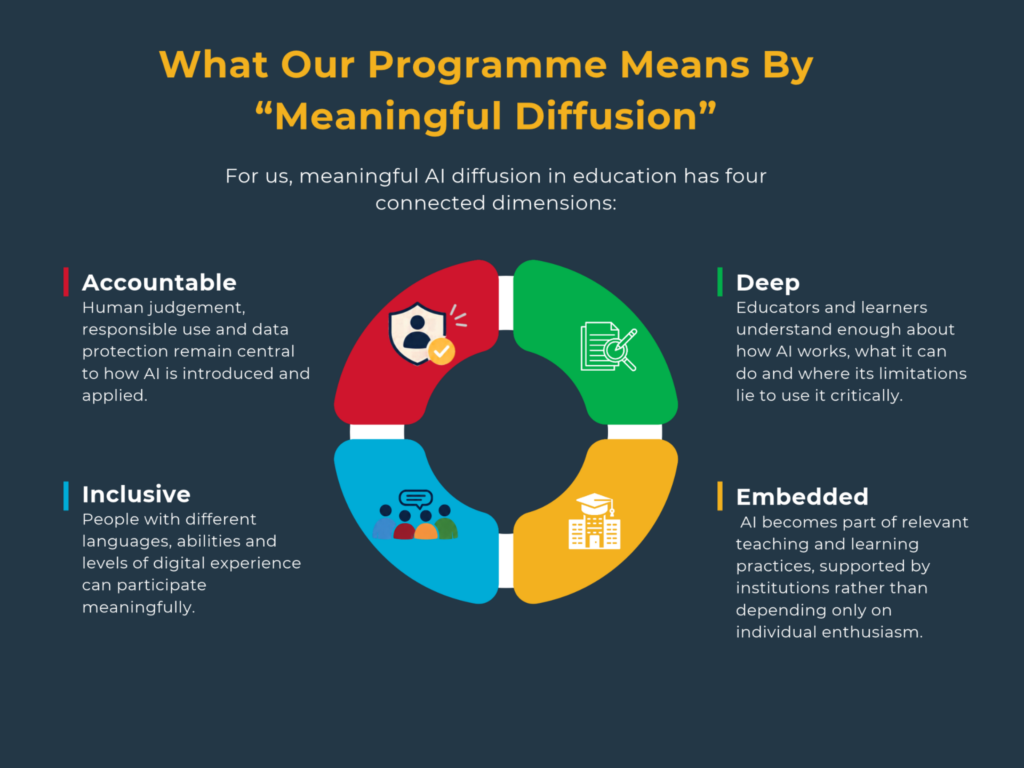
Meaningful AI diffusion in education is not achieved when people have simply encountered an AI tool. It is achieved when educators and learners understand enough to question its outputs, apply it to relevant tasks, use it responsibly and participate without being excluded by language, ability or digital experience. It also requires institutions that can support and sustain that capability.
Our next AI Mtaani edition will target community-based organisations. If your organisation is interested in exploring responsible and practical applications of AI, or in collaborating with us, get in touch at hello@openinstitute.africa.