By Furaha K. Hesketh – Community Manager, Maono Space and Data Values Advocate
When I joined the Data Values Fellowship, I thought I was signing up to learn about data. In many ways, that was true. Over the months that followed, I was introduced to concepts around data governance, ownership, inclusion, stewardship, and the ways data shapes decisions that affect people’s lives. I learned about power dynamics within data ecosystems, the importance of community participation, and the need to build systems that are not only technically effective but also fair and inclusive.
What I did not expect was how much the experience would challenge my assumptions about who data is for and what actually prevents communities from using it.
Unlearning the “Technical” Myth
Like many people, I had unconsciously accepted the idea that data is something highly technical. Something that belongs to analysts, researchers, governments, and institutions. Something that requires specialised skills and years of training to use effectively. Yet as the Fellowship progressed and I began designing Evidence Mkononi, I found myself questioning that assumption more and more.
Across the communities I work with, people are constantly making decisions, solving problems, and responding to challenges. Community leaders know which groups are struggling. They know where services are failing. They know the issues affecting young people, women, persons with disabilities, artists, and families because they encounter these realities every day. In many ways, they already hold deep forms of evidence.
What they lack is a way to organise that information into something usable.
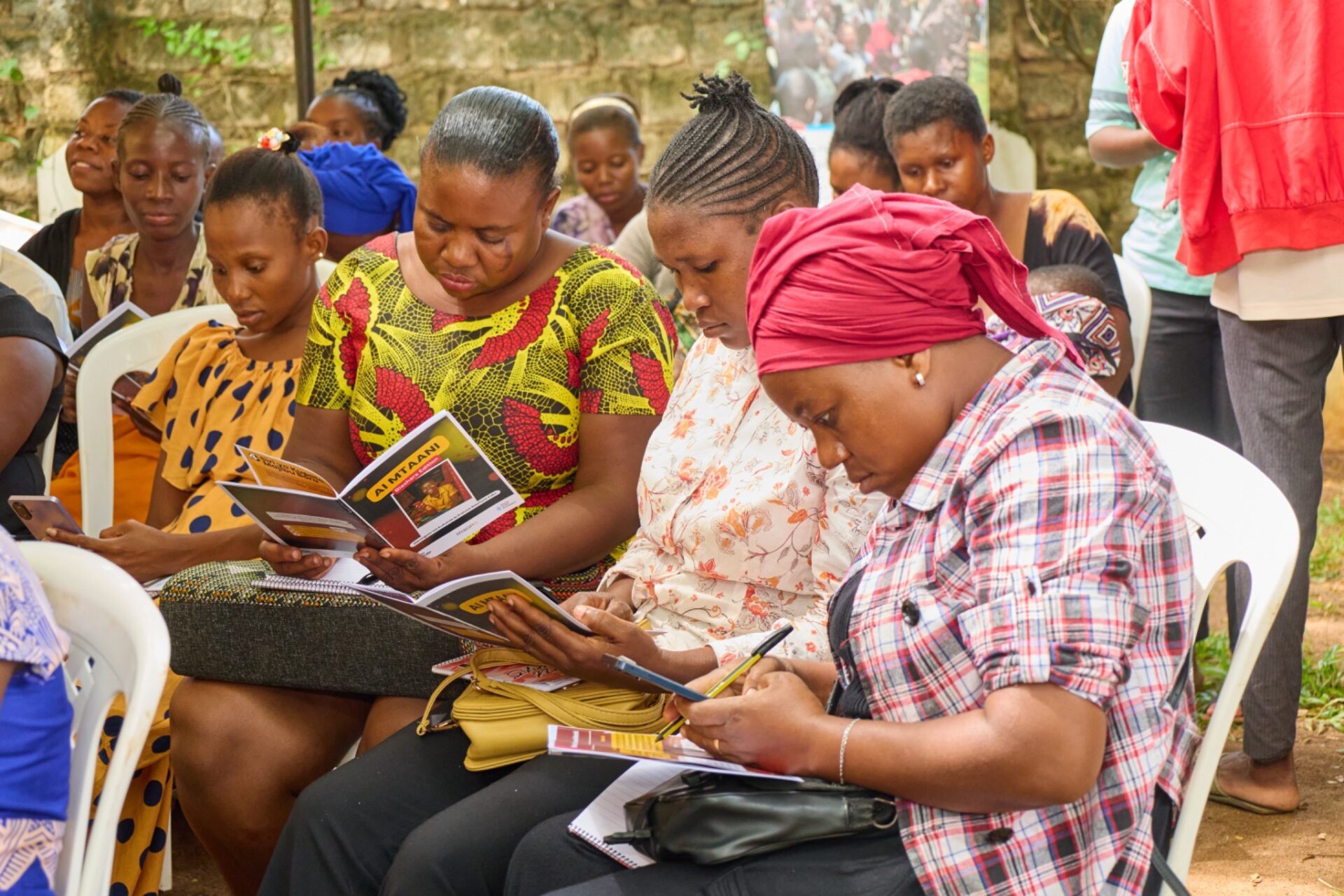
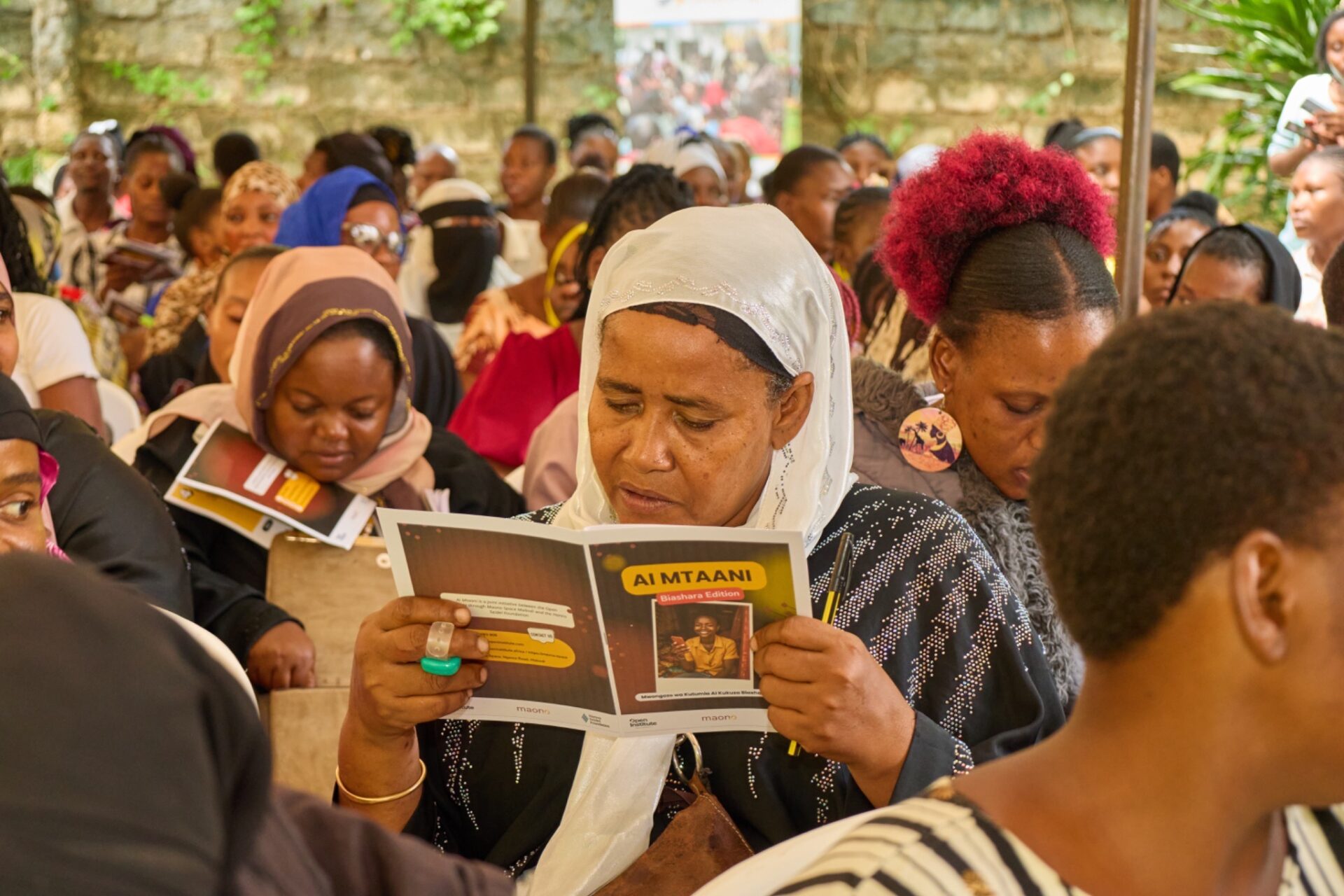
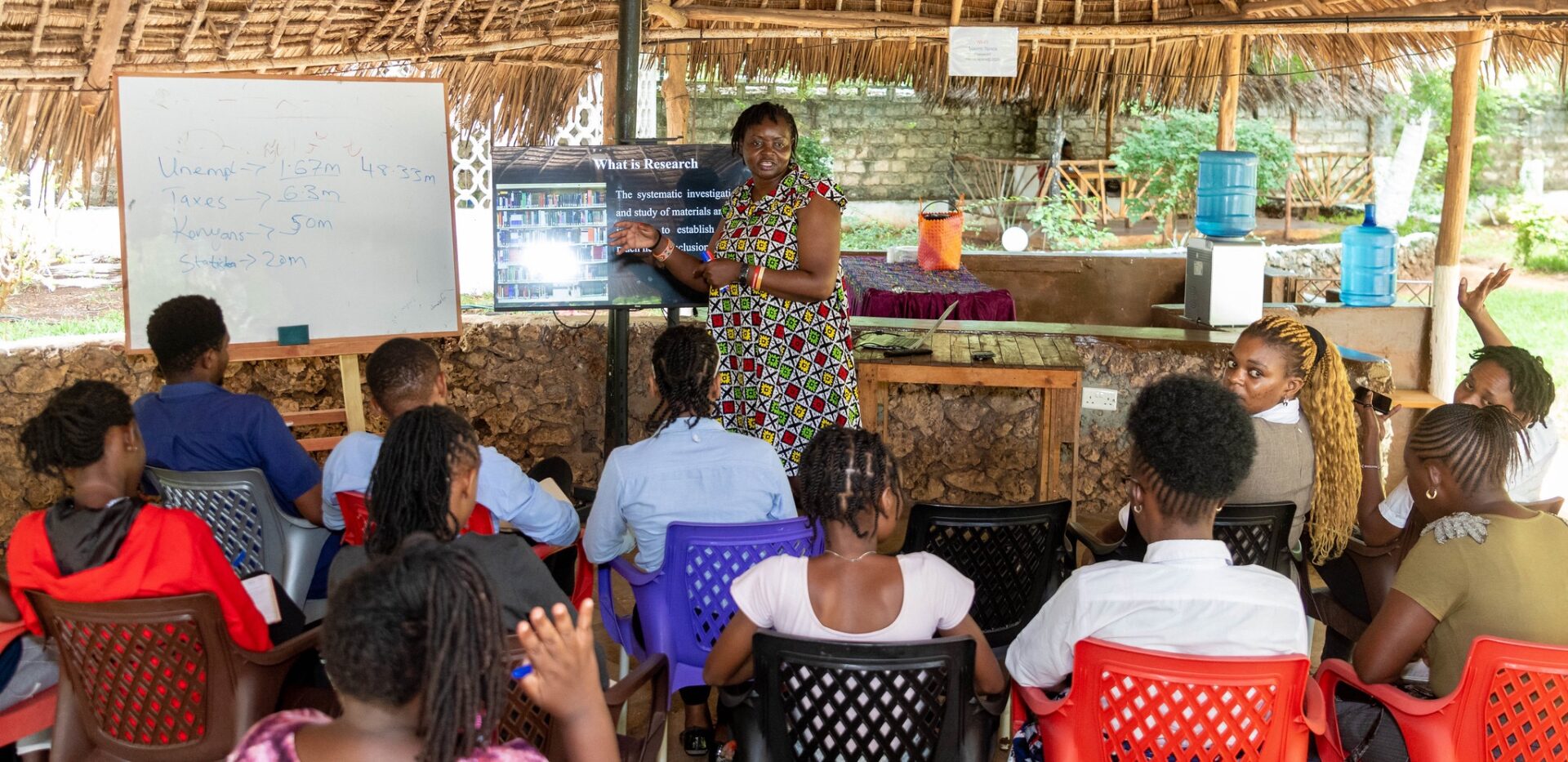
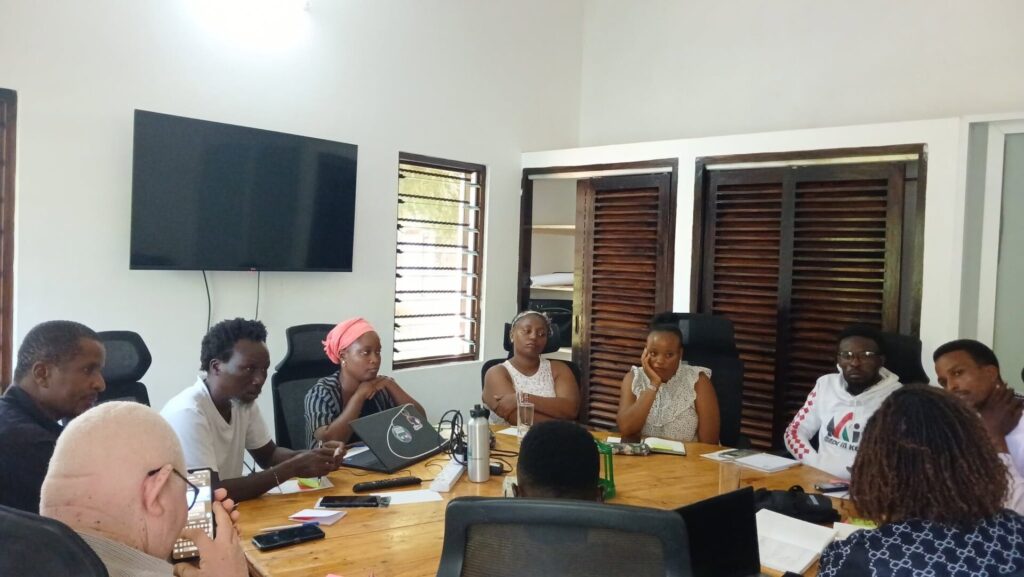
As I worked alongside eight community-based organisations in Malindi, this became clearer with every session. One of the most important realisations was that data literacy is far less about technical complexity than it is often assumed to be. When ideas were grounded in familiar community challenges, participants engaged quickly. They were not intimidated by the concepts themselves. They were simply seeing them in a form that finally made sense within their reality.
Shifting Assumptions on Language and Adult Learning
Before the project, I assumed language would be one of the biggest barriers. I spent time thinking about translation and whether Kiswahili would make learning more accessible. What I learned instead was more nuanced. Participants did not simply want translation but relevance. They preferred simple English supported by illustrations and real examples drawn from their own work. They wanted to recognise themselves in the learning process.
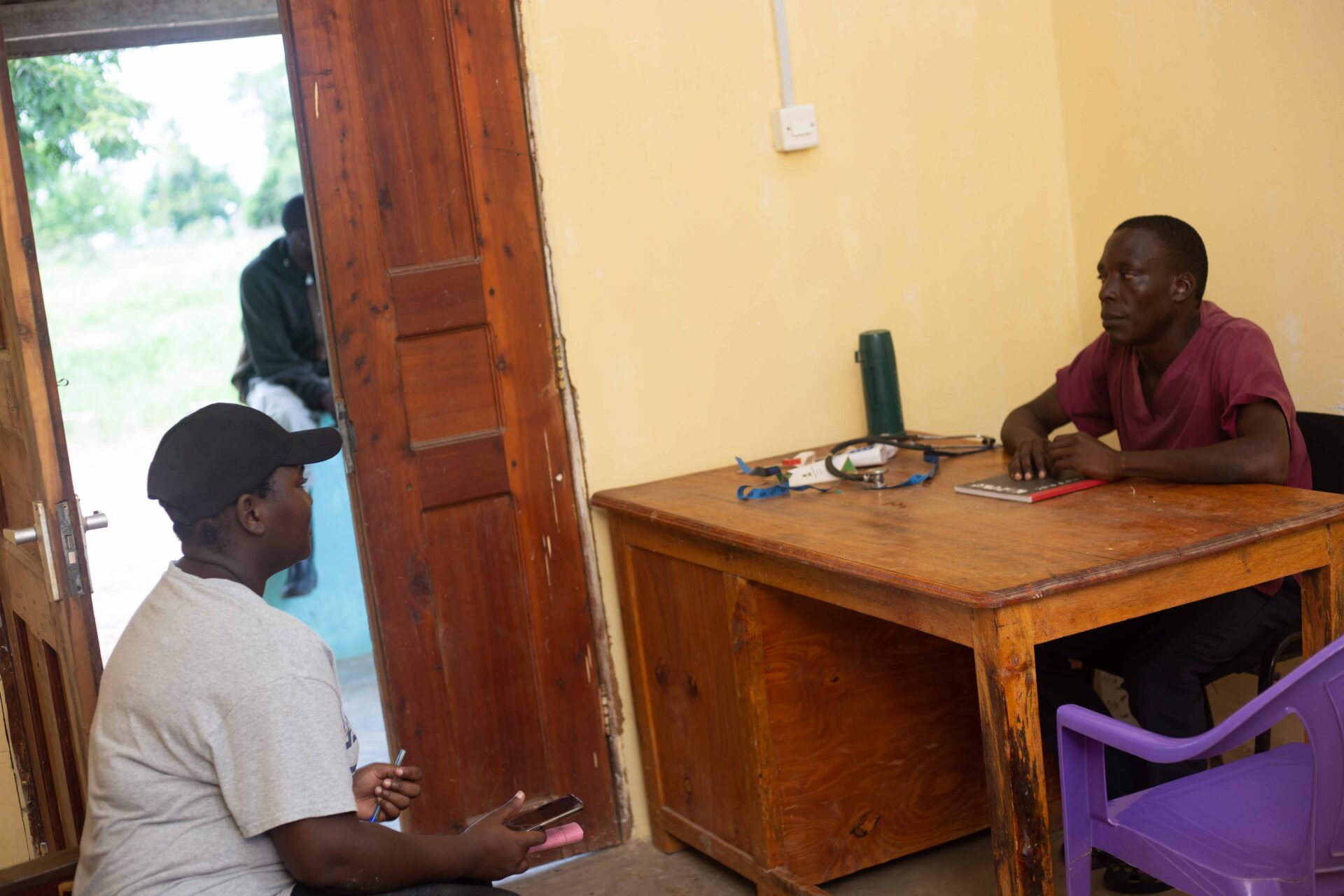
Another assumption that shifted was around adult learning. There is often a belief that adult learners struggle with engagement or that technical training is difficult to sustain. In practice, the opposite was true. The CBO leaders showed up consistently. They asked questions, participated actively, and applied what they were learning directly to their work.
The constraint was never interest but confidence.
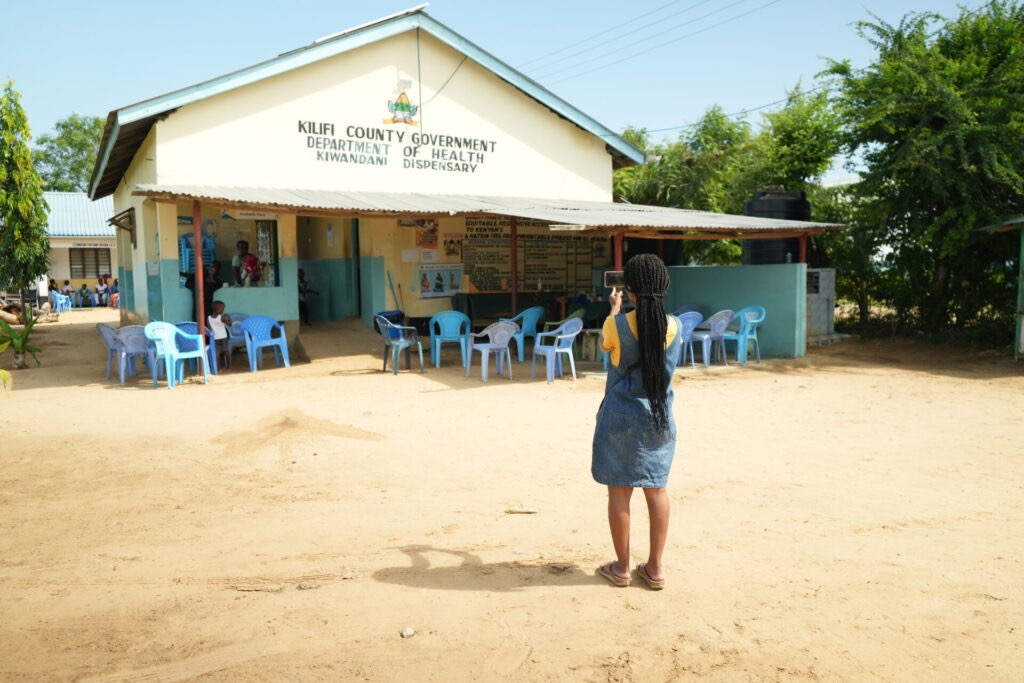
Most participants were already highly capable in their daily use of technology. Smartphones were part of their work and communication systems. The shift was not about learning new tools, but about seeing those tools as instruments for data collection, analysis, and decision-making. Once that connection was made, their confidence grew quickly
What emerged over time was a clearer picture: data literacy has less to do with technical skill and more to do with confidence, relevance, and having trusted support when navigating something unfamiliar.
The most powerful moments came when organisations began to see patterns emerge from their own data. Community leaders already knew individual stories very well. They could describe the experiences of young people, persons with disabilities, or households in detail. But when information was collected across larger groups, patterns became visible. Assumptions were tested. New questions emerged. And decisions and design for programs became more intentional.
This shift from anecdote to evidence didn’t replace lived experience. If anything, it gave that experience more weight.
Bridging Local Practice and Global Conversations
By the time I arrived at the Global Data Festival in Nairobi, I was not only thinking about the project, but also what it represented in a much larger ecosystem.
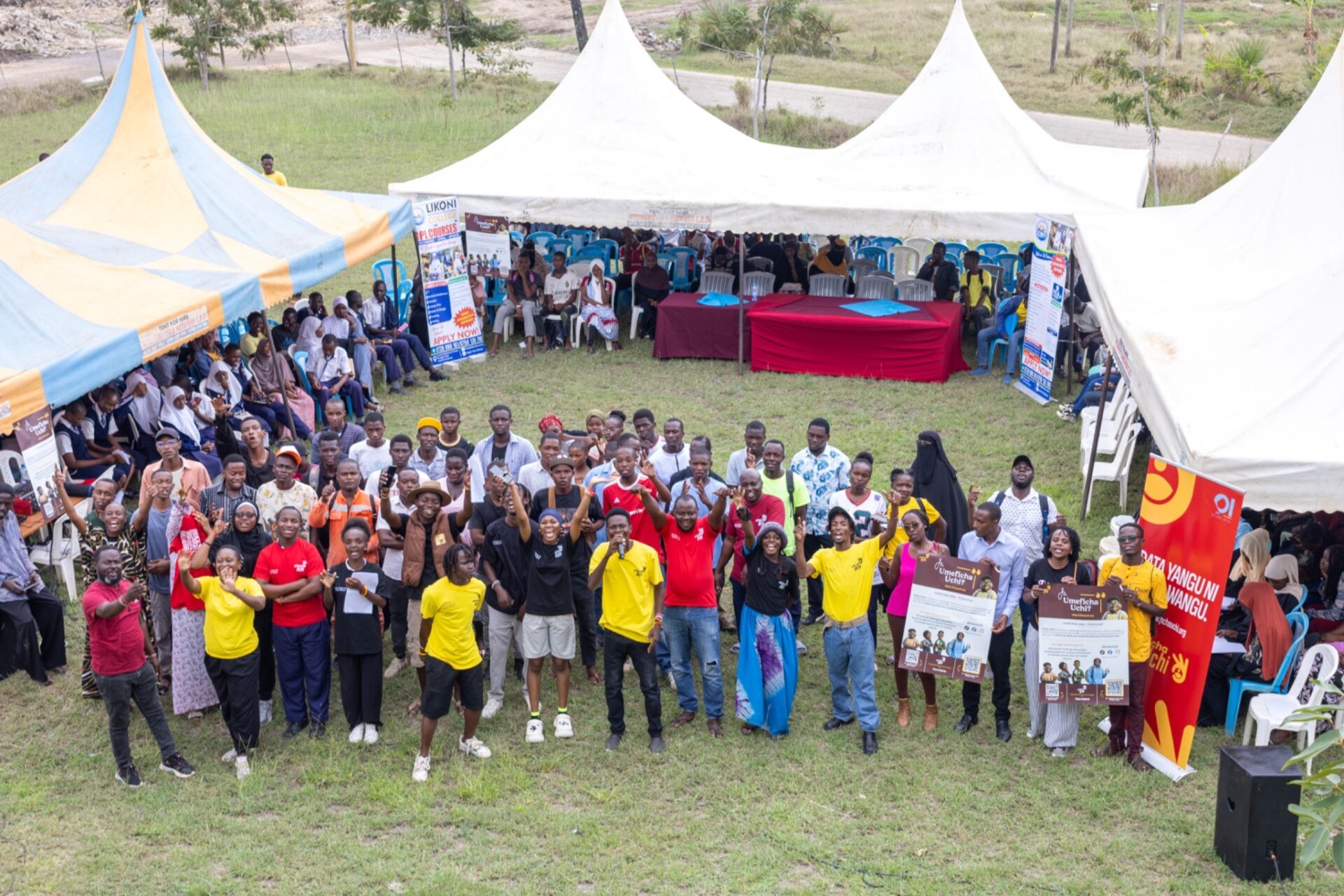
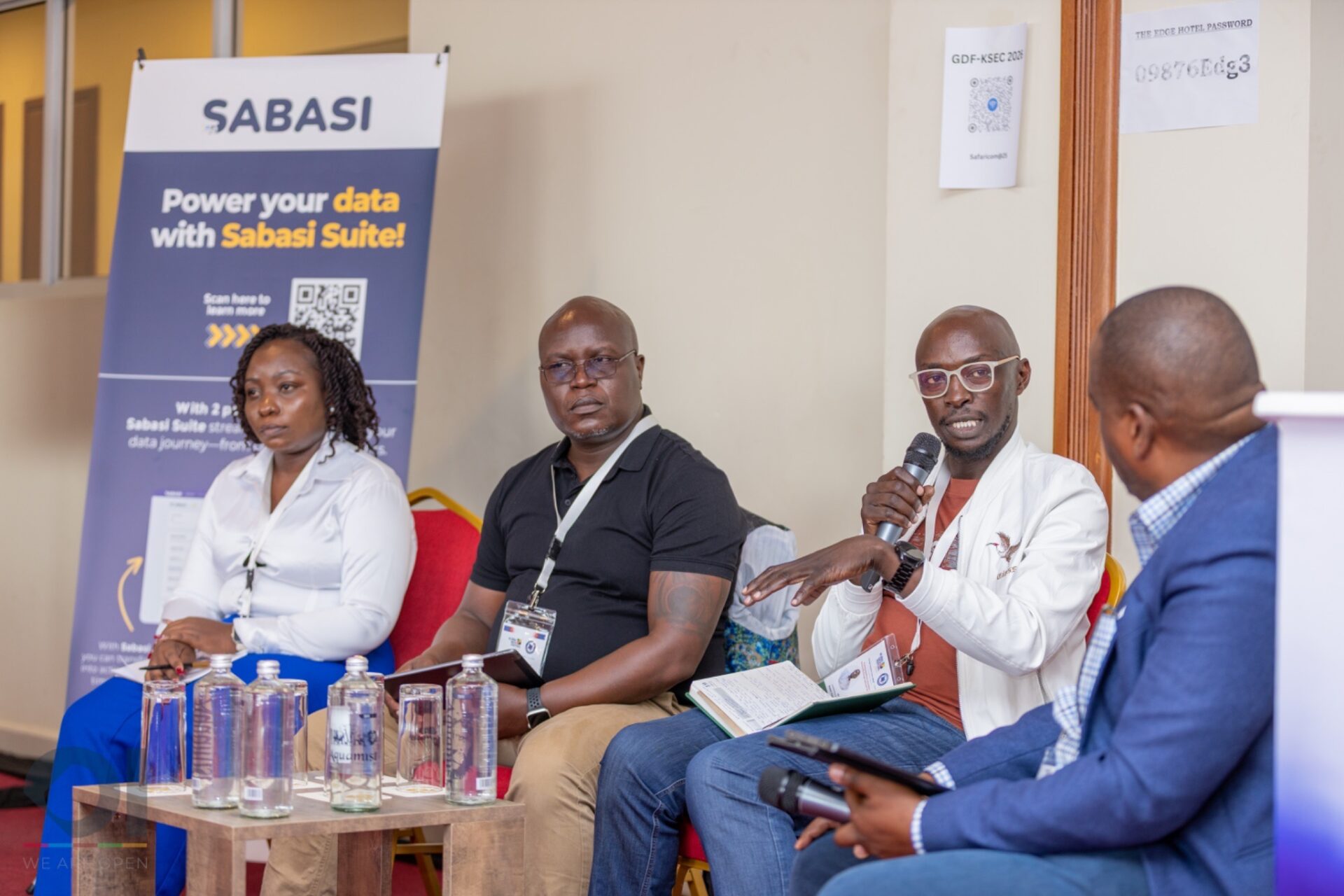
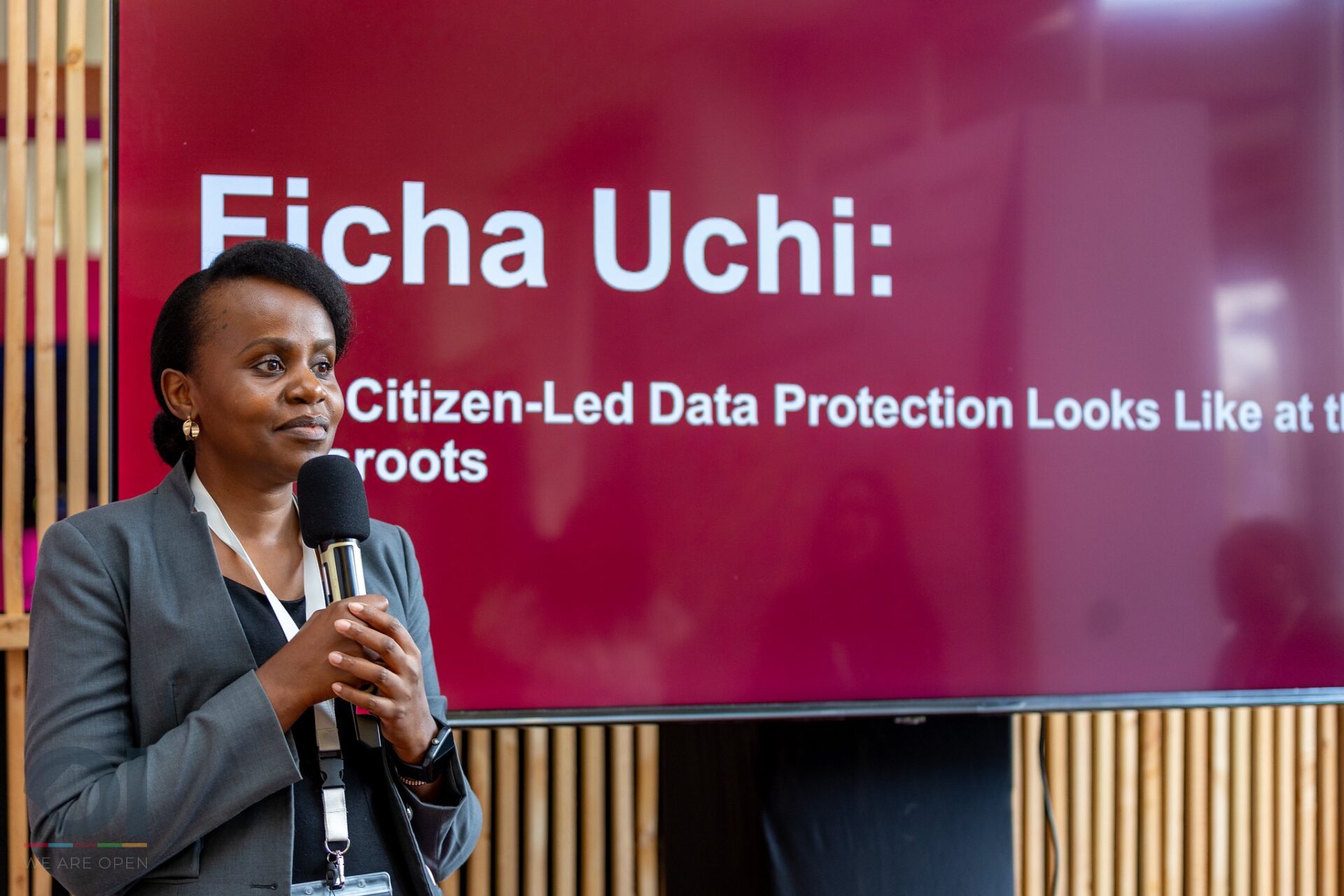
The Festival brought together nearly a thousand data and community practitioners from around the world. It was a space filled with conversations on governance, artificial intelligence, inclusion, innovation, and the future of data systems. Being in that room made it clear that these global conversations are often searching for answers that already exist in local practice.
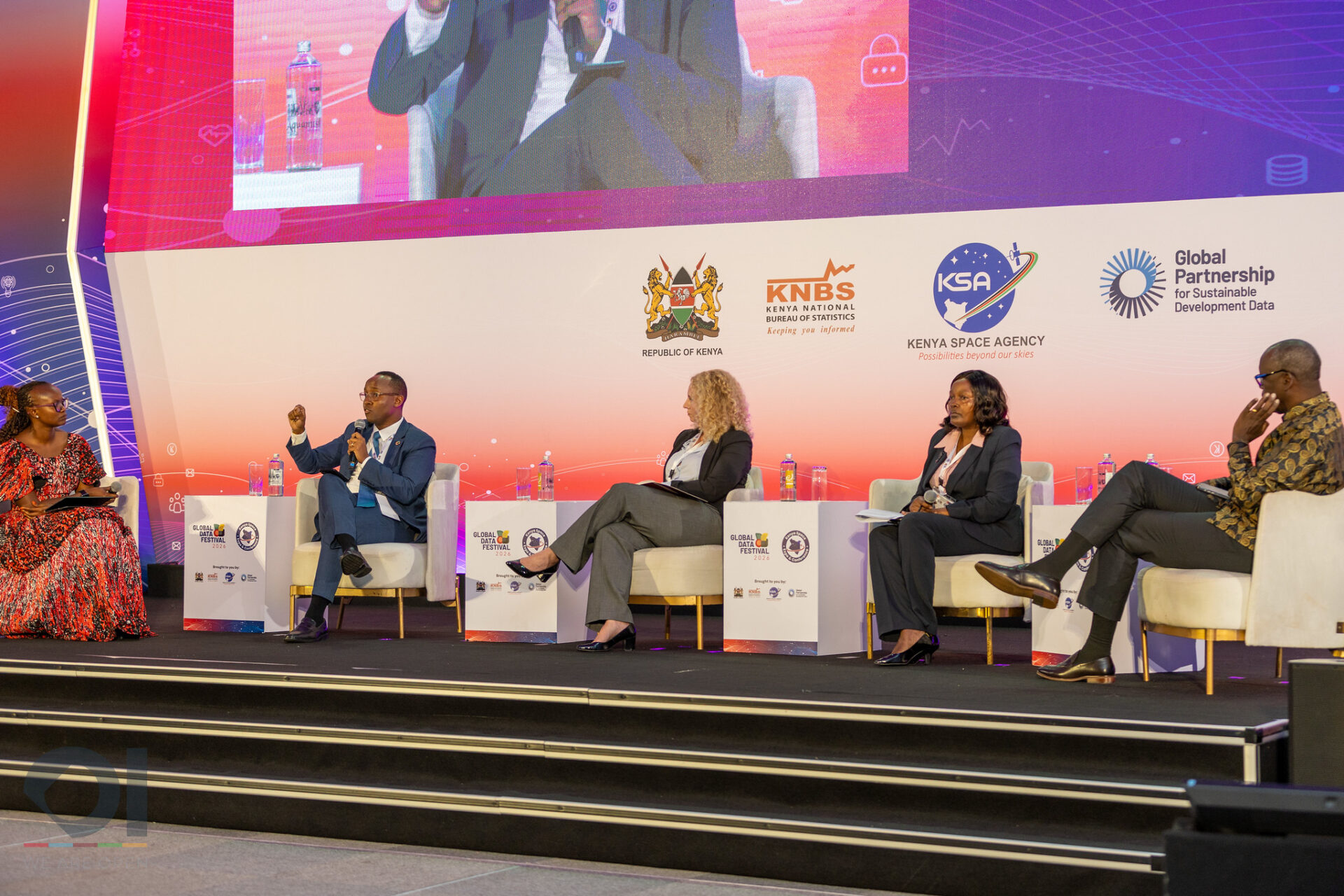
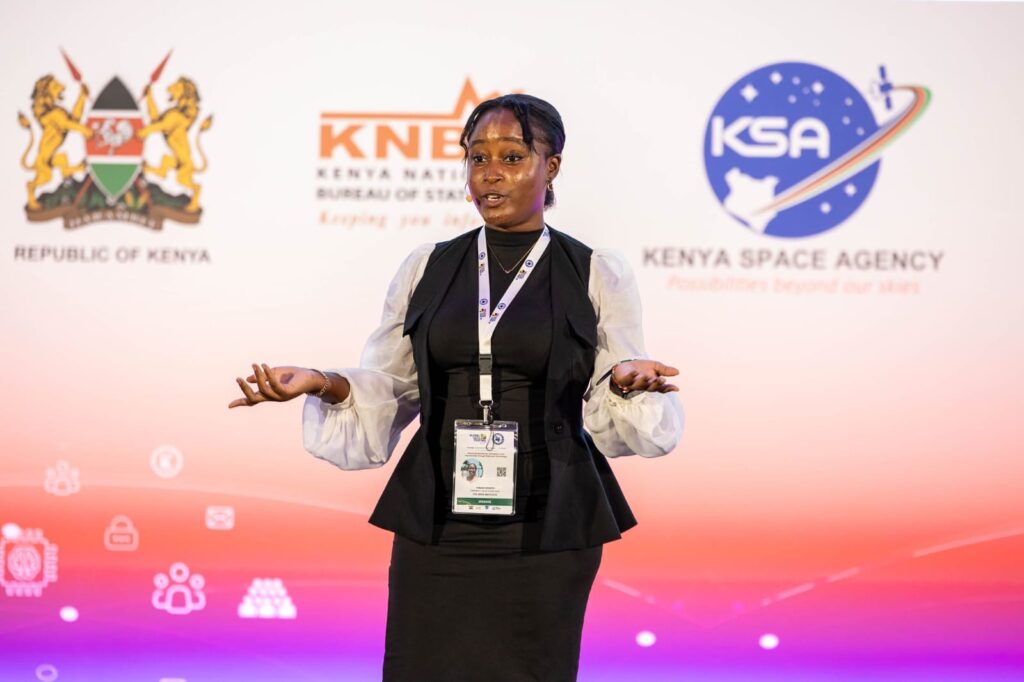
I had the opportunity to speak in a plenary session on youth leadership in data, where the central message was simple but important: the future is not something we are waiting for. In many communities, it is already happening. Young people are already designing solutions, building systems, and using evidence to respond to real challenges. The question is not whether they are ready. The question is whether systems are ready to recognise what is already in motion, fund it, scale it and meaningfully invest in it.
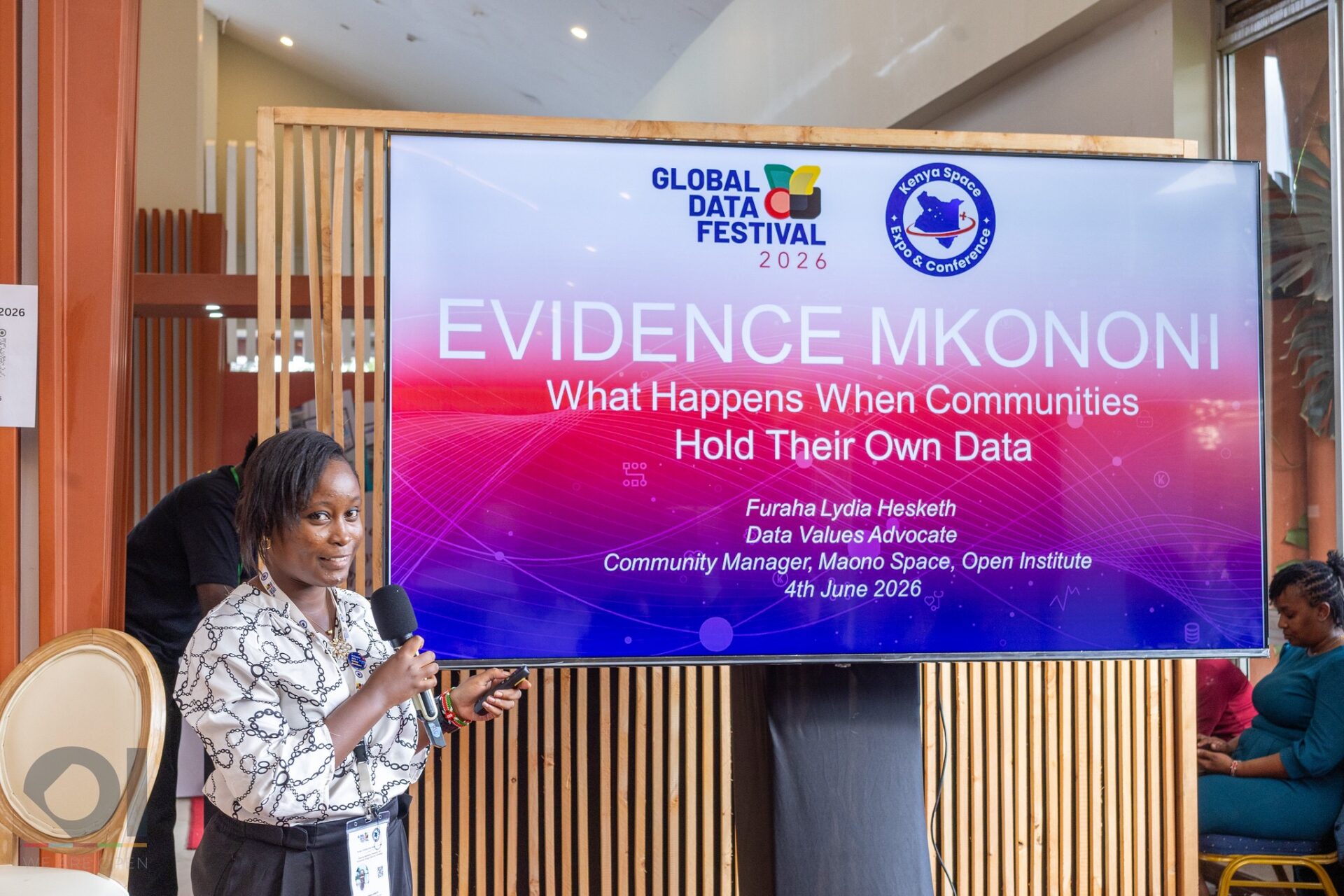
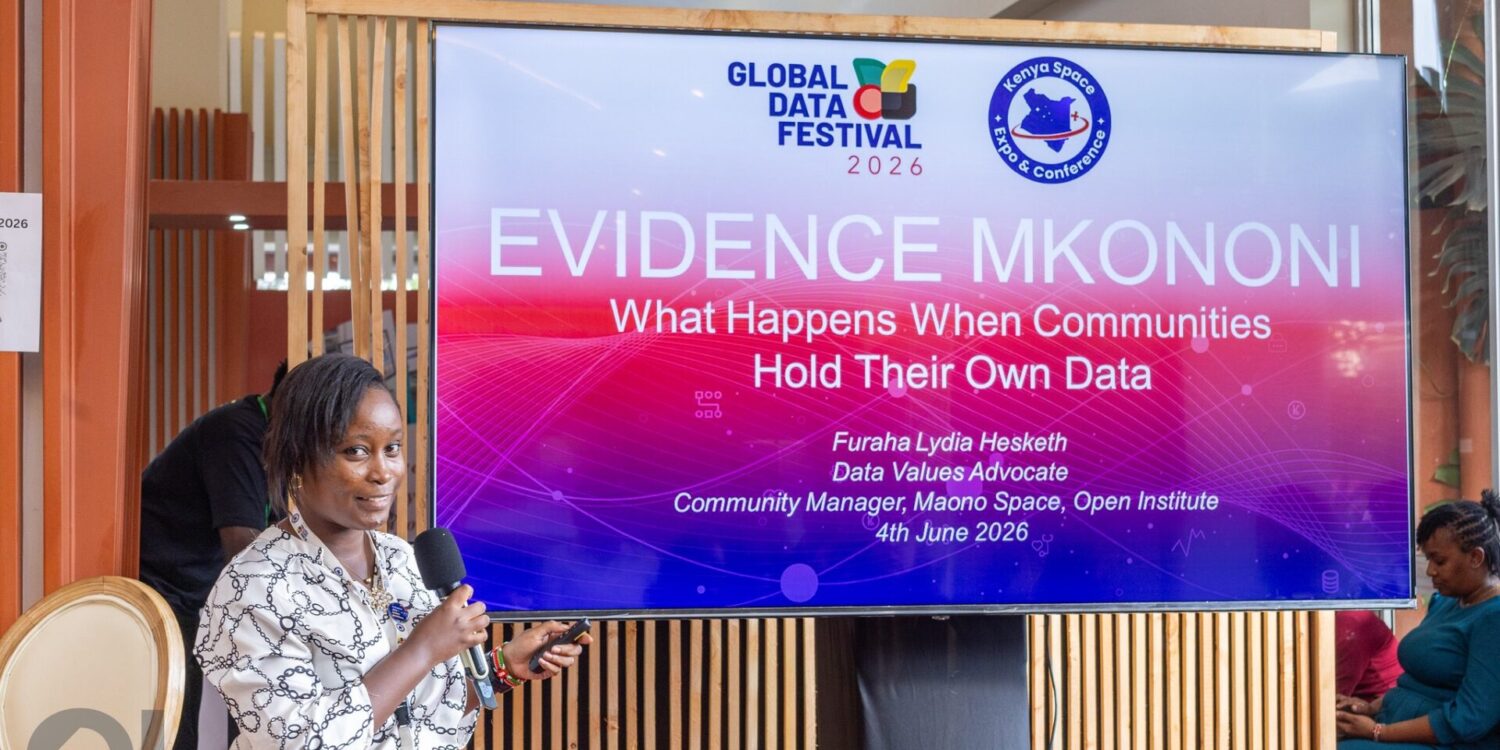
I also presented more deeply on the work of Evidence Mkononi. Standing on that stage and explaining what had happened in Malindi felt less like showcasing a project and more like surfacing a set of lived lessons: that communities already hold knowledge, that they can build their own evidence systems when supported, and that data becomes meaningful when it is tied to real decisions rather than abstract frameworks.
What stayed with me most from the Festival were not only the presentations, but the conversations in between. The questions people asked revealed how many systems are still trying to figure out how to make data more inclusive, more accessible, and more grounded in lived reality. Yet many of the answers already exist in the kinds of community-led processes I had seen in Malindi.
One key takeaway became very clear to me during and after those discussions: we need to design around communities, not expect communities to constantly adapt to systems designed without them. Data tools, training, and processes should begin with how communities already work, not with how institutions assume they should work.
The Path Forward: Designing Around Communities
As I reflected on the entire journey, from the Fellowship to implementing Evidence Mkononi and then standing on a global stage, I realised that this work does not end with the Fellowship. If anything, that is where it begins.
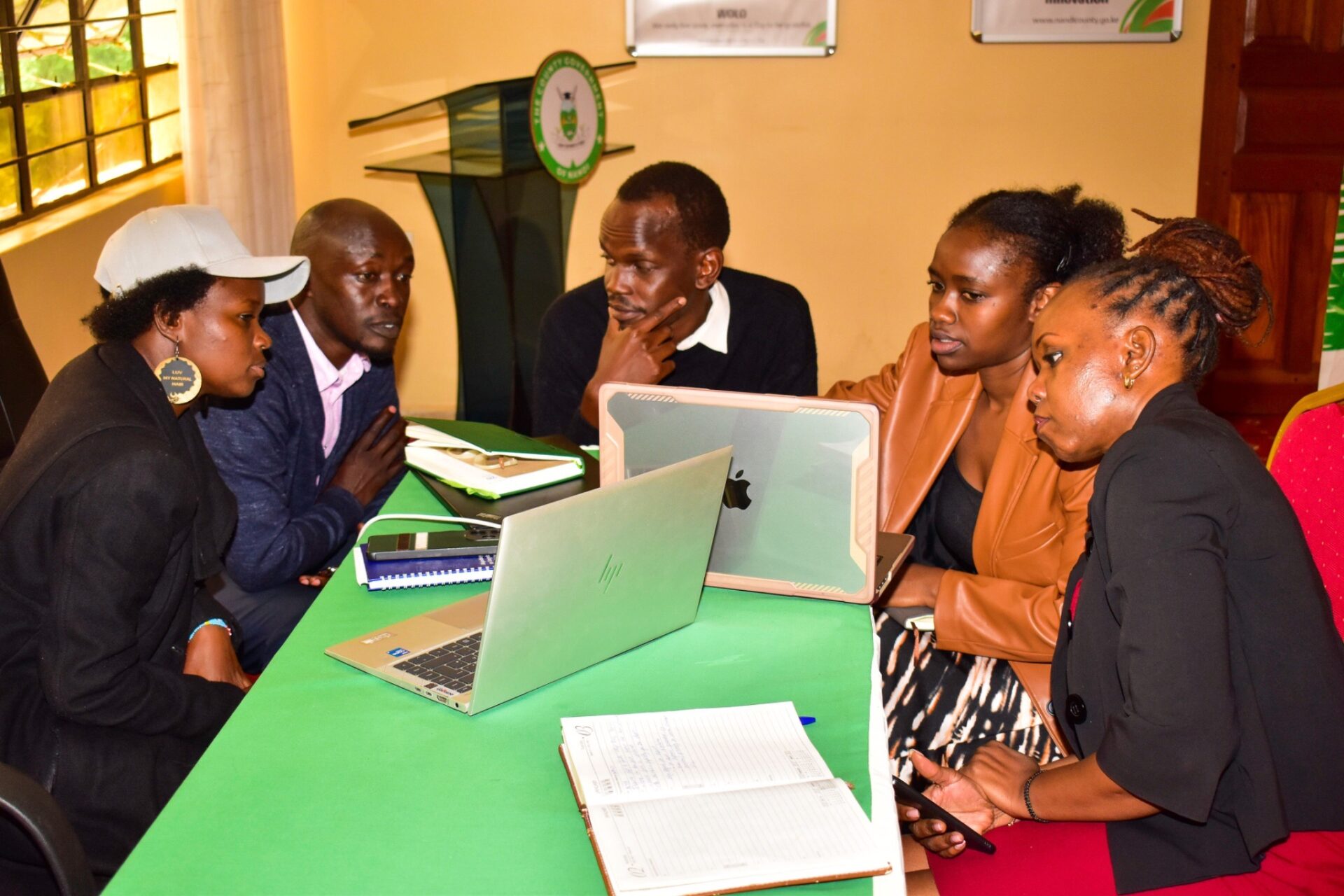
I now carry forward not just the experience, but the skills and responsibility to continue supporting community-based organisations in integrating data into their daily work. This includes helping them design better surveys, understand and use their own data, and build evidence that strengthens decision-making in ways that are practical and sustainable.
Evidence Mkononi was never meant to be a one-off project. It is part of a longer shift toward communities owning their evidence and using it to shape their own development pathways.
I leave this Fellowship with a deeper conviction than when I started: communities do not need to be brought into the world of data. Data systems need to be built around the realities of communities already living and working within them.