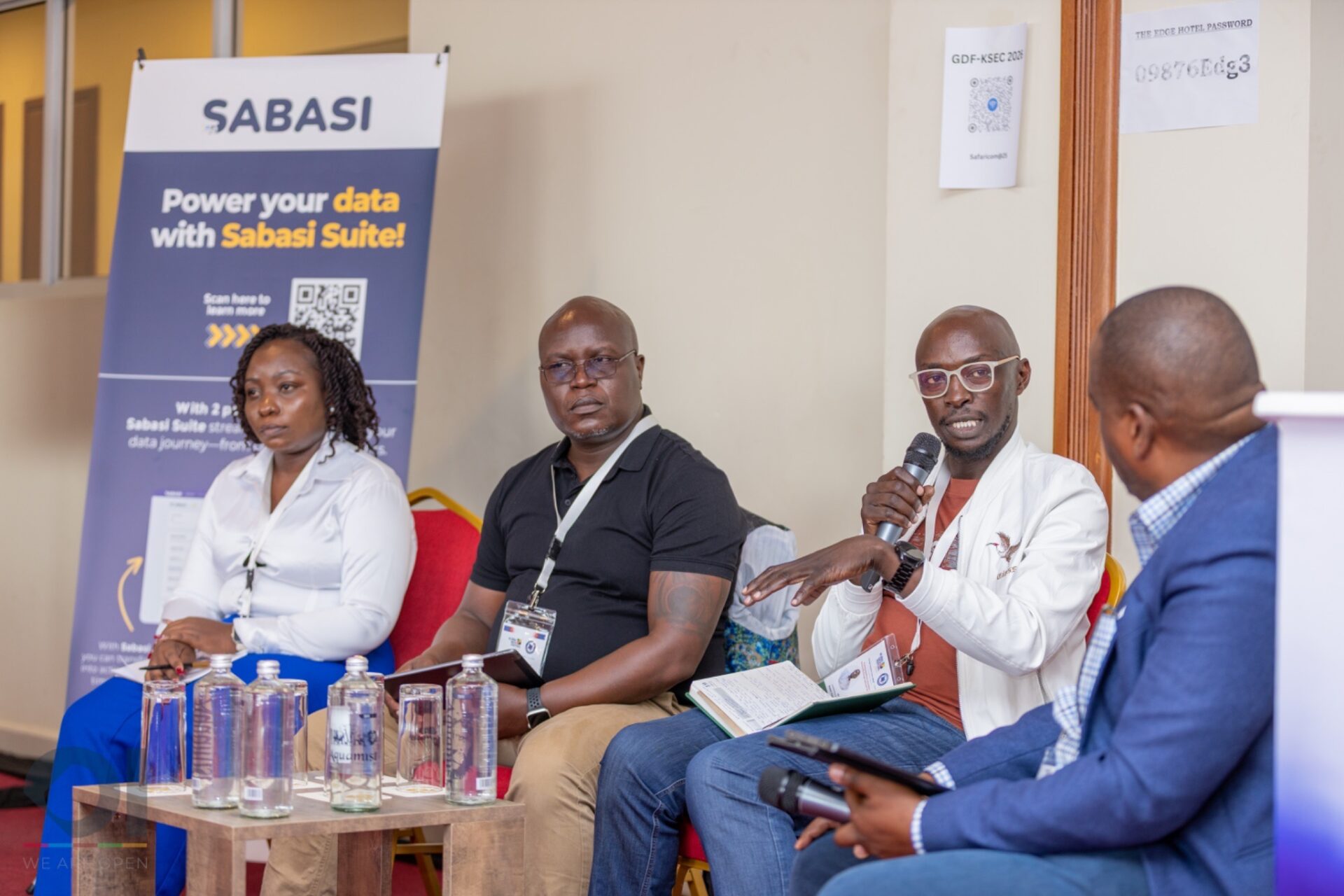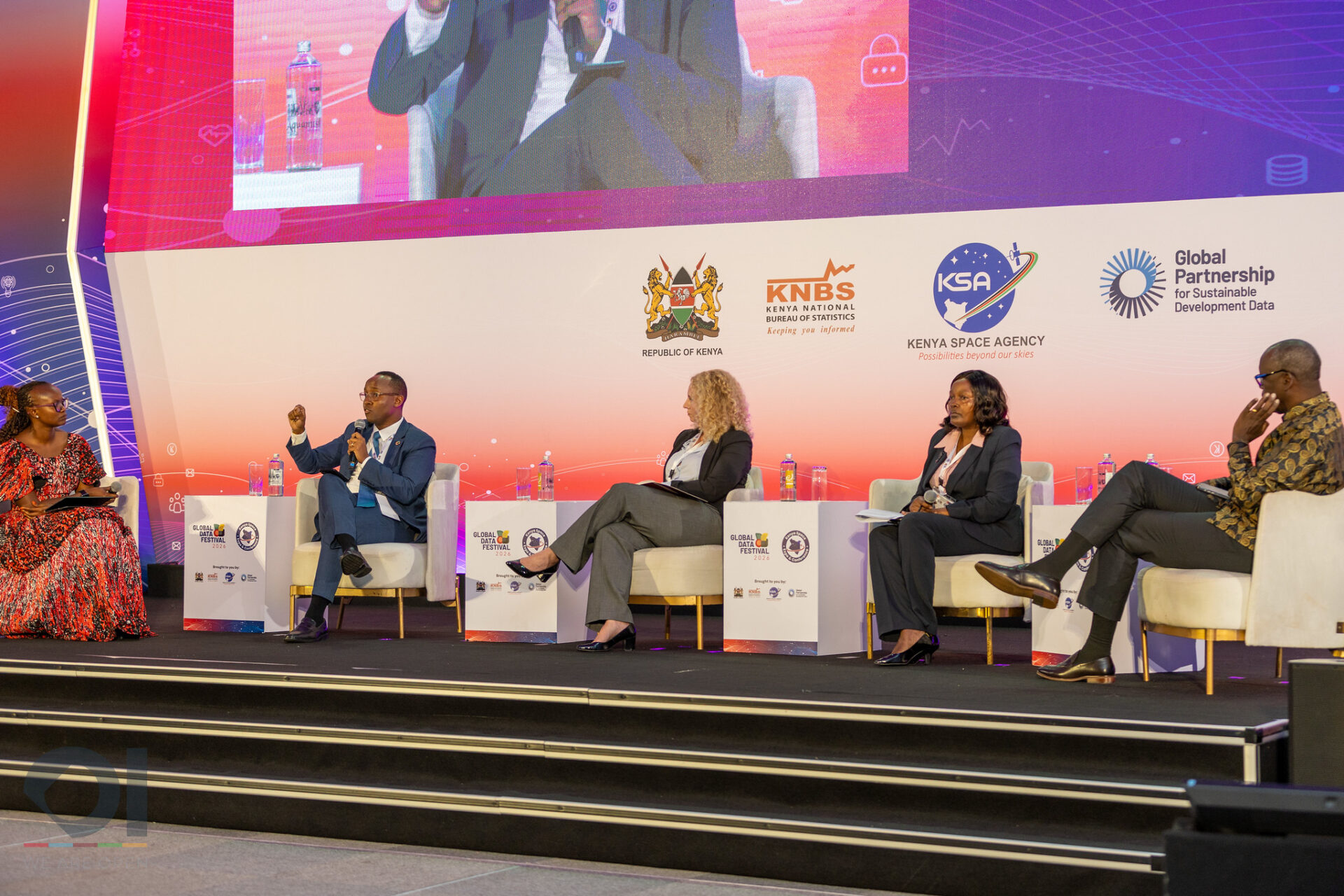
In late September, while world leaders filled New York for the UN General Assembly, the Gates Foundation convened Goalkeepers 2026 at Jazz at Lincoln Centre around an important question: will artificial intelligence deepen inequality, or expand human potential? The evening, titled Make This Matter: AI, Equity, and the Choice We Can’t Delay, was built on first-person stories from a nurse, a teacher and a farmer rather than on speeches alone. The accompanying Goalkeepers Report, released days earlier, put the stakes plainly: AI could be a great equaliser, or it could widen the gap.
At Open Institute, we have been working on the answer to that question for almost a year, in Kilifi County, with small business owners, change makers, teachers and students. This piece sets out what Goalkeepers 2026 got right, what we have learned on the ground through AI Mtaani, and what it will take to turn a global argument into local results.
The choice is real, and the window is short
The Goalkeepers Report is explicit that AI’s trajectory is not fixed. Left to the market alone, the report argues, the most capable tools get built first for those who can pay. To counter that, the Gates Foundation announced at least US$1 billion over two years to expand access to AI and AI-enabled solutions, split roughly 40% to education, 40% to health care, 10% to agriculture and 10% to the digital foundations, including datasets in languages the tools do not yet understand.
The report names three areas where action now matters most:
Make AI work in every language people speak. More than 90% of the data behind early large language models came from English-language sources.
Build AI for the contexts where it will be used, with countries and communities deciding how their data is managed and protected.
Invest in people and access, so that teachers, farmers, small traders, doctors and developers can learn to evaluate AI tools and adapt them to their own realities.
Those three points read like a description of the work we do at Open Institute. The third is the one we want to dwell on, because it is the one most often skipped. Models and infrastructure attract the headlines but usually, the question of whether a teacher in Malindi or a mama mboga in Kisumu can sit down with an AI tool, question it, and use it safely gets far less attention, and it decides who benefits.
What is AI Mtaani and why does it exists?
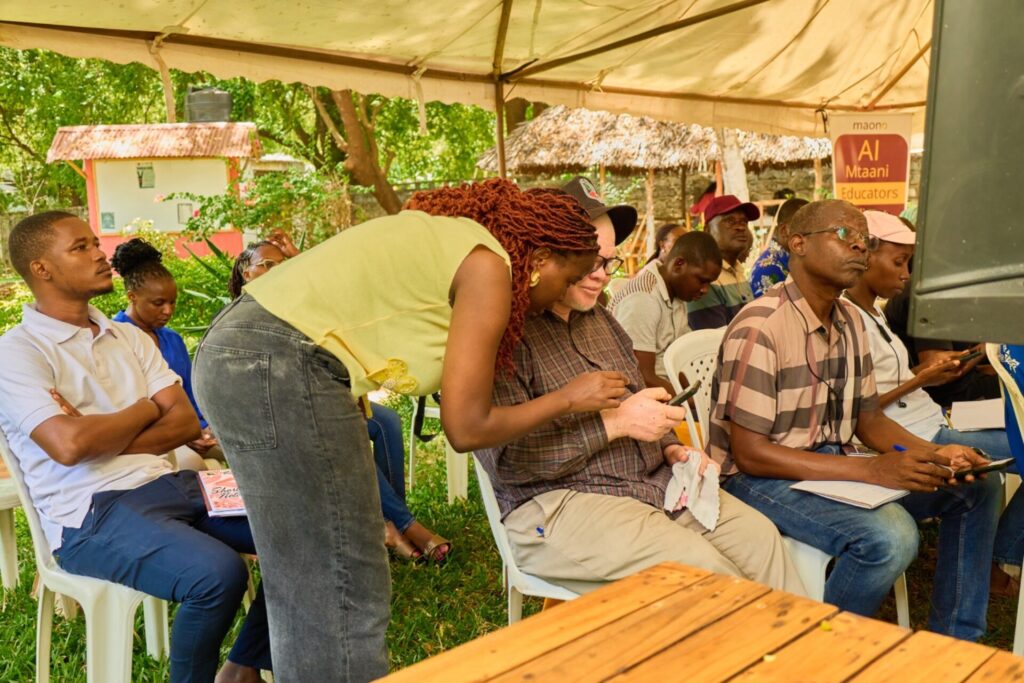
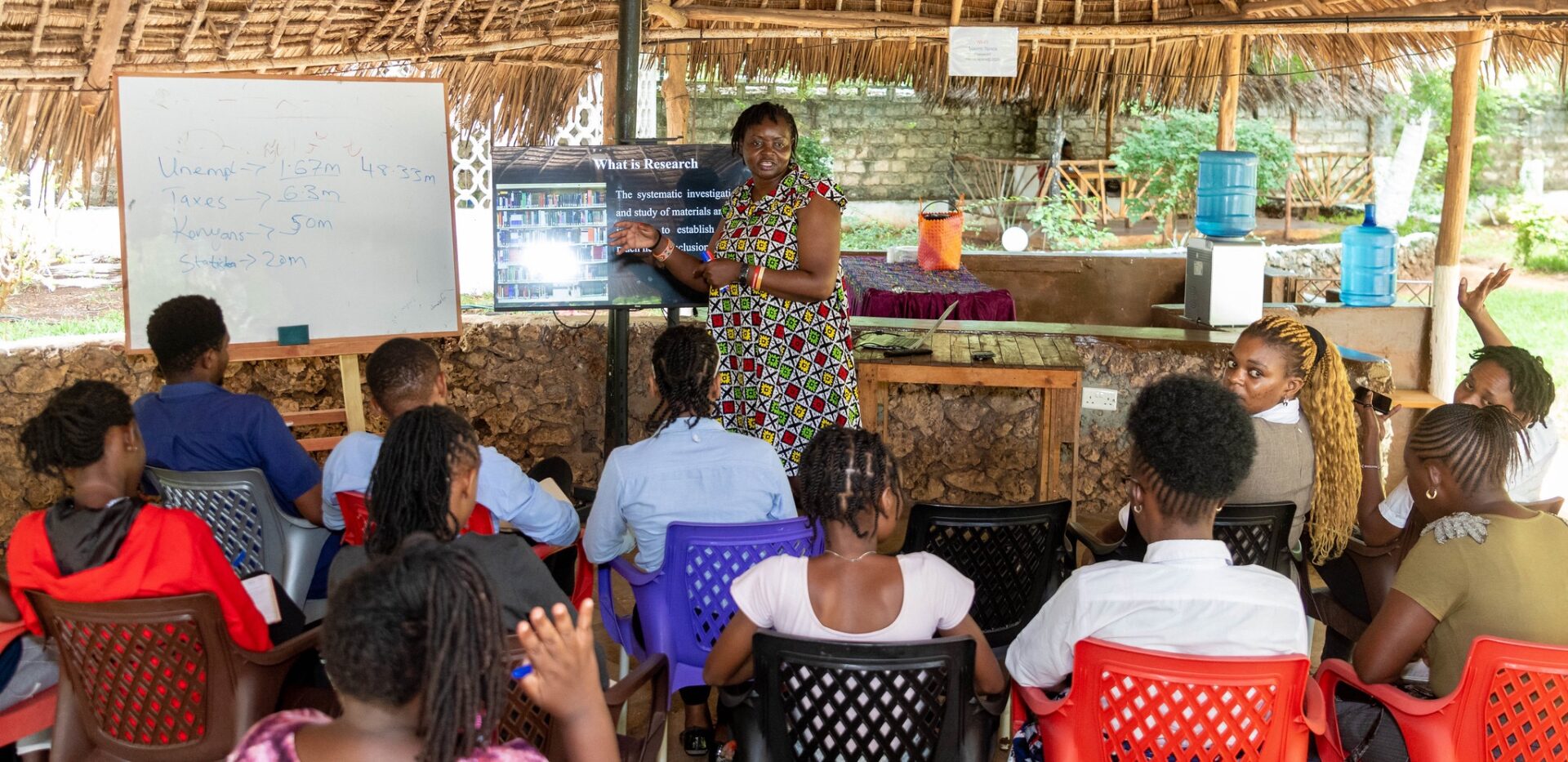
AI Mtaani is Open Institute’s community-driven programme, delivered through Maono Space, that makes artificial intelligence practical, accessible and relevant to everyday life. It brings AI learning closer to people who are often left out of conversations about emerging technology, including small business owners, teachers and young people. Through hands-on training, participants explore how to use AI tools to create marketing content, design promotional materials, communicate with customers, develop business ideas and support teaching and learning. Rather than treating AI as a complex technology reserved for experts or large businesses, AI Mtaani starts with the tools people have and the challenges they face in their daily lives.
The programme exists to ensure that communities are not spectators in the AI revolution but active participants equipped with the knowledge, confidence and skills to engage with, influence and benefit from it. Our experience has shown that having access to AI tools does not always mean knowing how to use them effectively. People need practical guidance, opportunities to experiment, and safe spaces to ask questions about accuracy, privacy, ethics and the limitations of AI. By bringing this learning into the community and connecting it to local livelihoods and education, AI Mtaani aims to help people make informed choices, unlock new opportunities and participate meaningfully in an economy increasingly shaped by AI.
What we have done so far
Our delivery to date, in Kilifi County:
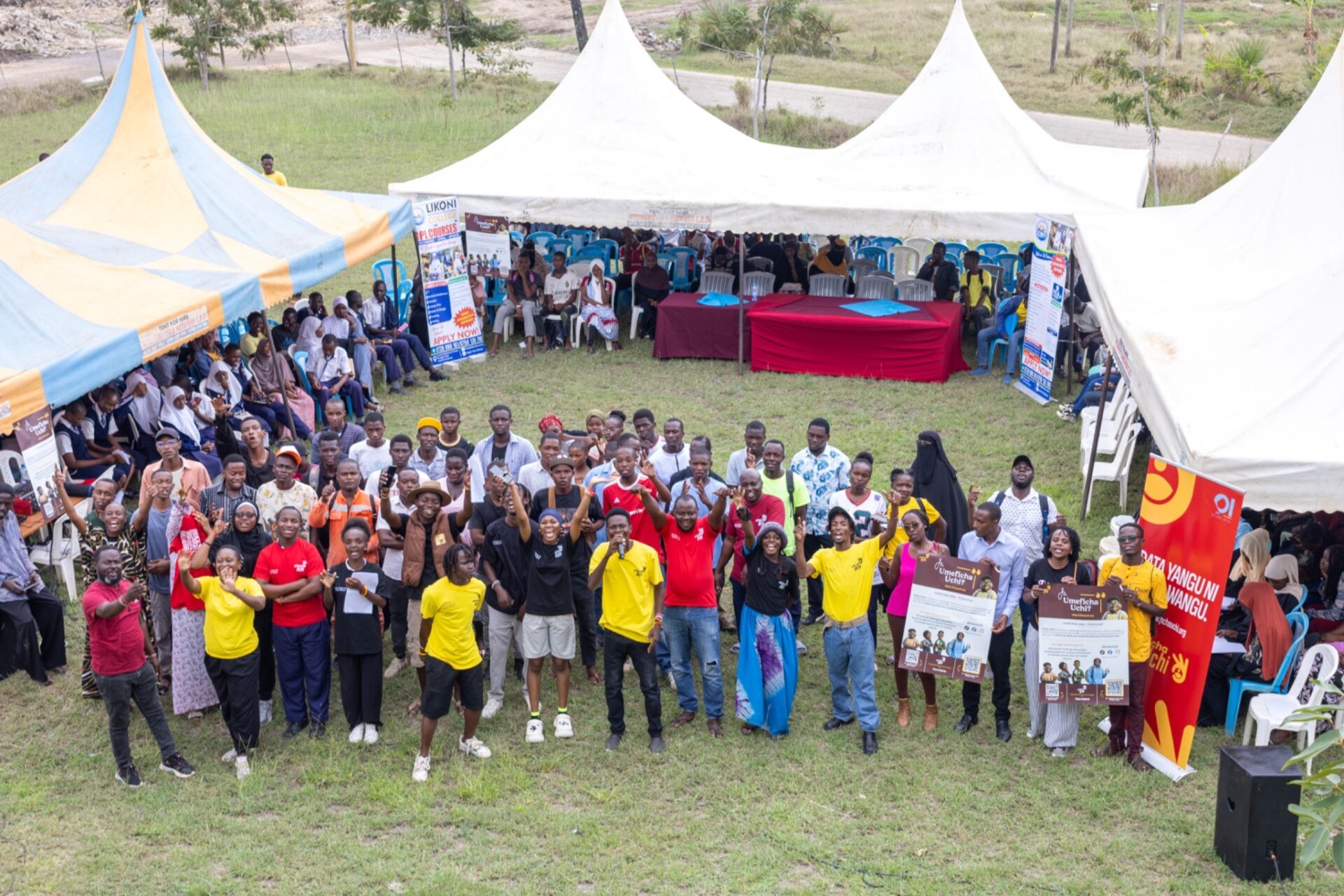
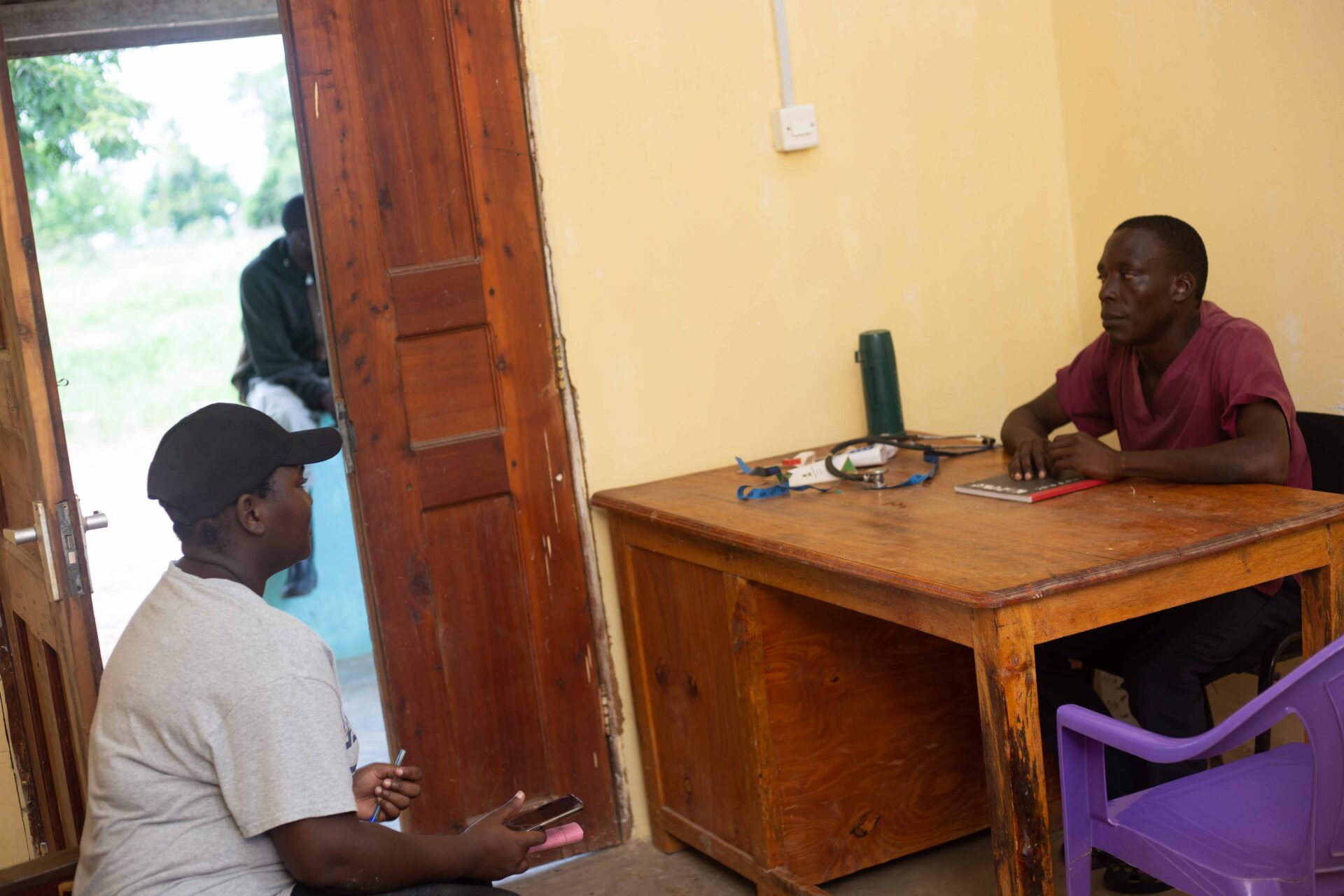
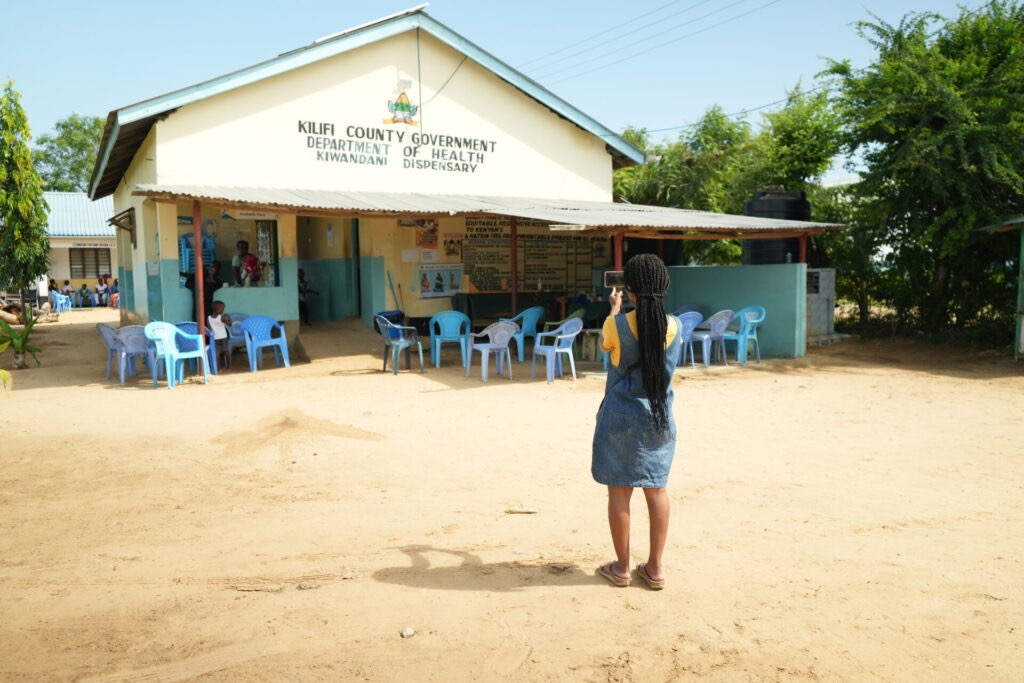
November 2025: the first AI Mtaani training launched the conversation, bringing together teachers, learners, changemakers and small business traders from across Malindi to explore what AI means for their lives and work. Participants explored free tools for content writing, poster design, business record management, marketing, schoolwork and new side hustles. The training revealed a strong demand for digital skills, with young people seeing AI as a tool for education, creativity, income generation and business growth.
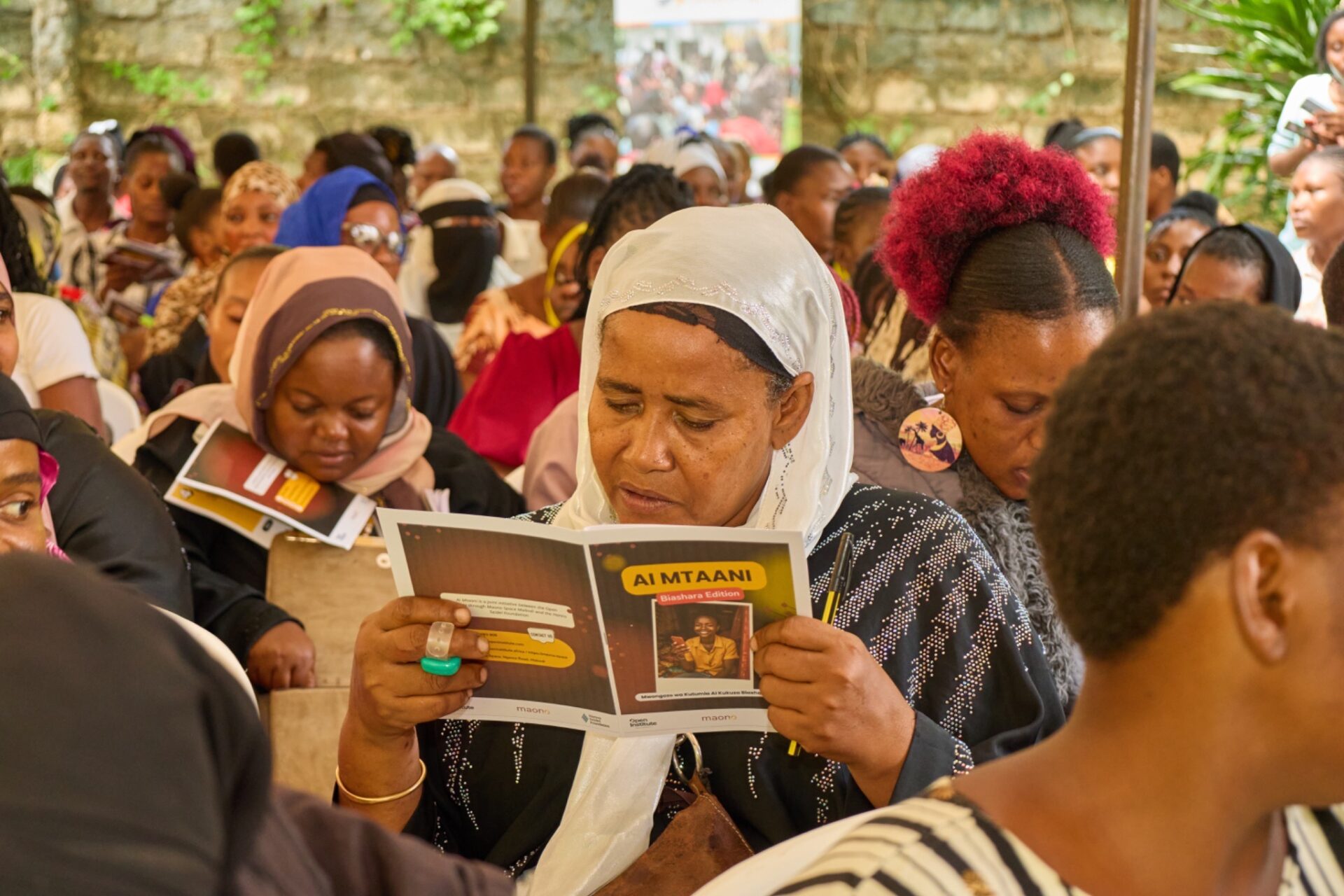
March 2026: Biashara Edition 1: more than 129 small business owners used tools such as Gemini for content creation, customer communication, research and business ideas. They also identified ways to use AI to boost productivity, conduct market research and reach more customers.
July 2026: Biashara Edition 2: 160 more entrepreneurs joined, deepening practical use.
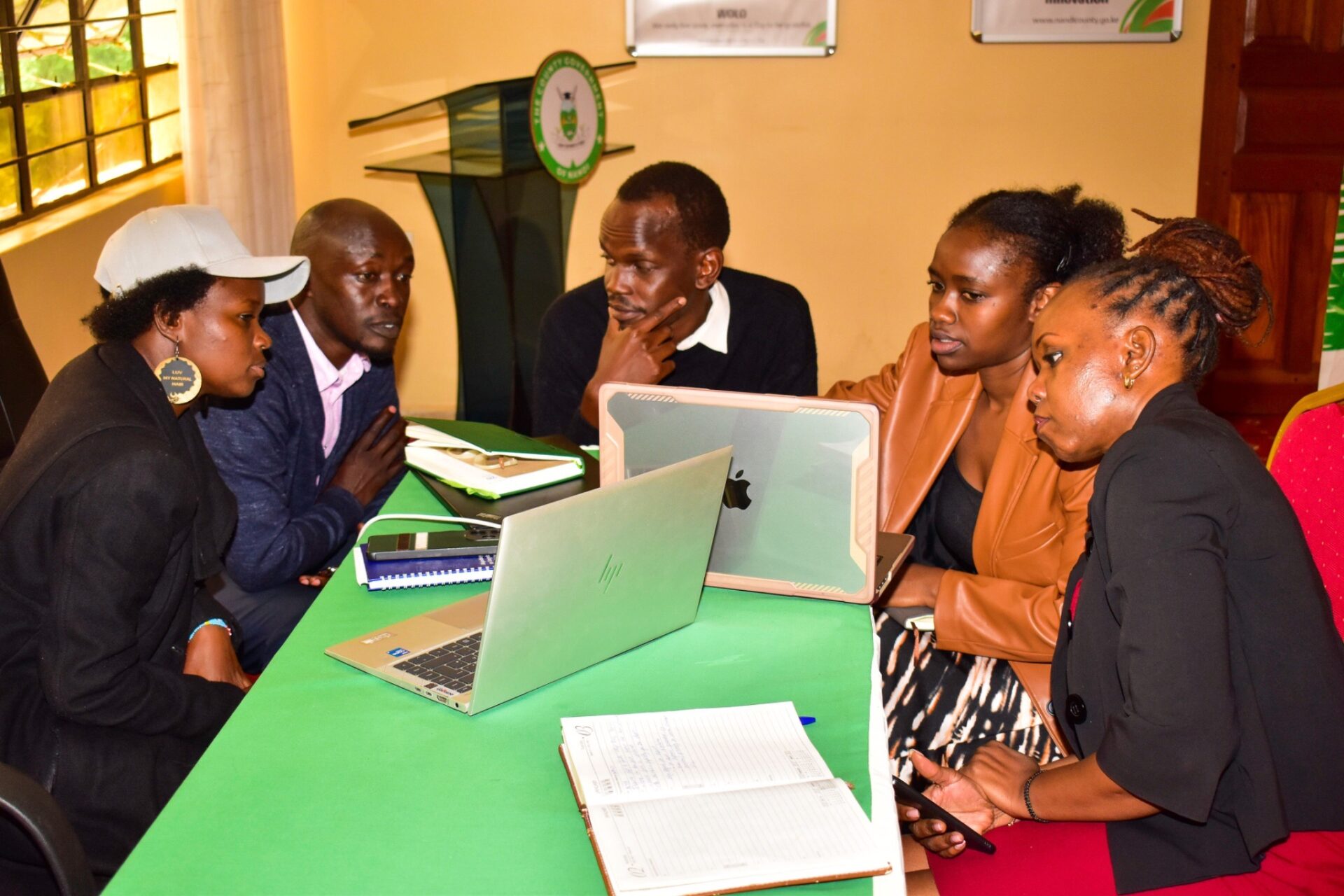
September 2026: Educators Edition: more than 68 teachers took part in applying AI in lesson planning, teaching materials and work schemes using a simple part prompting approach.
What we learned
One of the key lessons from AI Mtaani is that exposure to AI remains limited, particularly among people living in rural areas. Even among those with access to AI tools, many are unsure how to use them meaningfully in their daily lives and work. Across our engagements with small business owners, teachers and students, we have met people who already had tools such as ChatGPT and Meta AI on their phones but lacked the guidance to use them effectively. This highlighted the need for more inclusive and comprehensive training that caters to different levels of exposure, knowledge and digital skills, equipping everyone with the confidence to ask the right questions, give clear instructions, assess responses and recognise when AI gets things wrong.
For a small business owner, AI becomes valuable when it helps solve an everyday problem: creating a promotional poster, responding to customers, organising stock, improving marketing or exploring a new source of income. The lesson is that AI literacy becomes more meaningful when people can immediately connect what they learn to their livelihoods, rather than being introduced to technology in abstract terms.
The same principle applies in education. Several teachers told us their learners were already using AI at home. This raises an important question: how can teachers help learners navigate AI responsibly if they have not had sufficient opportunities to explore these tools themselves? Training educators is therefore not simply about helping them prepare lessons or save time. It is about equipping them to guide learners in questioning AI-generated information, protecting their privacy, recognising misinformation and using technology to strengthen, rather than replace, their own thinking.
Another lesson is that responsible AI adoption begins with creating space for people to ask questions, challenge misconceptions and explore the myths and cultural beliefs surrounding the technology. During our engagements, participants wanted to understand how AI obtains information about them, whether it was demonic, whether it had a gender, and how to tell if an AI-generated video was real. These questions reflect how people interpret unfamiliar technologies through their existing beliefs, cultural experiences and understanding of the world. In some cases, myths and misconceptions can create fear or mistrust, while in others, curiosity opens the door to learning. AI Mtaani provides a space to address these concerns without dismissing people’s beliefs, encouraging open conversations that distinguish fact from misconception and help participants engage with AI more confidently, critically and responsibly.
Responsible AI use must begin with data protection
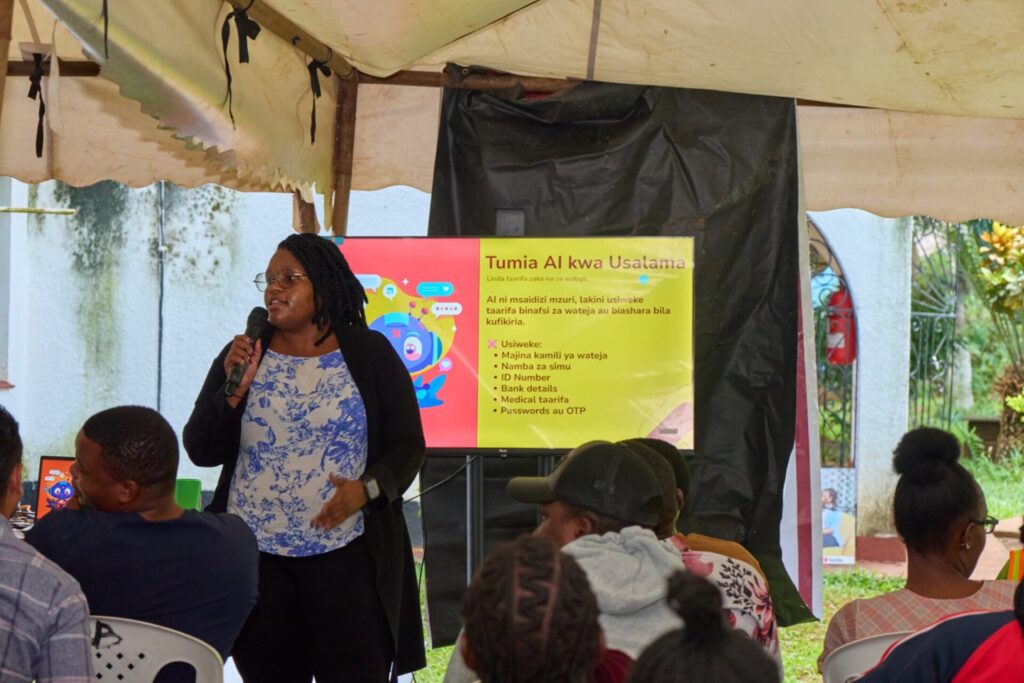
As AI tools become part of everyday learning and work, data protection cannot be treated as a separate conversation. It must be part of how we teach people to use these tools from the beginning.
Our engagements with teachers raised questions about whether their schools were registered with the Office of the Data Protection Commissioner (ODPC) and how personal information should be handled. These uncertainties point to a broader need for practical guidance on data protection in schools, among small business owners and other community institutions. When a teacher enters a learner’s name, assessment details, contact information or other identifiable information into an AI platform, that information may be processed outside the school’s immediate environment. The implications depend on the tool, its settings, the information entered and its data-handling practices.
The same risks apply to entrepreneurs who might upload customer records, identification documents or financial information while experimenting with AI tools. Without clear guidance, people may unintentionally expose information they have a responsibility to protect.
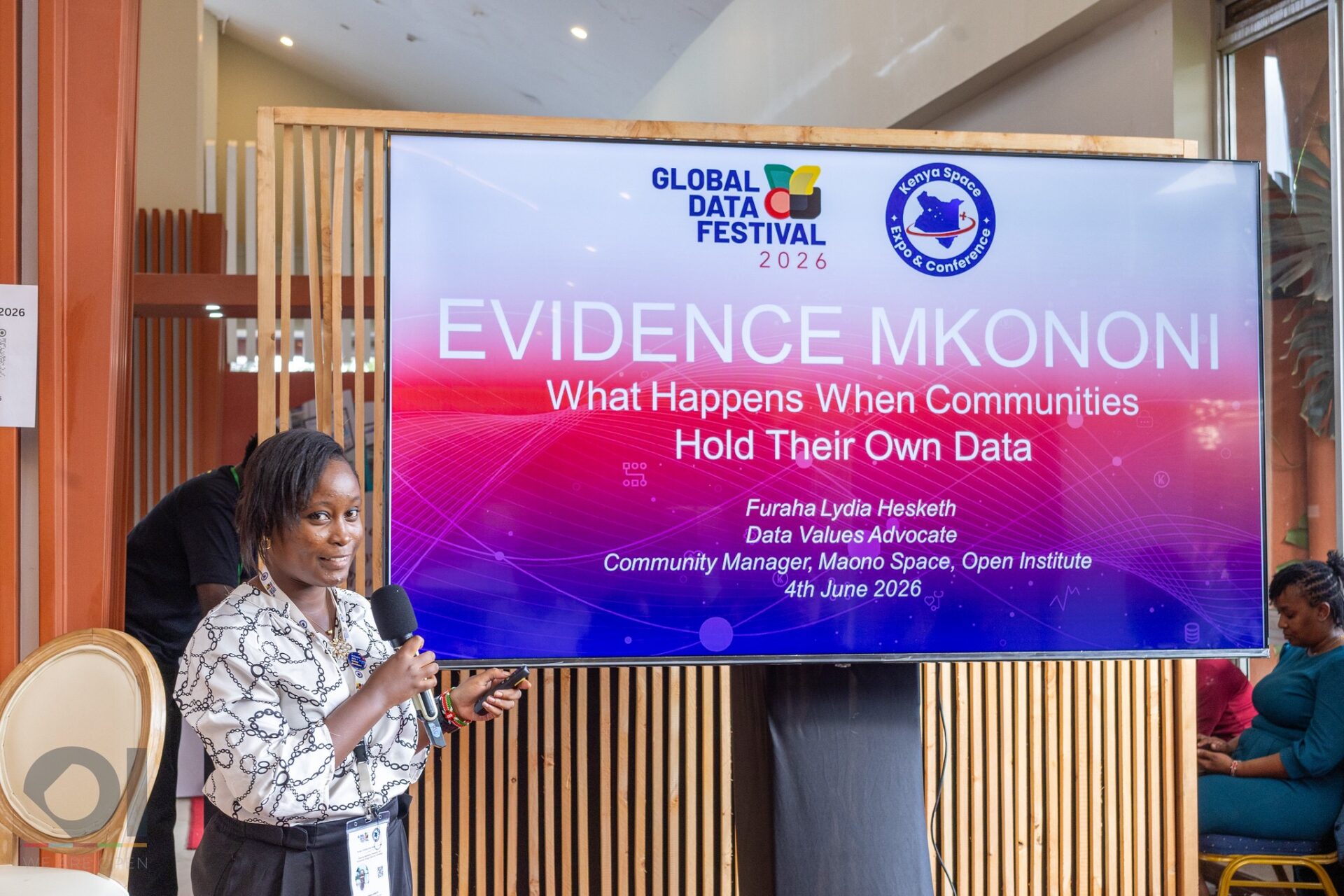
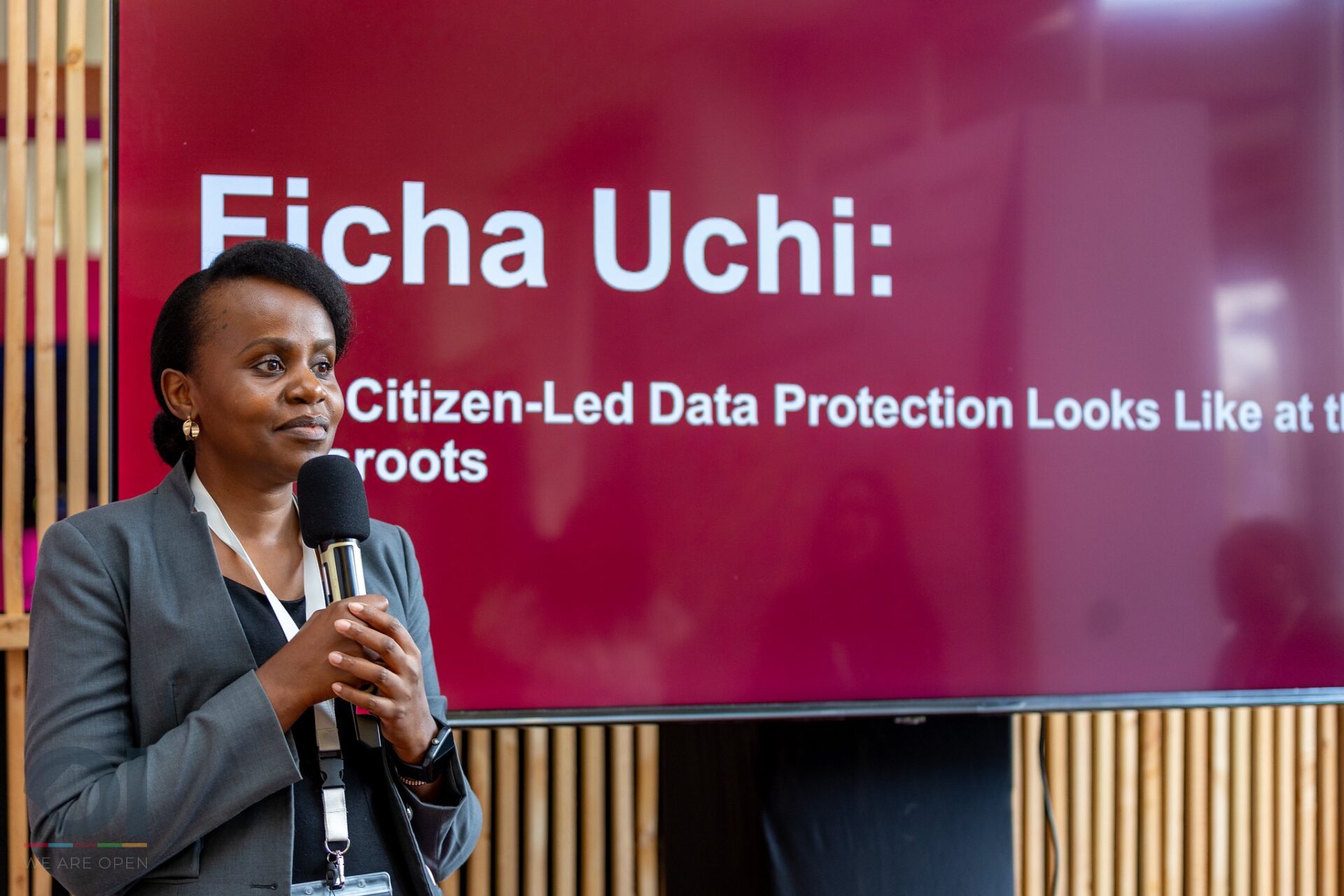
This is where AI Mtaani connects directly with Open Institute’s data governance work and Ficha Uchi. Understanding personal data, consent, privacy and individual rights is essential to responsible AI adoption. People need to know what information they should never share, how to check the privacy practices of the tools they use, when to seek consent and how to respond when personal information is mishandled. Schools and businesses also need clear internal practices that help staff make safe decisions.
Introducing AI without explaining the responsibilities that come with it risks creating new digital vulnerabilities. Responsible AI literacy must combine practical skills with an understanding of privacy, safety, accountability and the rights of the people whose information may be involved.
From lessons to a theory of change
AI Mtaani’s design aligns directly from the three Goalkeepers priorities, applied at community level.
| Goalkeepers priority | AI Mtaani intervention | Outcome we are working toward |
| Invest in people and access | Hands-on, practical training for business owners, teachers and students in their own communities | Participants can use AI tools confidently and critically in their work, teaching and decision-making |
| Build for context | Training anchored in local livelihoods, and real community use cases | AI is applied to problems people actually have, not imported use cases |
| Community control of data | Data protection and AI ethics built into every session, linked to Open Institute’s data governance work | Participants know what not to share, who regulates data, and how to protect themselves and others |
| Work in the languages people speak | Facilitation in the languages and registers communities use, with participant feedback shaping content | A growing evidence base on where tools fall short for Kenyan users, to feed into wider advocacy |
Our targets: to reach 10,000 small business owners, 10,000 students and 1,000 teachers. So far, 289 business owners, 102 students and a growing cohort of teachers have been trained, which is a foundation.
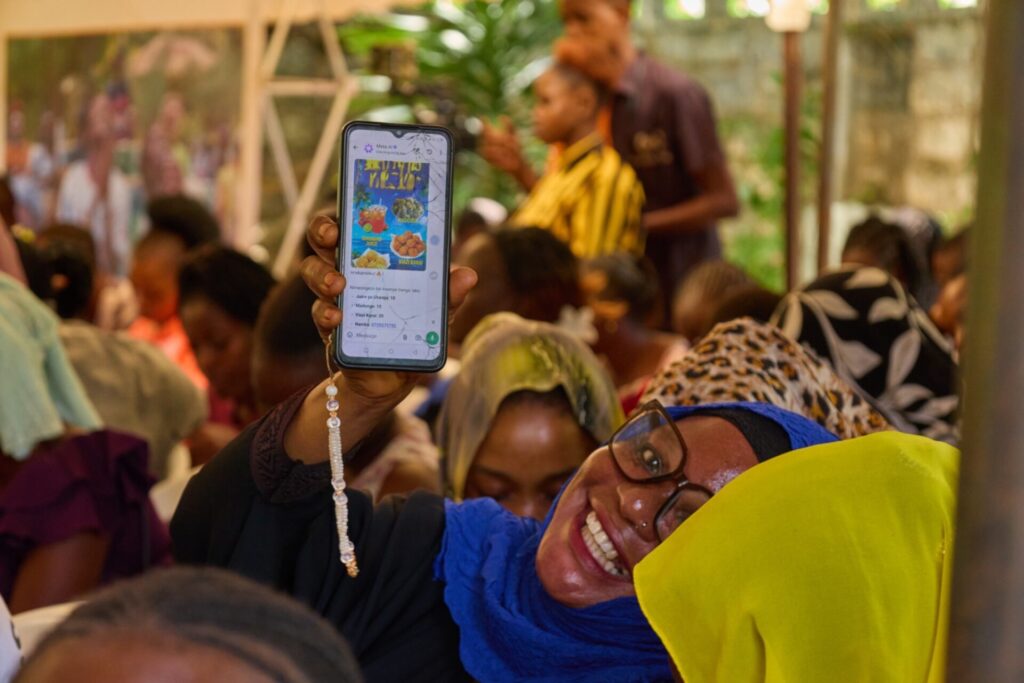
The impact we want: communities that have historically had less access to technology are equipped to shape how AI is used in their own lives, workplaces and schools. For small businesses, that means better productivity and market research and reach. For teachers, it means a trusted assistant that supports their judgment without replacing it. For learners, it means adults who can guide them. For all of them, it means protected data and a voice in the AI conversation.
How partners can help make this matter
The Goalkeepers Report calls on governments, companies and philanthropy to invest in the people side of AI. Here is where that investment can go in AI Mtaani:
- Fund a training cohort: cover venue, facilitators, materials and follow-up support for a defined group of business owners, students or teachers.
- Sponsor expansion to a new community: help AI Mtaani move beyond Kilifi County into other underserved areas, replicating a model that has worked.
- Co-design for scale: work with us to build the partnerships and support systems needed to reach the 10,000 / 10,000 / 1,000 targets sustainably.
We would also value partners who can support follow-up and measurement, so we can report not just who attended but what changed in their work, classrooms and data practices.
The choice we can’t delay
Goalkeepers 2026 asked a global audience to make this matter. Our answer is that it matters most where the stakes are least visible: in a classroom in Malindi, a shop in Kericho, a teacher asking whether AI knows who she is. If those people are equipped, AI becomes a tool for expanding opportunity. If they are not, the gap the report warns about opens on our doorstep. The AI conversation is already happening. Our job is to make sure the grassroots are part of it.