Authors: Catherine Gichobi, Rachel Juma
Within the corridors of a county referral hospital, a health records officer transcribes numbers from a paper register into a digital system. In a remote dispensary, a nurse tallies the day’s immunisations, deciding how to classify a child who received a catch-up dose. At the Ministry of Health, analysts compile reports to forecast drug needs for vertical programs for the coming quarter. These disparate scenes are connected by a single, fragile thread: data. The numbers generated across Kenya’s 10,000+ health facilities form the empirical bedrock upon which the entire health system is built. Without accurate and timely data, counties cannot effectively deploy staff, plan infrastructure or respond to population needs. Yet, an invisible crisis of data quality threatens to undermine all of it.
At the heart of this crisis lies a deceptively simple but consequential distinction: the difference between a ‘true zero’ and a ‘missing value’. A ‘True Zero’ means someone looked and found nothing. For example, 0 cholera cases reported this week; 0 maternal deaths reported this month. This is evidence that surveillance happened. A ‘Missing Value’ means no one knows; the system was simply never told. In District Information Health Software 2(DHIS2), this distinction routinely collapses. Missing values/Blanks are treated as null, excluded from analysis, or silently defaulted. If 50 facilities report 0 cholera cases and 50 more leave the field empty, one may conclude that only 50 facilities are clear of cholera while missing a possible outbreak unfolding in the silent half. The danger isn’t in what the data says, but in what it fails to say and whether anyone downstream knows the difference. The consequences travel quietly but far, where drug forecasts are built on incomplete denominators, leaving some facilities overstocked and others empty. Surveillance dashboards can’t tell silence from safety; hence, they go blind exactly where early warning matters most. The question isn’t just technical; it’s whether the people deciding Kenya’s health policy can trust the numbers in front of them.
The Cost of Poor Data: Consequences for Kenya’s Health
These ripple effects lead to policy and resources flowing to the wrong priorities. Areas burdened by hypertension receive diabetes investments because the true disease burden was never captured. Poor reporting can also lead to staff reductions where services are actually most needed. At the Kenya Medical Supplies Authority (KEMSA), weak forecasts result in expired medicines in warehouses while health facilities experience critical stock-outs.
The same data gaps distort progress toward disease control, creating false confidence or unnecessary alarm. During outbreaks such as cholera, measles, or dengue, delayed and inaccurate data slows response efforts, as seen during the COVID-19 pandemic. Vulnerable populations, including those in informal settlements, arid regions, and persons with disabilities, remain invisible when they are not accurately counted.
Ultimately, poor data is a patient safety issue. Missing records, inaccurate inventories, and incomplete patient information can delay treatment, cause medication errors, and cost lives. The true cost of poor-quality data is measured in wasted resources, misplaced priorities, weakened trust, and preventable deaths.
Getting it right: Lessons from Kilifi and Homa Bay
There are already examples within Kenya that demonstrate what good data governance looks like. Having worked alongside Kilifi and Homa Bay Counties in strengthening health data systems, we have observed improvements in data quality, not by technology, but by a deliberate validation process from the lowest facility level.
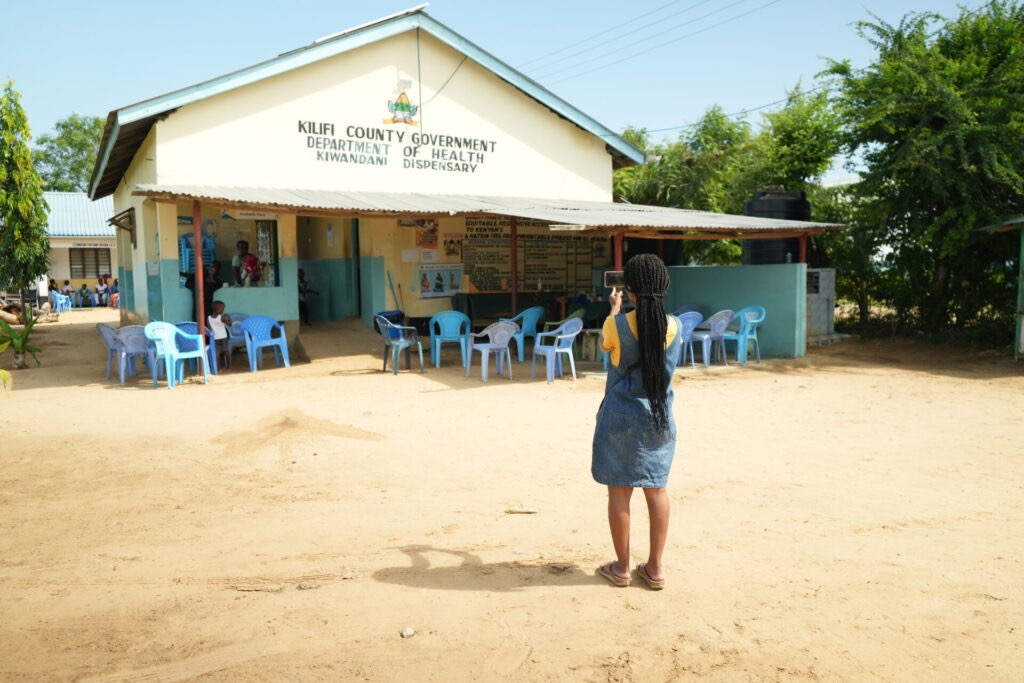
In July 2026, Open Institute held workshops with Kilifi County’s Health Department with facility-level teams from across the county, validated their routine data, examined unusual trends, standardised indicator interpretation and agreed on facility-specific improvement actions before the data informed planning and decision making. During the exercise, we learned that referral numbers were routinely reported, but the source of the data was not consistently captured. As a result, the health manager could not identify which facilities needed support, where the referral network was failing or how to target interventions effectively.

These findings are consistent with evidence that weak referral systems, poor documentation and a lack of feedback mechanisms undermine referral monitoring and accountability. High-quality data is not produced only by software; it depends on routine validation, standardised tools and a culture of data use in the health system. When facilities routinely question their own numbers before reporting, counties can spend less time correcting errors and more time improving health outcomes.
The purpose of data is not to populate dashboards; it is to reduce uncertainty in decision-making.
Similarly, we ran a workshop with Homa Bay County Government data champions from health, blue economy, education and other departments in June 2026, sensitising officials on stronger data handling practices and scoping the county’s data ecosystem. The workshop surfaced exactly the failure mode described above: in the Kenya Health Information System (KHIS) data, true zeros and missing values were often indistinguishable, undermining confidence in what the numbers actually represented.

Open Institute is now supporting the county in developing its statistical strategy plan, which pushes departments, health included, toward data pipelines where entries are correctly input, distinguished and understood. We are also training the data champions to actively confirm and record a checked zero rather than leave a field blank. Once that discipline holds, drug distribution to facilities with high disease incidence, health programme targeting and staffing decisions can be based on what is actually happening on the ground, replacing guesswork with reliable evidence. These are not isolated experiments. They are proof that the shift from unreliable data to trustworthy evidence is a priority for County Health Departments, and progress is underway.
From Numbers to Lives
“No data point exists in isolation from the individual it represents; its collection, use, and protection carry real human consequences.”
In a health centre in Turkana, a number entered into a register represents a child vaccinated against pneumonia, while in a hospital in Mombasa, it represents a mother surviving childbirth.
Therefore, the pursuit of data quality is not a mere technical exercise for health records. It is a core function of ethical health governance and a direct determinant of patient safety. It requires leadership commitment from the national Ministry of Health down to the facility-in-charge. Donors must fund data systems as critically as they fund medicines. Policymakers must demand evidence they can trust.
Kenya has made remarkable strides with the health systems. By treating data quality as the foundation of a resilient, equitable, and effective health system, our county Health Departments can turn information into genuine insight, and insight into impactful action.