By Lydia Furaha | Community Liaison, Maono Space
“We cannot allow the digital divide to harden into an AI divide,” United Nations Secretary-General António Guterres told delegates at the opening of the inaugural Global Dialogue on AI Governance in Geneva on 6 July 2026, held back-to-back with the ITU’s AI for Good Global Summit. Speaking to roughly 1,500 delegates from governments, industry, and civil society, he warned that public investment in AI capacity for developing countries remains “a rounding error” by comparison with investment elsewhere, and that unequal access to AI skills risks turning the digital divide into “a development gap, a security gap, and a sovereignty gap.”
His warning was especially pointed for Africa. By 2050, one in every four people on Earth will be African, and the continent already has the world’s largest youth population, projected to double to more than 830 million by 2050. Its consumer economy is expanding just as quickly: household spending across the continent is projected to reach US$2.5 trillion by 2030, up from roughly $1.1 trillion in 2015, making Africa one of the world’s fastest-growing consumer markets.
If training in how to actually use AI tools bypasses this generation of entrepreneurs, the consequences will not just be technological; they will be economic. In societies where opportunity is already unevenly distributed, unequal access to AI skills risks reinforcing existing exclusion rather than reducing it.
Ensuring AI Tools Work for Everyone
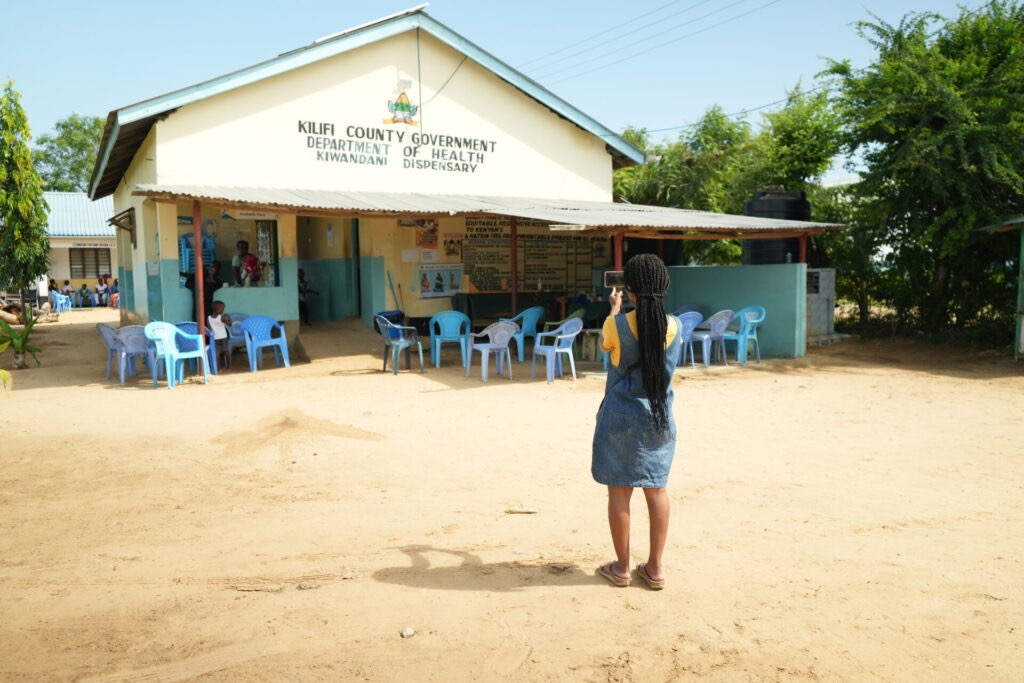
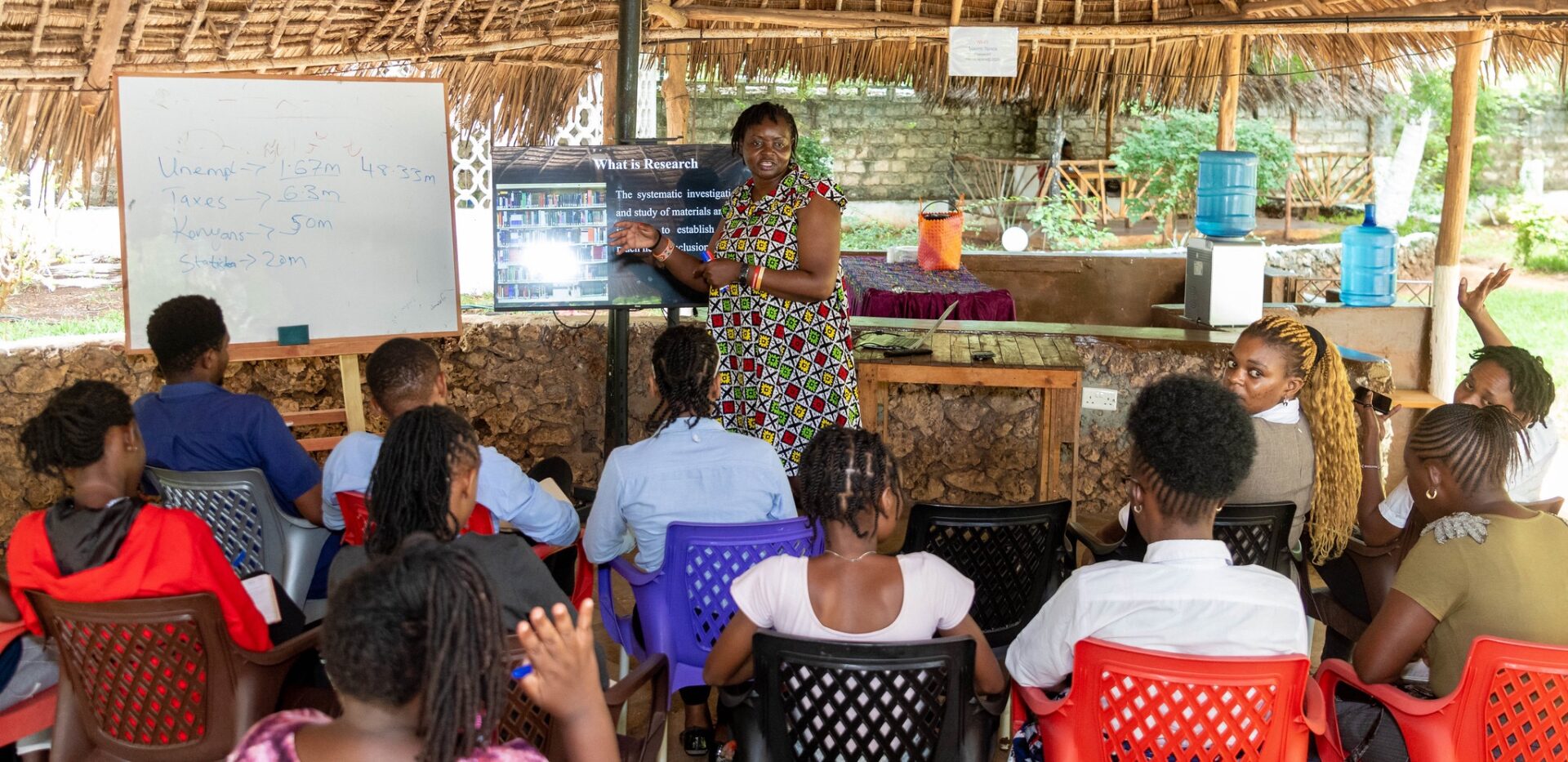
While world leaders in Geneva debated AI governance, safety, and global cooperation at a policy level, a very different and much more hands-on kind of session was happening back home at Maono Space in Malindi on 9 July 2026: a practical training that introduced small business owners to specific AI tools, not AI as an abstract technology, but the concrete apps and prompts they could open on a phone and use that same afternoon.
This was the second edition of AI Mtaani for Biashara, delivered under the AI Mtaani Programme of The Open Institute, in partnership with the Hanns Seidel Foundation, and hosted at Maono Space. The programme seeks to make AI tool literacy accessible at the local level to entrepreneurs and communities, covering both what these tools can do for a small business and where they can go wrong.
A Room Full of Curiosity
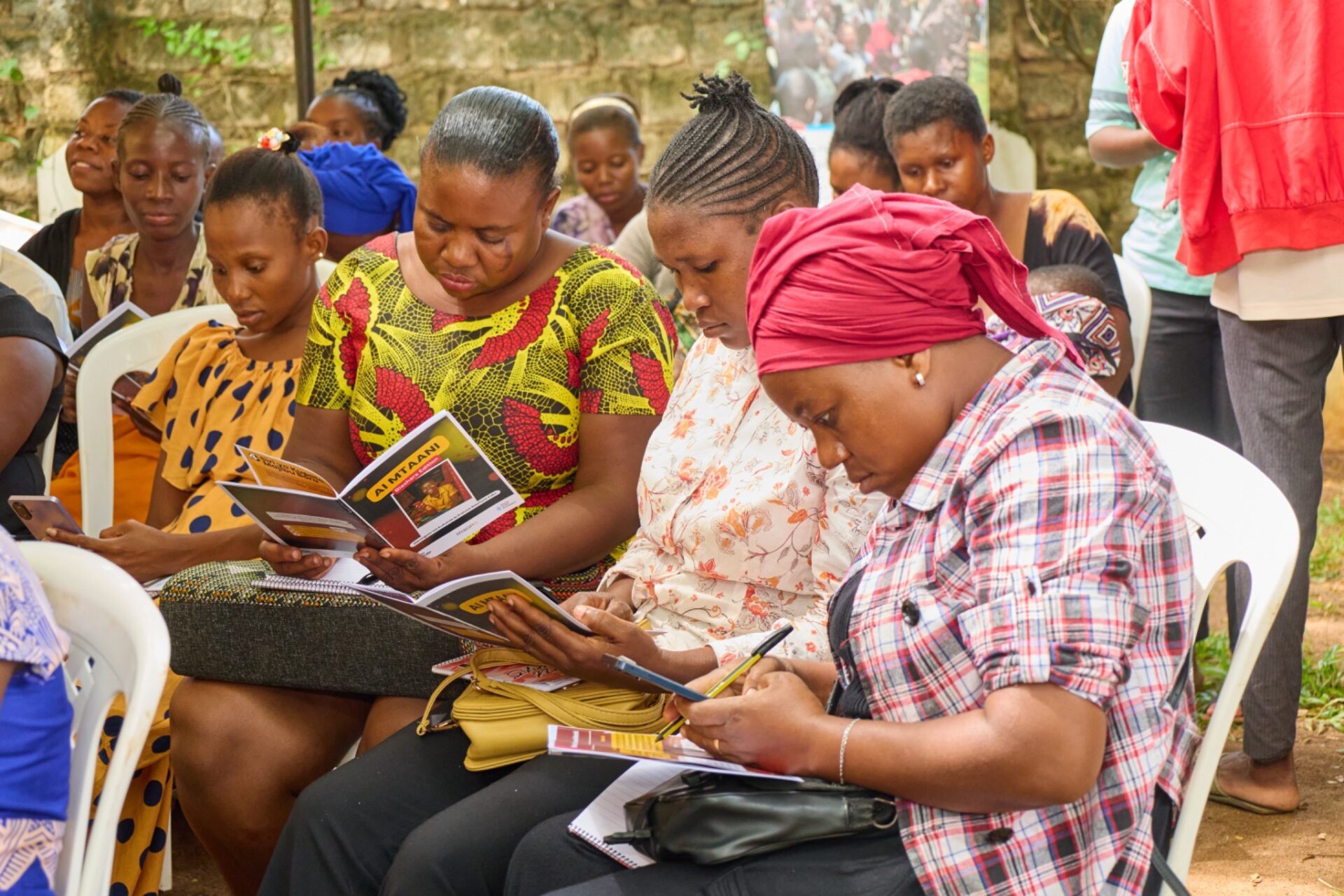
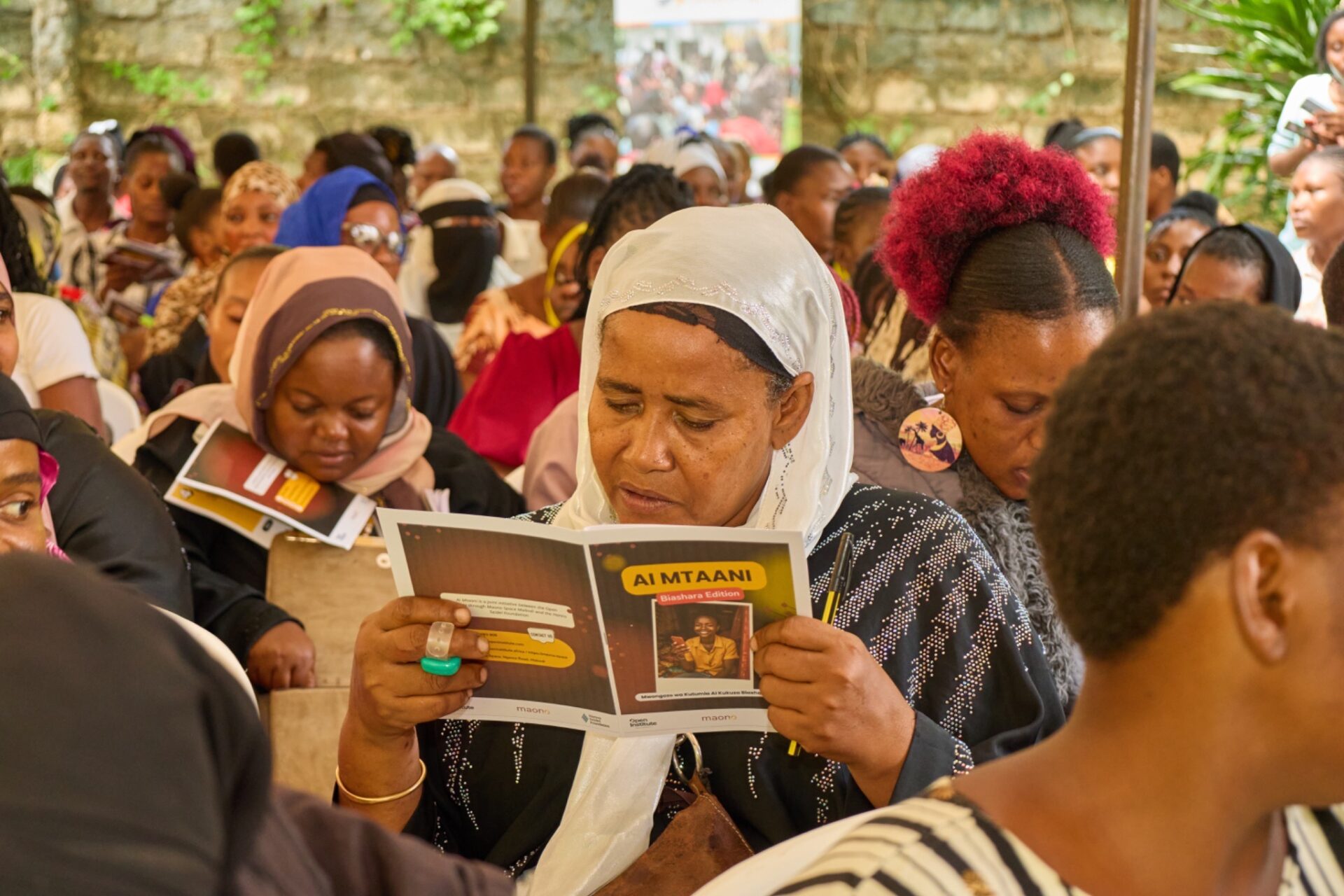
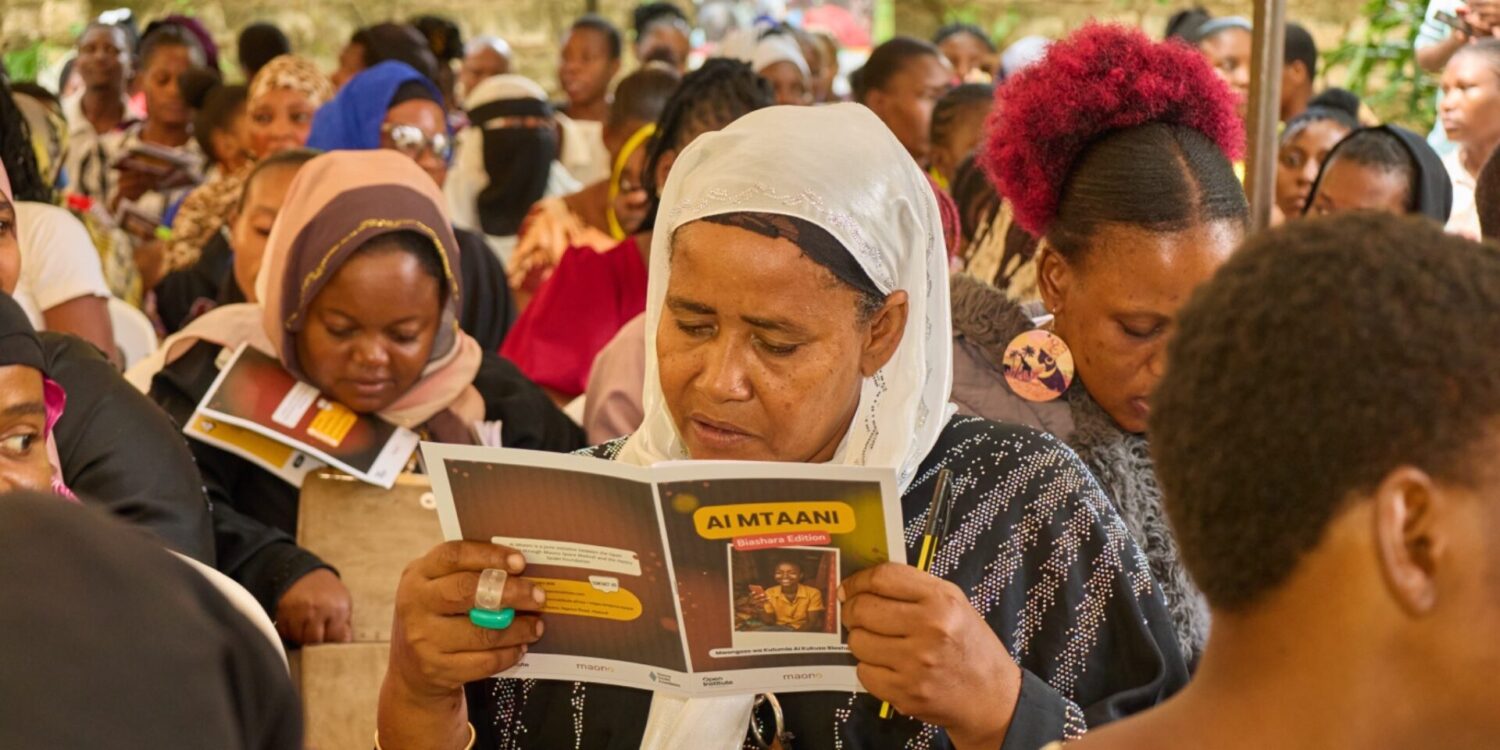
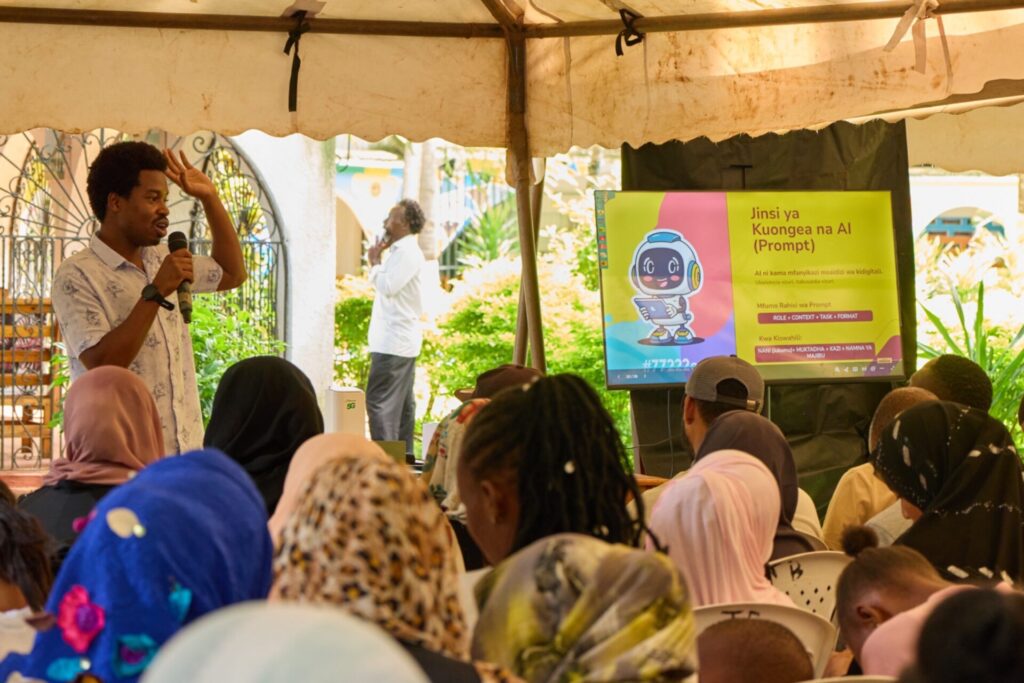
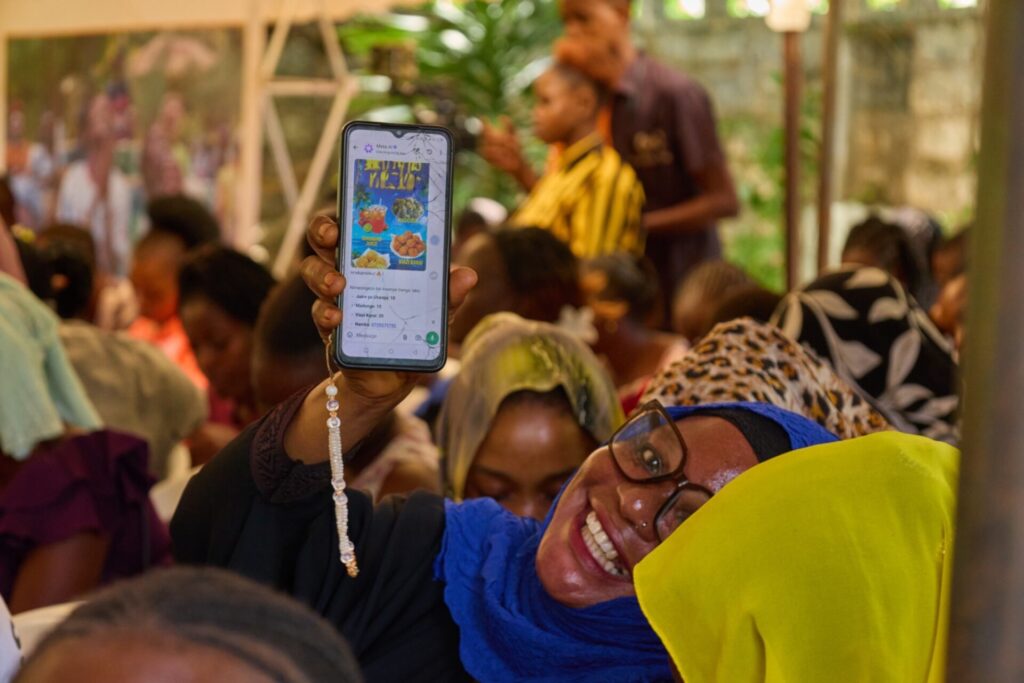
The response to the call for participation was strong: 203 entrepreneurs registered, and 160 attended, 117 women and 43 men. The room reflected the diversity of Malindi’s micro-entrepreneurial economy: salon owners, grocery shop operators, mitumba (second-hand clothing) traders, phone repair technicians, cyber café operators, and shop owners.
These micro-enterprises are the backbone of the local economy. According to Kenya’s 2026 Economic Survey, the informal sector accounts for roughly 83.8% of total employment in Kenya, about 18.1 million people. At the county level, Kilifi’s own economic data show that trade and services activities: wholesale and retail, transport, real estate, and other services combined, make up a substantial share of the county’s Gross County Product, alongside agriculture, forestry and fishing, which KNBS identifies as Kilifi’s single largest economic activity. Either way, the small business owners in the room represented the retail and trade backbone that keeps Malindi’s local economy moving.
For many participants, this was their first formal opportunity to learn about specific AI tools, yet the pre-training survey revealed many had already been quietly using them: some had used WhatsApp’s AI features to polish messages to customers, a few had used ChatGPT for brainstorming, and some had generated digital posters for their businesses. Others came simply out of curiosity. What united them was a practical question: could these tools help them market, communicate, or save time and not whether AI would transform the world.
Making AI Tools Make Sense
Teaching a room of small business owners how to use AI tools is rarely about algorithms. It is about connecting a new tool to a task the person already does every day, writing a customer reply, designing a poster, or taking stock of inventory.
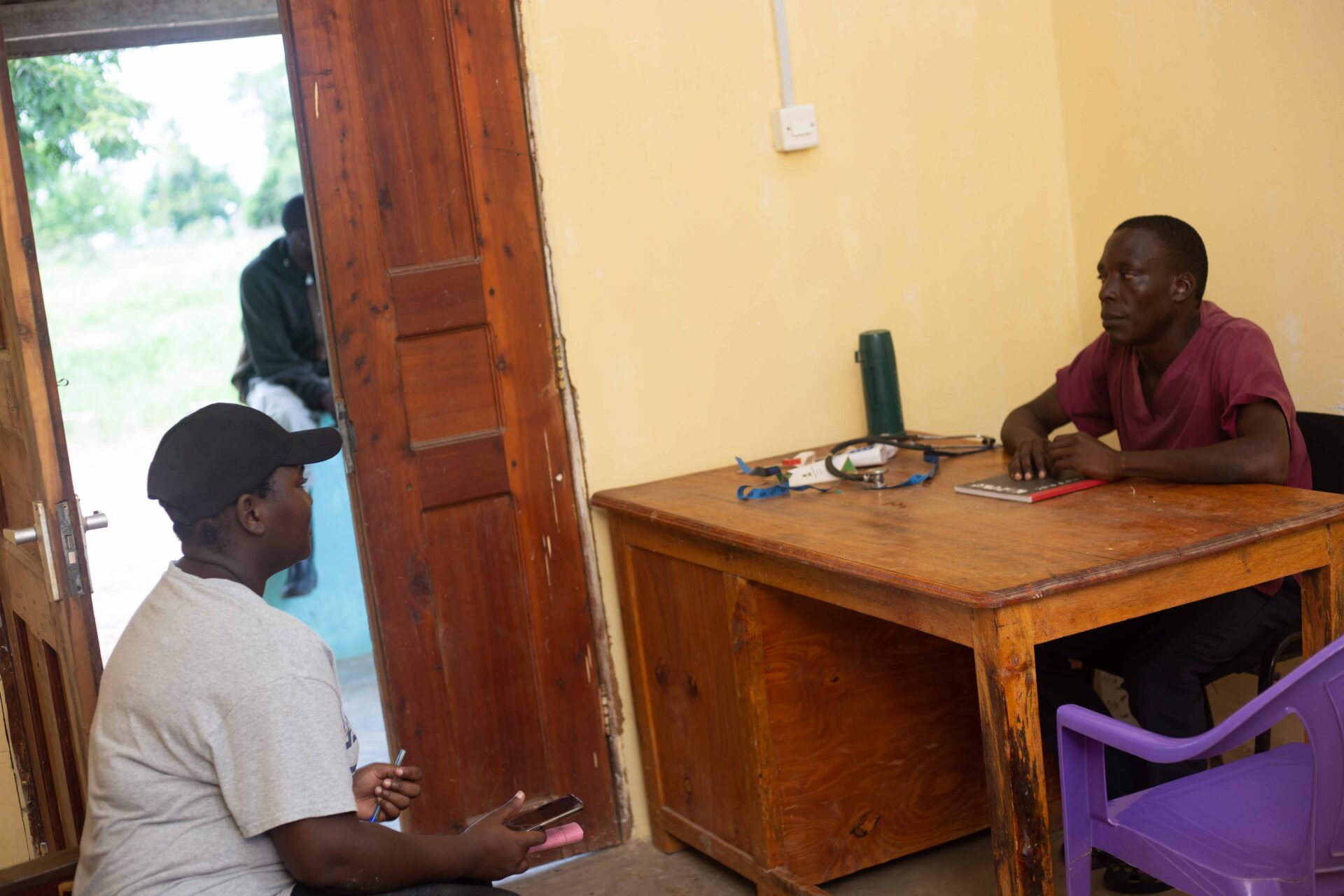
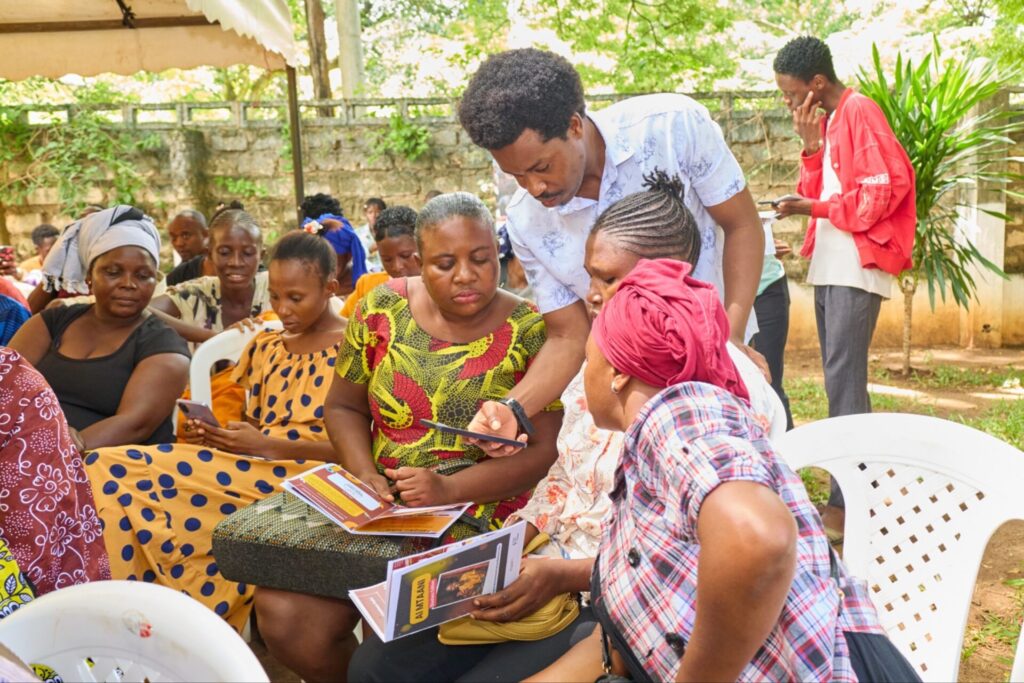
One moment captured what that kind of inclusion actually requires in practice. Several participants arrived without a smartphone of their own or with devices that had lost power overnight due to a lack of reliable electricity at home. Rather than sitting out the exercises, they paired up with fellow entrepreneurs at their table and worked through the prompts together, turning a device shortage into peer learning, with participants teaching each other as much as any facilitator did. It was a reminder that introducing a new tool sometimes starts with making room for people who don’t arrive with the same equipment, rather than assuming everyone does.
Throughout the day, participants practised specific, bounded tasks with specific tools: drafting customer messages, generating promotional posters, organising inventory lists, and writing clearer prompts to get better results. For many, it was the first time they had used an AI tool to solve a real business problem, and the questions in the room stayed grounded in that day-to-day reality — “Can AI help me write messages to customers?” “Can it help me advertise my business?” “Can it save me time?”
It’s worth being honest about the limits of a single afternoon like this. One workshop builds awareness and a first set of working prompts, not mastery, and it does not solve the underlying access problems: device ownership, electricity, and data costs that several participants ran into on the day. What it does is lower the barrier to a first try, and pair people who lack equipment with those who have it, which is where sustained practice has to start.
Alongside the practical exercises, the training also confronted participants with the risks of these same tools. Deepfakes and AI-generated misinformation are already circulating widely online, often shared before anyone checks where they came from. Facilitators showed participants an AI-manipulated video as a worked example; walking through the visual and audio tells that mark a video as fabricated, a concrete, memorable lesson in verifying before sharing.
That same caution extended to how participants use these tools themselves. Alongside what the tools could do, they also learned what they should never feed into them: passwords, identification documents, financial details, or other sensitive personal information. Building AI tool literacy, in other words, also means building safe digital habits around those tools, as echoed by our ongoing data protection campaign.
Capacity Building Begins Locally
What happened at Maono Space on 9 July 2026 was a direct, small-scale answer to what the UN Secretary-General called for in Geneva: AI capacity building that reaches communities in practical terms, one tool and one prompt at a time, rather than as a policy abstraction.
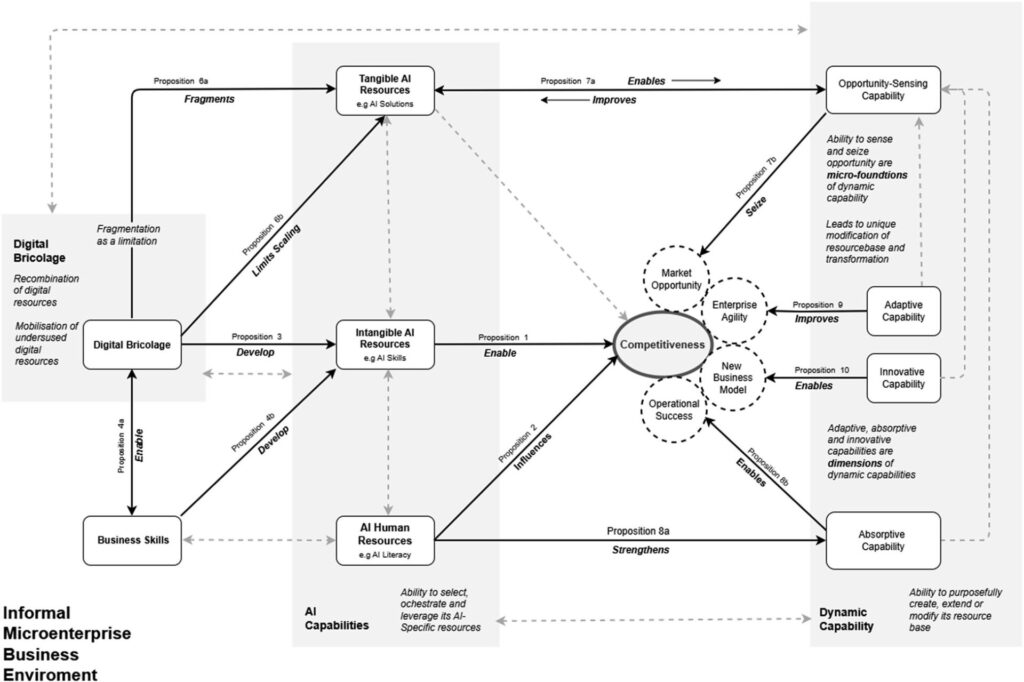
Left to market forces alone, new technologies tend to widen gaps rather than close them. Larger, better-resourced businesses adopt AI tools quickly to cut costs and capture market share, while informal traders are left to catch up on their own or get squeezed out. A conceptual framework published in the International Journal of Entrepreneurial Behaviour & Research makes a similar case: it argues, drawing on illustrative case examples rather than large-scale empirical data, that AI can act as either a leveller or a stratifier for informal microenterprises depending on whether traders have the capabilities to put simple, mobile-first AI tools: voice translation, visual marketing generators, basic digital record-keeping — to use. Localised, hands-on training of the kind delivered at Maono Space is one of the more direct ways to move a trader from the stratified side of that divide toward the levelling side.
Technology itself does not level the playing field; the training and community environment in which it is introduced does. That is why building AI tool literacy at the local level matters as much as governing it globally. At Open Institute, we put this into practice through Maono Space, making specific AI tools understandable, accessible, and relevant to everyday business tasks, so that grassroots communities are shaping how these tools work for them rather than having that decided elsewhere.
Why the Room Must Include Women
Of the 160 entrepreneurs who attended, 117: about 73% were women. That figure reflects the reality of who makes up a large share of the informal business community.
Women already make up a substantial share of Kenya’s and Africa’s informal trading economy: the salons, grocery stalls, and mitumba stands that filled the room at Maono Space. This means they carry a proportionate share of the exposure to whichever way AI reshapes small trade. While the effects of these tools are increasingly being felt by everyone, access to the skills needed to use them is not equally distributed.
UNESCO’s global research on digital skills finds that men are roughly four times more likely than women to hold advanced digital skills, and that the gap widens further at the frontier: across G20 countries, only about 7% of ICT patents are generated by women, a figure closer to 2% globally, and technical hiring pools in AI and data science are frequently under 1% female. UNESCO’s later work on AI and gender adds that this skills gap is compounded, not offset, by gender imbalance among the people building AI systems in the first place, so tools built with a narrower set of assumptions reach a training pipeline that is itself narrower for women.
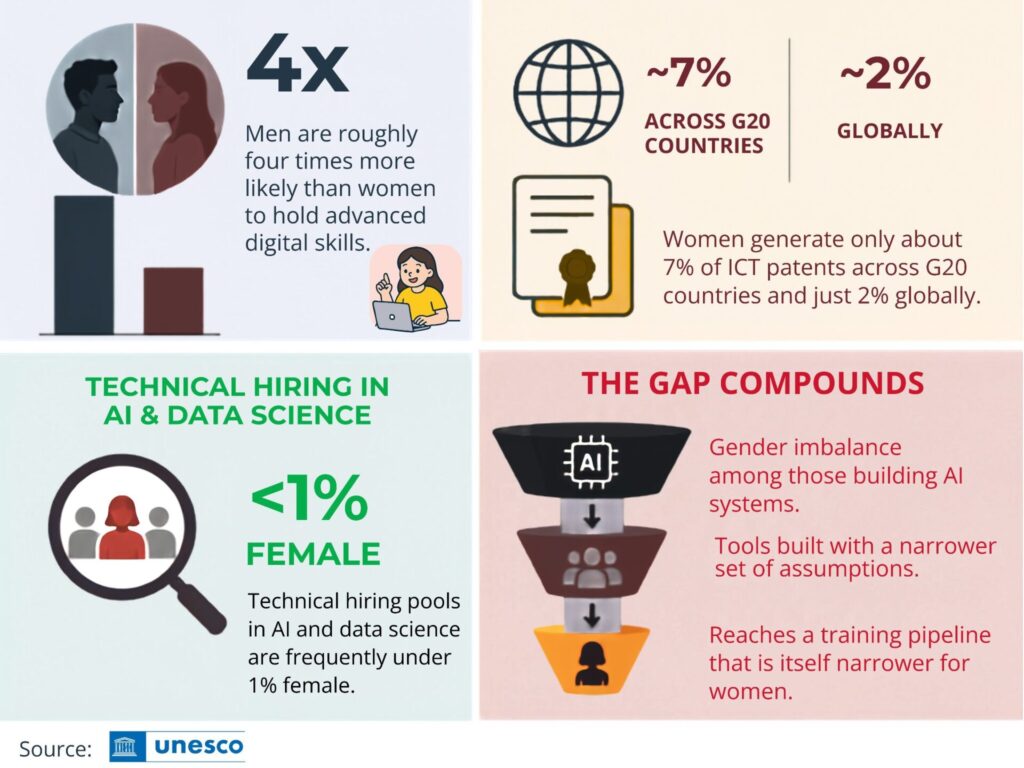
That combination, high economic exposure, lower baseline access to the skills needed to benefit, is precisely the formal case for making sure women are not just present but well represented in local AI tool training. If a skills gap of that scale is left to close on its own, it will not close. It will compound existing inequalities, because the entrepreneurs least likely to access formal digital skills training are often the same women running the informal micro-enterprises most exposed to AI-driven change.
Deliberately building sessions, timing, and peer-learning structures that work for women traders is not a diversity add-on but essential, if AI capacity building is to close existing gaps at the local level instead of reproducing them.
The 73% turnout of women at Maono Space suggests the demand and the willingness are already there. The open question is whether AI literacy programmes across the region are designed deliberately enough to meet it, or default to formats that quietly favour whoever already has the most digital confidence walking in the door.
A Direct Answer, at a Small Scale
Global forums set the agenda and shape high-level governance. But that vision only becomes real when it reaches a salon owner, a mitumba trader, or a cyber café operator directly and teaches them specific tools and specific safe habits, rather than a general enthusiasm about AI. Achieving this requires sustained investment, local partnerships, and organisations that can deliver practical AI training where people live and work. We welcome organisations, institutions, funders, and ecosystem partners who share this vision to collaborate with us in expanding practical AI tool training across communities.