By The Open Institute | 19 May 2026
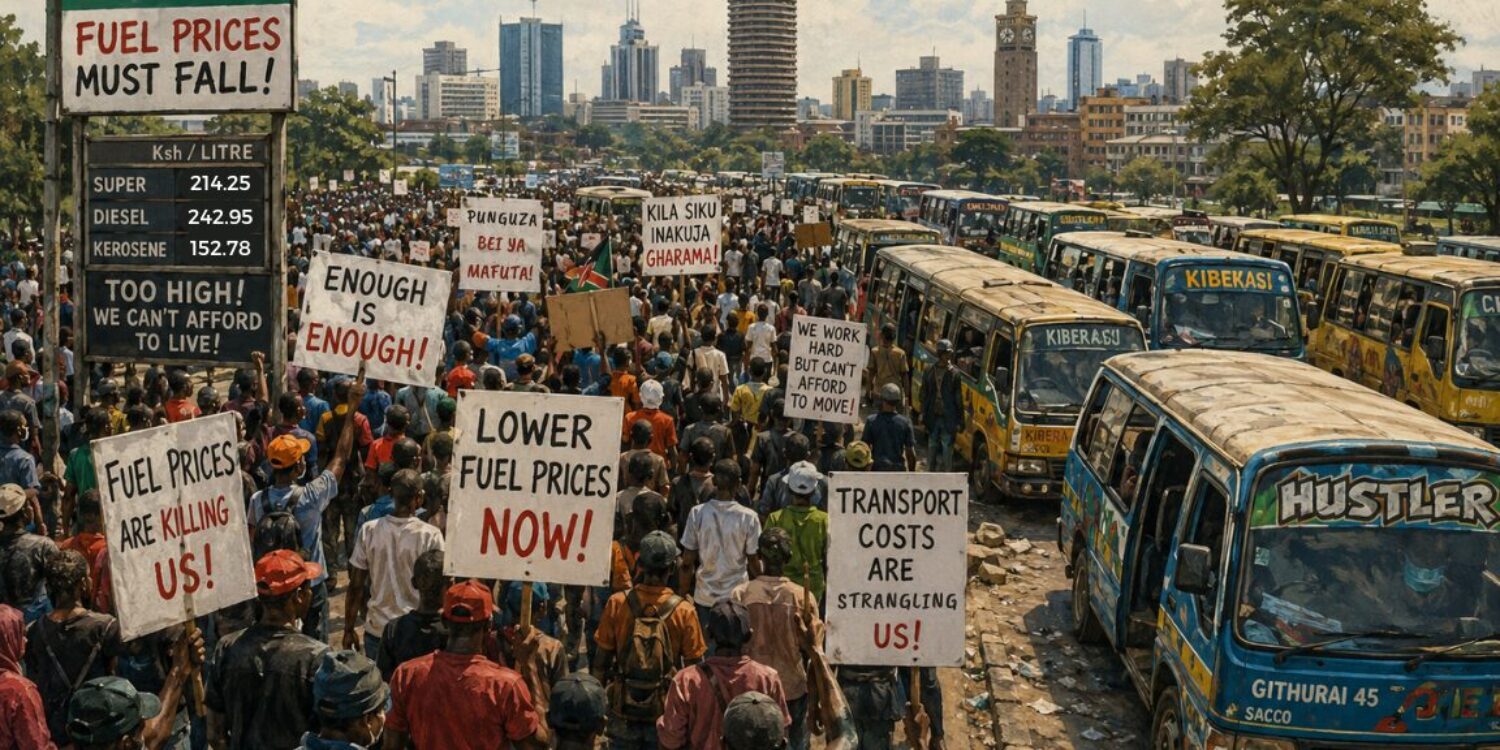
Kenyans woke up this week to near-empty roads and stranded commuters. On Monday, 18 May 2026, a nationwide transport strike brought cities to a standstill. Four people were killedand more than 30 injured as protests erupted across several towns. A further 348 people were arrested. The immediate trigger was fuel prices, but the deeper story is about something that has been building for much longer: the growing distance between the decisions governments make and the citizens those decisions affect.
At the Open Institute, we work on the conditions that make good governance possible — transparency, accountability, and active citizen engagement. And what is unfolding in Kenya right now is, at its heart, a story about all three.
What Is Actually Driving the Prices?
To engage with this crisis honestly, citizens need facts. Here they are.
Kenya imports 100% of its refined petroleum products. That makes domestic pump prices a direct function of three variables: global oil market prices, the Kenya shilling–US dollar exchange rate, and taxes and levies.
(Note: Brent crude— the international benchmark used to set the price of oil on global markets, priced in US dollars — is the reference point for Kenya’s import costs. Because Kenya pays for its fuel in dollars, any spike in Brent crude prices translates almost directly into higher costs at the pump before a single local tax or levy is added.)
The Iran war has disrupted supplies through the Strait of Hormuz — one of the world’s most critical oil transit chokepoints — causing Brent crude to surge above $100 per barrel, spiking tanker insurance premiums, and lengthening alternative shipping routes. All of these costs flow directly into Kenya’s import bill.
The result: the average landed cost of diesel surged by over 68% between February and March 2026 alone. In the May 15–June 14 pricing cycle, diesel hit a historic high of KSh 242.92 per litre in Nairobi, up from KSh 196.63 the previous month.
These are real global pressures, with global oil market trends, taxes and exchange rate fluctuations influencing high fuel costs across East Africa.
But global pressures do not fully explain the governance gap.
The Fuel Crisis Across Africa
Kenya is far from alone in navigating this crisis. Across the continent, governments are grappling with the same global shock. Every African country that imports refined fuel is feeling the pressure. Most countries in sub-Saharan Africa have allowed partial or full increases in domestic fuel prices, reflecting growing awareness of the financial costs of untargeted subsidies. But how governments have communicated and managed those increases varies enormously, and that variation holds important lessons.
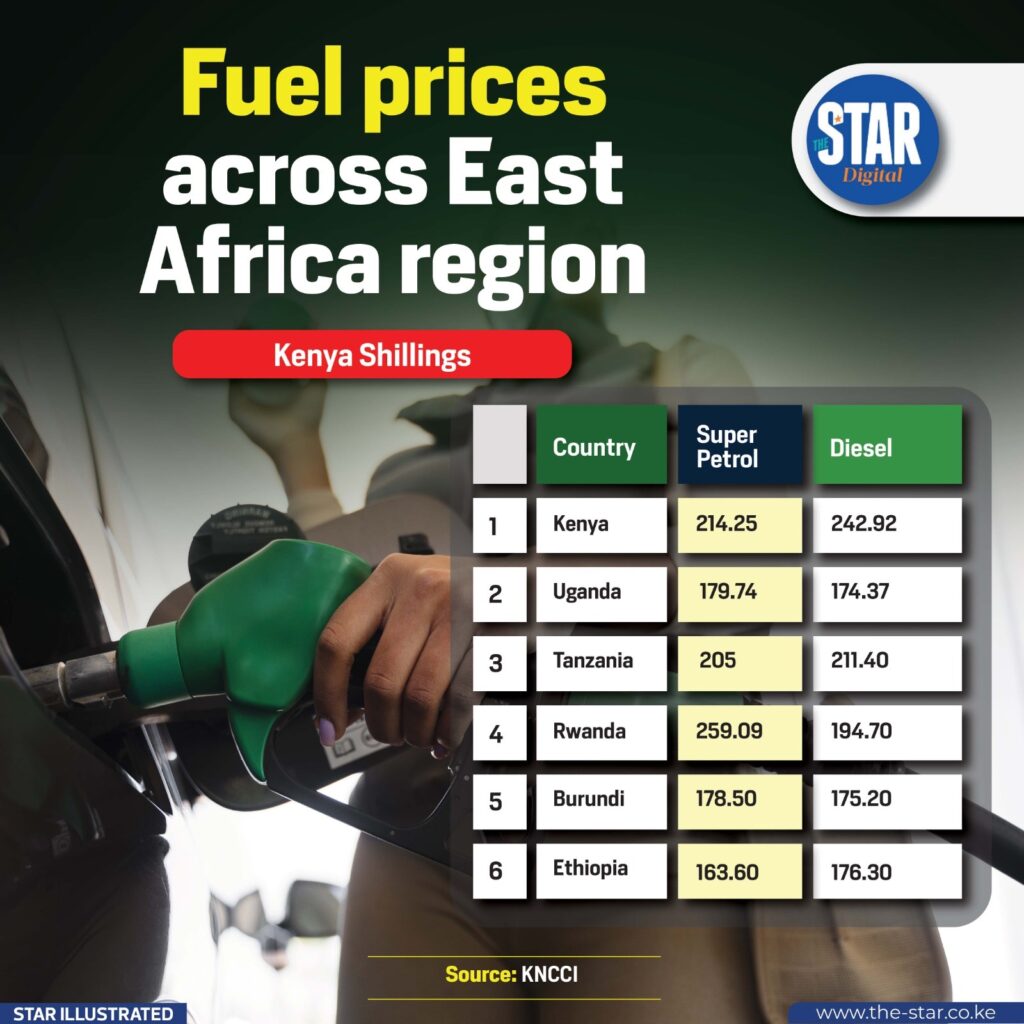
Across East Africa, fuel prices continue to fluctuate. Rwanda currently has the highest price per litre on petrol in the region, retailing at Sh259.09, while Kenya recorded the highest price per litre on diesel. Tanzania saw retail fuel costs rise more than 30 percent overnight to record levels, but President Samia Suluhu Hassan responded with a visible public gesture: ordering carpooling for senior government officials, including shared bus rides, beginning with her own office. This was a symbolic act of shared burden that kept public trust intact. Ethiopia moved proactively, tightening fuel distribution systems, prioritising essential sectors, and publicly framing the response as active crisis management rather than reactive price adjustment. Ethiopia also issued direct fuel subsidies of roughly $0.63 per litre for diesel to cushion households. The DRC, despite limited fiscal resources, maintained some of Africa’s lowest fuel prices through transparent government-negotiated agreements with oil companies, paying out to cushion consumers and publishing the figures.
None of these approaches is without trade-offs. Subsidies are expensive and can be regressive. Rationing is disruptive. But what these examples share is something simpler and less costly: proactive, clear communication with citizens about what is happening, why, and what government is doing in response.
Meanwhile, a structural opportunity is emerging on the continent. Nigeria’s Dangote refinery — which can single-handedly meet all of Nigeria’s demand for refined oil — has been exporting fuel to Côte d’Ivoire, Cameroon, Tanzania, Ghana, and Togo, with South Africa and Kenya also reportedly expressing interest. African-sourced refined fuel, reducing dependence on Middle East supply chains, is no longer a distant aspiration. It is happening now. The question for East African governments, including Kenya, is whether procurement decisions that could reduce long-term import vulnerability are being made transparently and with public accountability.
From Blame to Blueprint: What Needs to Change
The transparency question is not about assigning fault. It is about building systems that work better for everyone — citizens, government, and the economy — the next time a global shock hits. And there will be a next time.
Kenya’s fuel pricing formula under the Petroleum (Pricing) Regulations, 2022 is more structured than many in the region. It accounts for landed costs, taxes and levies, foreign exchange assumptions, profit margins, and distribution costs. The building blocks of a transparent system exist. What is missing is the habit of communicating it proactively, in plain language, before crises force the conversation.
Consumer groups and legislators have long argued that the monthly review cycle responds faster to price increases than to declines, and a proposal is already on the table to introduce a 14-day emergency review mechanism during periods of volatility. That is exactly the kind of structural reform that benefits everyone.
The fuel price is not simply a product of global oil markets. For every litre of petrol purchased in Kenya, the total tax and levy burden amounts to KSh 72.38 — roughly 36.6% of the pump price, covering excise duty, VAT, a Road Maintenance Levy, Railway Development Levy, Anti-Adulteration Levy, and several others. Each of these levies was introduced for a legitimate public purpose. However, when global shocks compress household incomes and push fuel to historic highs, the cumulative burden of a tax structure built up over years becomes acutely visible, and acutely felt.
This is precisely the kind of structural question that benefits from open, evidence-based public dialogue. Kenya stands to benefit from a standing conversation between government and citizens about what the tax structure is for, what it is achieving, and whether it is working in the current reality. Several legislators have already begun that conversation. Citizens deserve to be part of it too.
When the Feedback Loop Breaks — and How to Fix It
When transport operators say the government has “not been listening,” they are describing one side of a broken feedback loop. But feedback loops have two sides.
For governments to be genuinely responsive, they need more than the political will to listen; they need structured, consistent mechanisms through which citizens can actually be heard.
On the evening of 18 May, following nationwide unrest, the government convened a six-hour consultative meeting with public transport operators. By the following morning, EPRA had revised its prices: diesel was reduced by KSh 10.06 per litre, and a few vehicles began returning to the roads. This matters. It demonstrates that when citizens organise, articulate their concerns, and engage through legitimate channels — even under pressure — duty-bearers can and do respond.
But the response also illustrates the limits of reactive governance. The same revision that reduced diesel simultaneously raised kerosene by KSh 38.60 per litre, a fuel relied upon predominantly by low-income households for cooking and lighting. Transport operators, for their part, rejected the partial reduction as insufficient, having demanded a full reversal of the previous 46-shilling hike. The engagement happened, but it happened under duress, without adequate prior consultation, and produced outcomes that shifted rather than solved the burden on ordinary Kenyans.
Reactive vs. Responsive: A Critical Distinction
This is the difference between reactive government and responsive government. A reactive government acts when a crisis forces its hand. A responsive government builds the systems, habits, and culture that make crises less likely because citizens become a part of the conversation from the beginning. A responsive government, as scholars of public administration have long argued 1, anticipates citizen needs through embedded engagement systems, built into the everyday rhythm of governance rather than activated by crisis.
What True Public Participation Requires
Public participation in Kenya, as in many African countries, often exists in form but not in function. Decades of research on public participation tell us that there is a significant difference between being informed of a decision and being genuinely involved in making it. Kenya’s fuel pricing process sits at the lower rungs of what meaningful participation looks like2. The six-hour consultation that followed Monday’s unrest was a step forward. But consultation after a crisis is not the same as participation built into the system.
Though the appropriate processes are followed, with notices gazetted and hearings held, these processes frequently assume a level of access to information that excludes the very citizens most affected by the decisions being made. A matatu driver in Kitale and a market trader in Gikomba are unlikely to submit formal comments to a regulatory review. That does not mean they have nothing to say. It means the system has not been designed with them in mind.
Whose Responsibility Is It?
This is not only a government failure. Civil society, media, and organisations like ours share responsibility for making participation more accessible by translating technical processes into plain language, creating tools that lower the barriers to engagement, and ensuring that citizen voices reach decision-makers in forms they can act on.
When citizens understand why a decision was made — what options were considered, what constraints existed, what the government chose and why — they are far better placed to engage constructively, to hold decision-makers accountable to their own stated reasoning, and to push for better options over time.
Building the Infrastructure for Trust
What Kenya needs is the infrastructure that makes two things possible at the same time: pricing decisions communicated clearly before they take effect; public participation processes designed for the people most affected, and feedback mechanisms that are open at all times.
What Is Worth Building On
The Open Institute calls on all duty-bearers to treat this moment as a turning point. But we are not speaking from the outside. We are speaking from experience.
Through our Open County Programme, we have worked with county governments to build ecosystems around open data — helping governments become more transparent. When governments open their data and create the systems to engage with citizens around it, trust grows. Decisions improve. And when the next crisis hits, there is already a foundation of communication and accountability to build on.
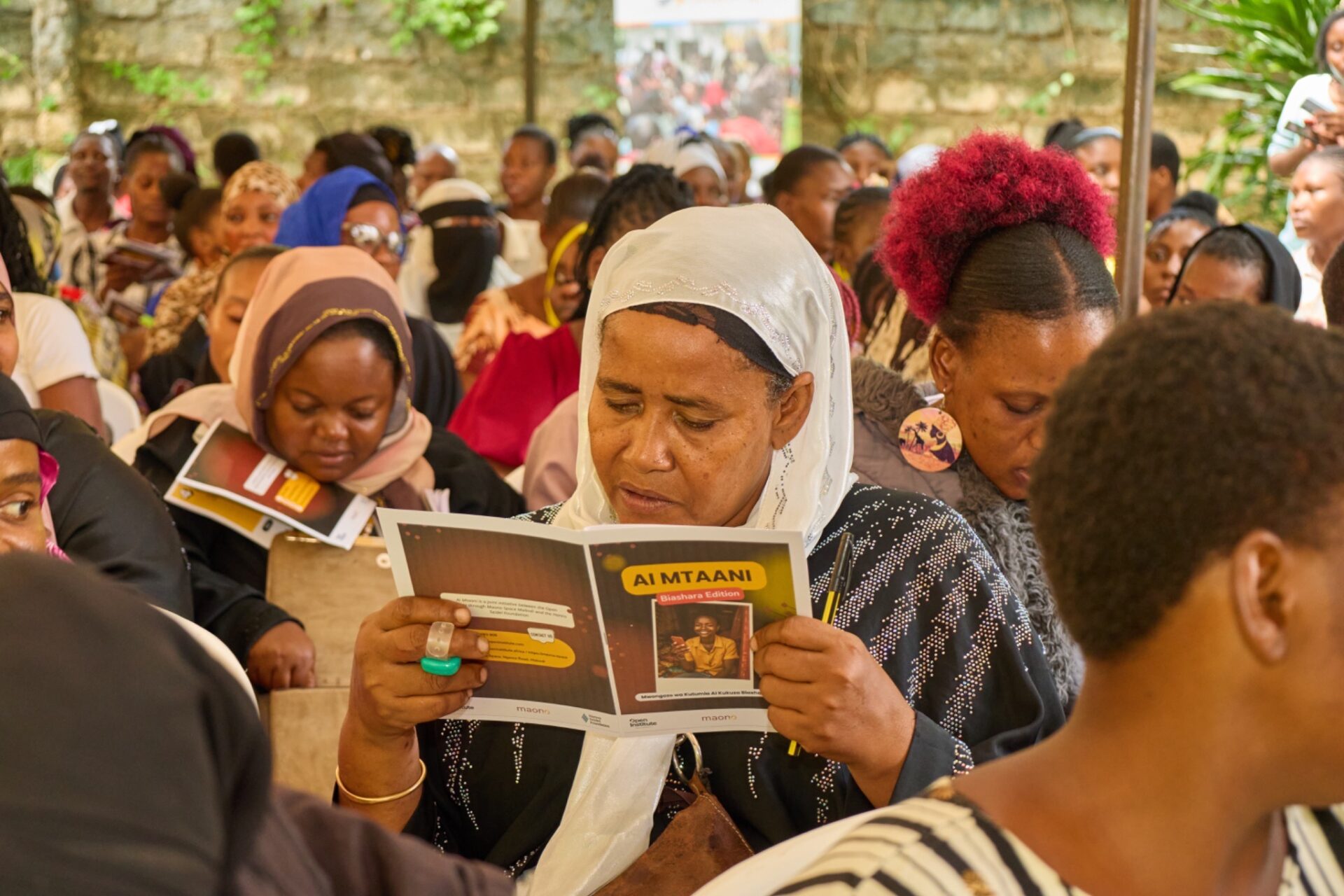
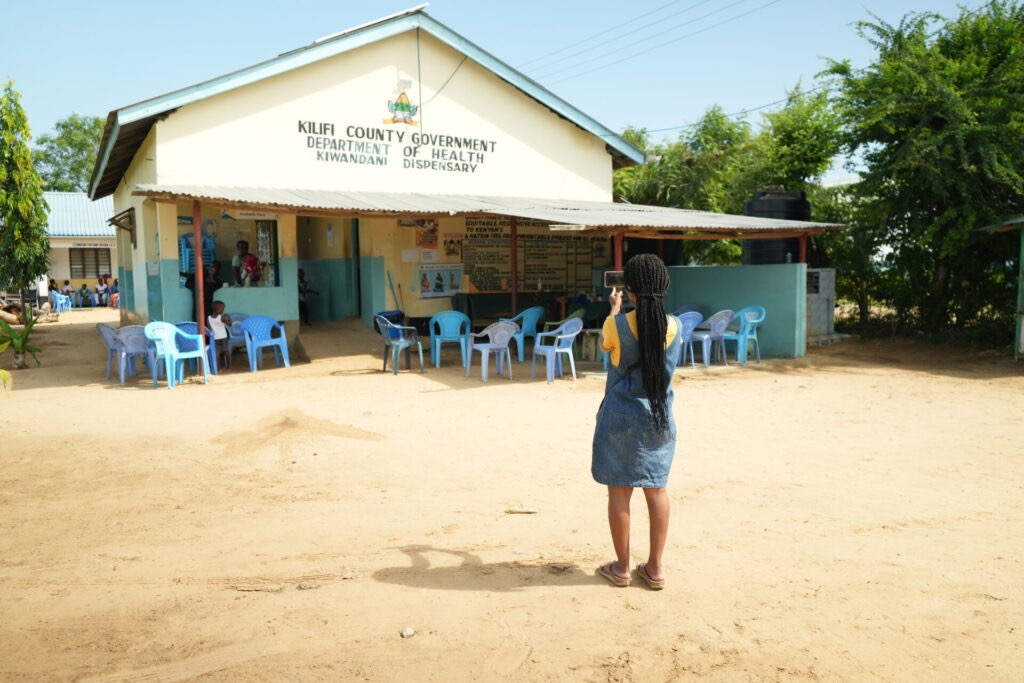
Through our Maono Space programme, we have seen what becomes possible when structured, accessible spaces are created for citizens and governments to engage. In Kilifi County, citizens used data they collected themselves to monitor development projects and present their priorities directly to the Governor through evidence. That is active citizenship in practice. It works because the space was designed to be accessible: not a formal hearing room, not a gazette notice, but a process built around the people it was meant to serve.
We have also seen, through Maono Space’s work in county budget and development processes, that when citizens are genuinely mobilised and given accessible entry points into formal participation processes, turnout is high. People want to engage. They want to be heard. The barrier is rarely willingness — it is access.

Residents of Kilifi engaging with the county government during a public participation forum on budget estimates at Maono Space.
This week’s events have shown that citizen voices, when organised and clearly expressed, can move policy. What this crisis is ultimately calling for is a different relationship between governments and citizens — one built on proactive information sharing, participation processes designed for ordinary people, and feedback mechanisms that exist before the crisis, not because of it.
Open societies are built through habits, systems, and institutions that treat transparency not as an afterthought, but as infrastructure. That is the work. And it is already underway.
- Responsive Government Theory: Peters, B.G. and Pierre, J. (2000). Governance, Politics and the State. Macmillan. ↩︎
- Arnstein’s Ladder of Citizen participation: Arnstein, S.R. (1969). A Ladder of Citizen Participation. Journal of the American Institute of Planners, 35(4), pp.216–224. https://www.tandfonline.com/doi/abs/10.1080/01944366908977225 ↩︎