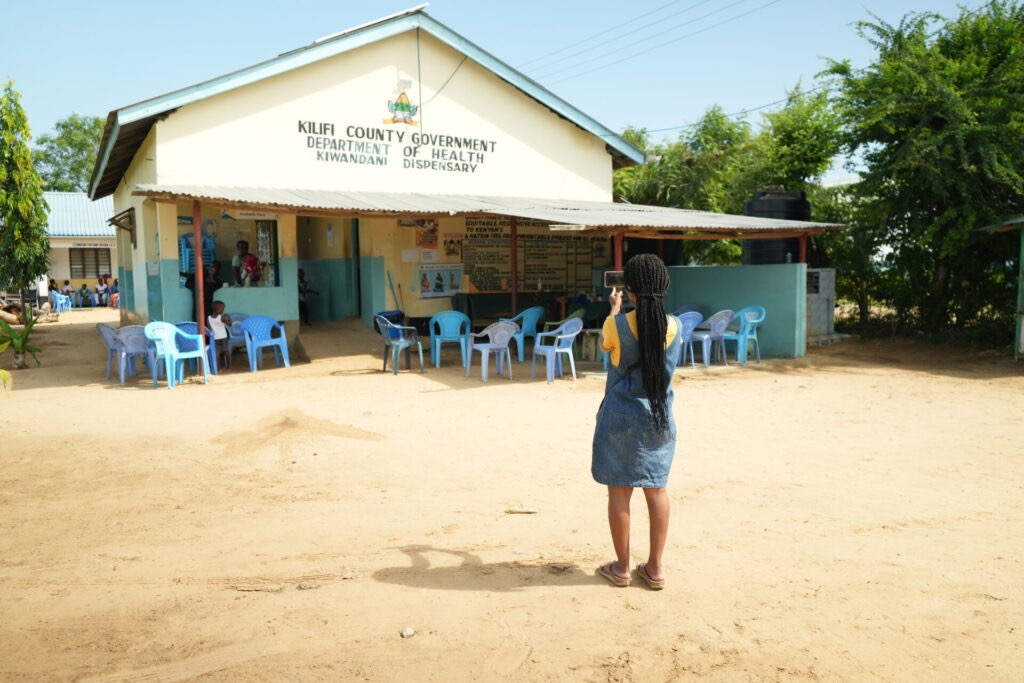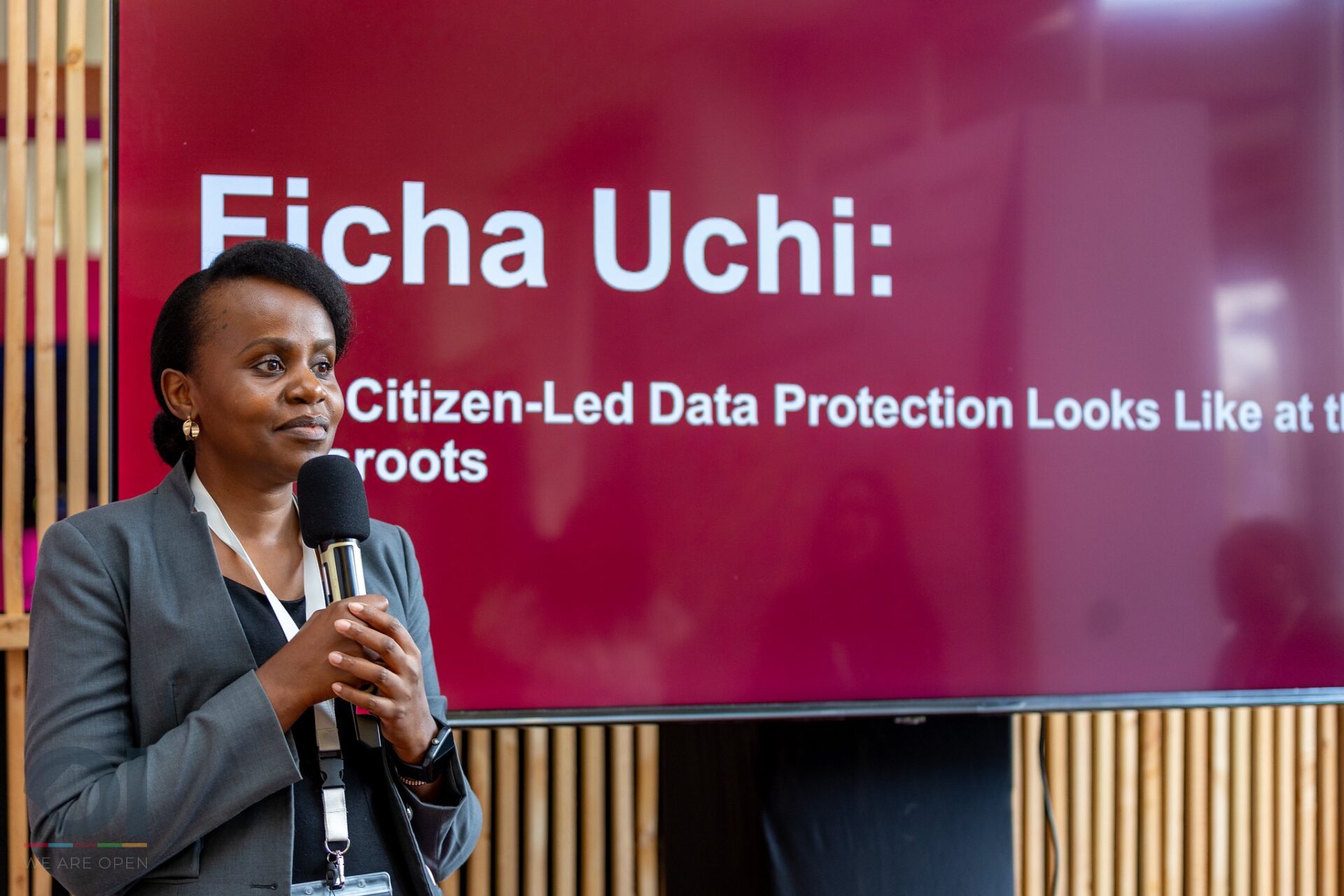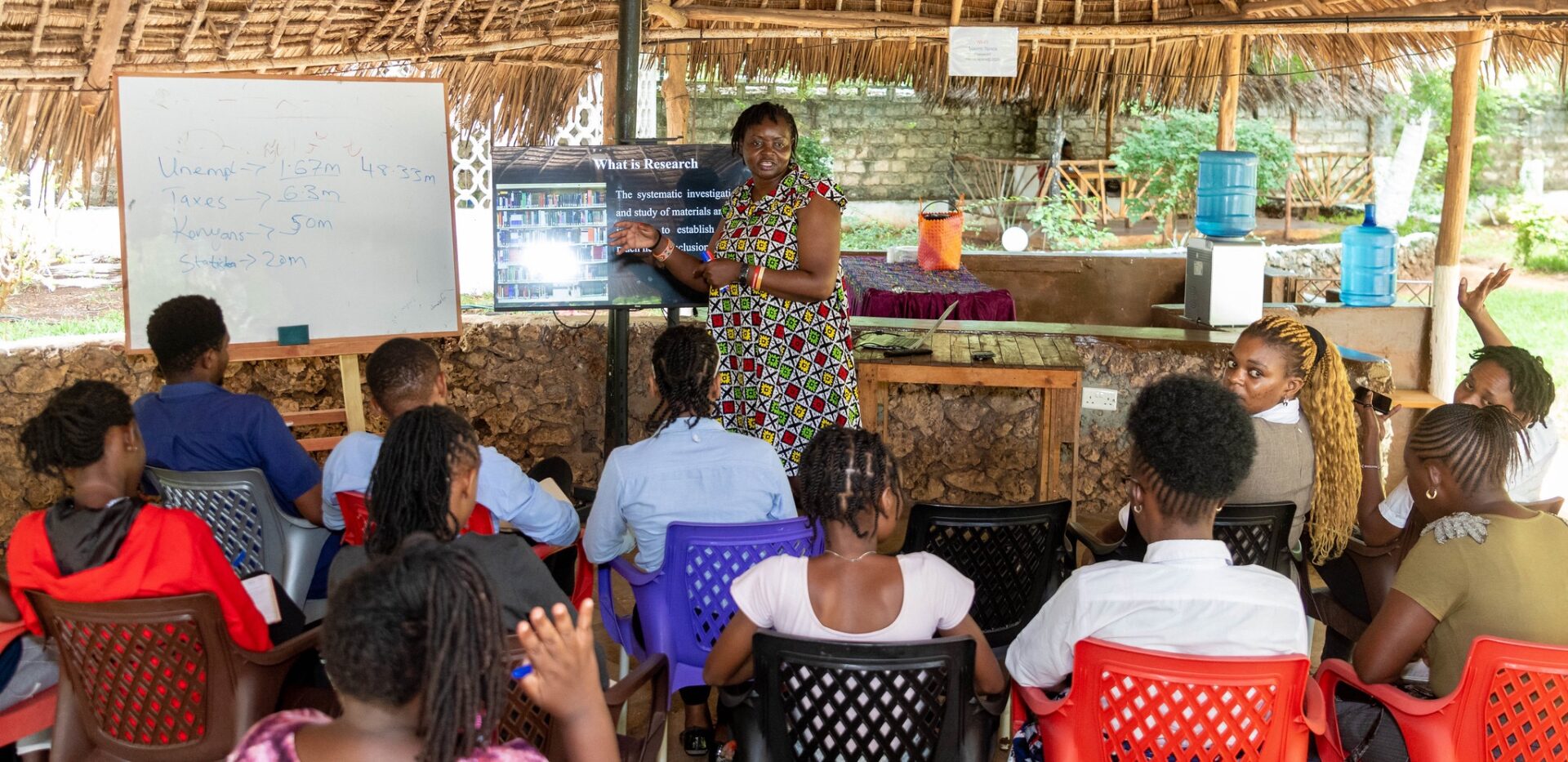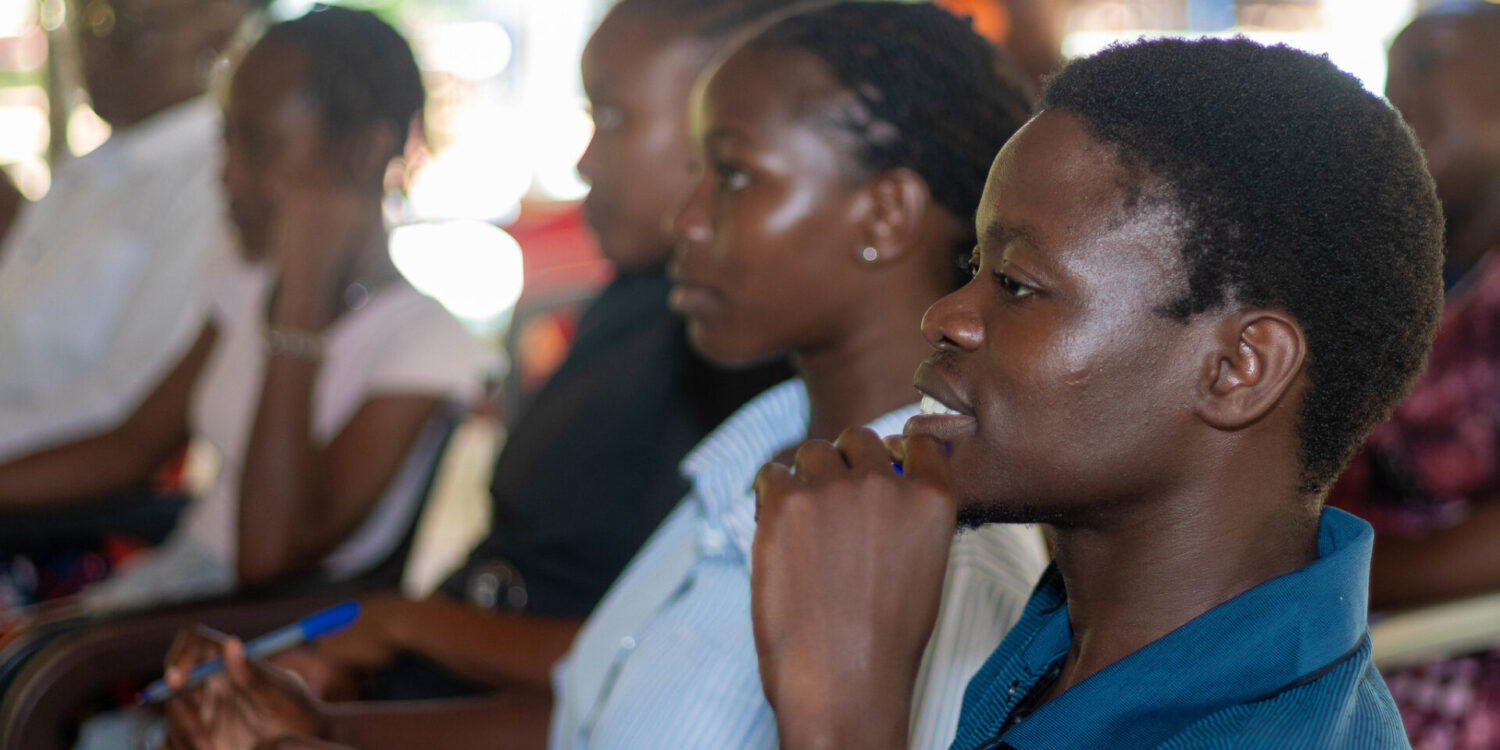
Grassroots journalists in Kenya face an uphill battle. In counties like Kilifi, reporters navigate underfunded newsrooms, precarious contracts, limited access to public data, and political pressures that shape which stories reach the public. Investigative journalism, which shines a light on accountability, innovation, and community agency, is often impossible under these conditions. The narratives that dominate are not always those that serve citizens; instead, they are the stories that survive in a fragile, fragmented media economy.
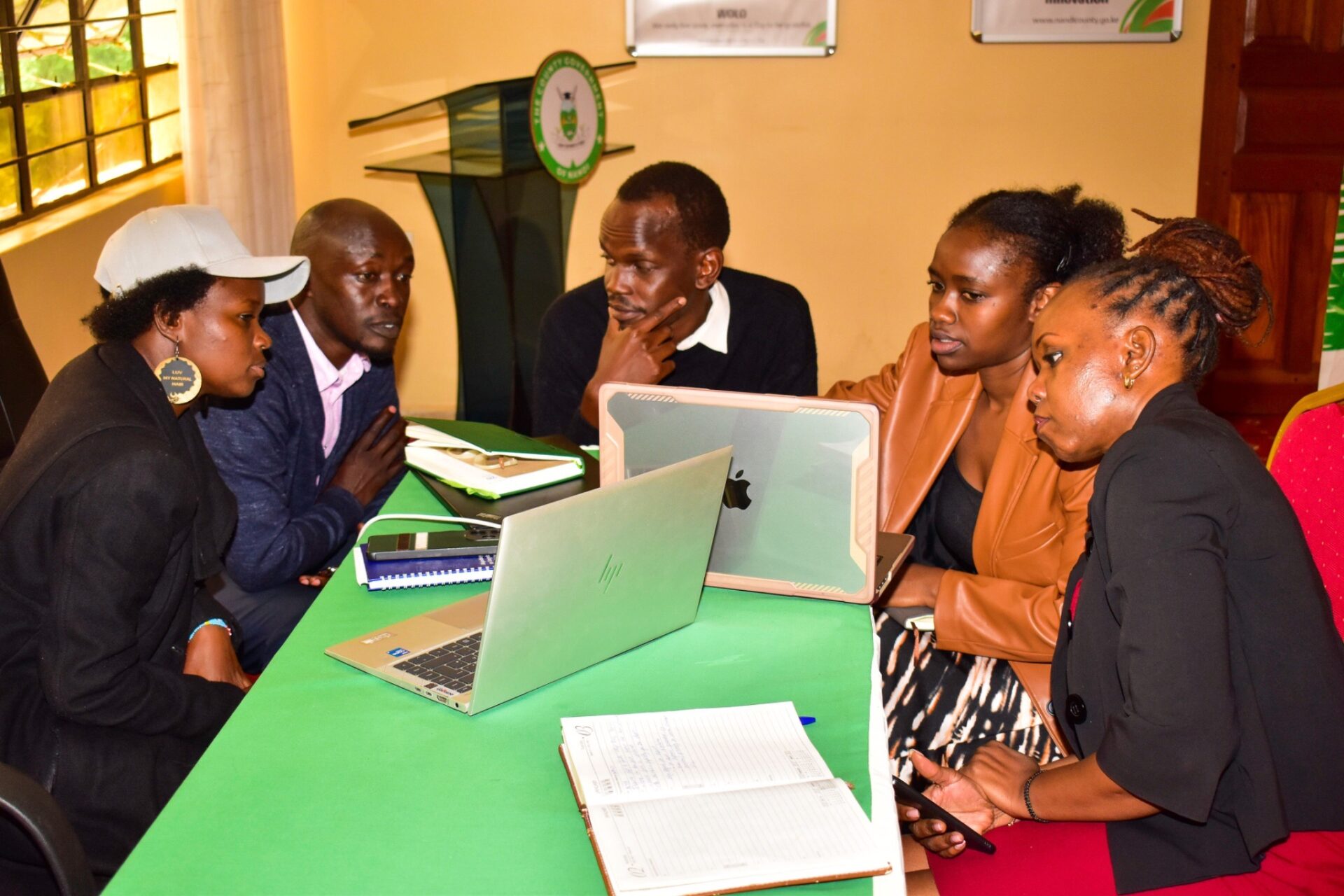
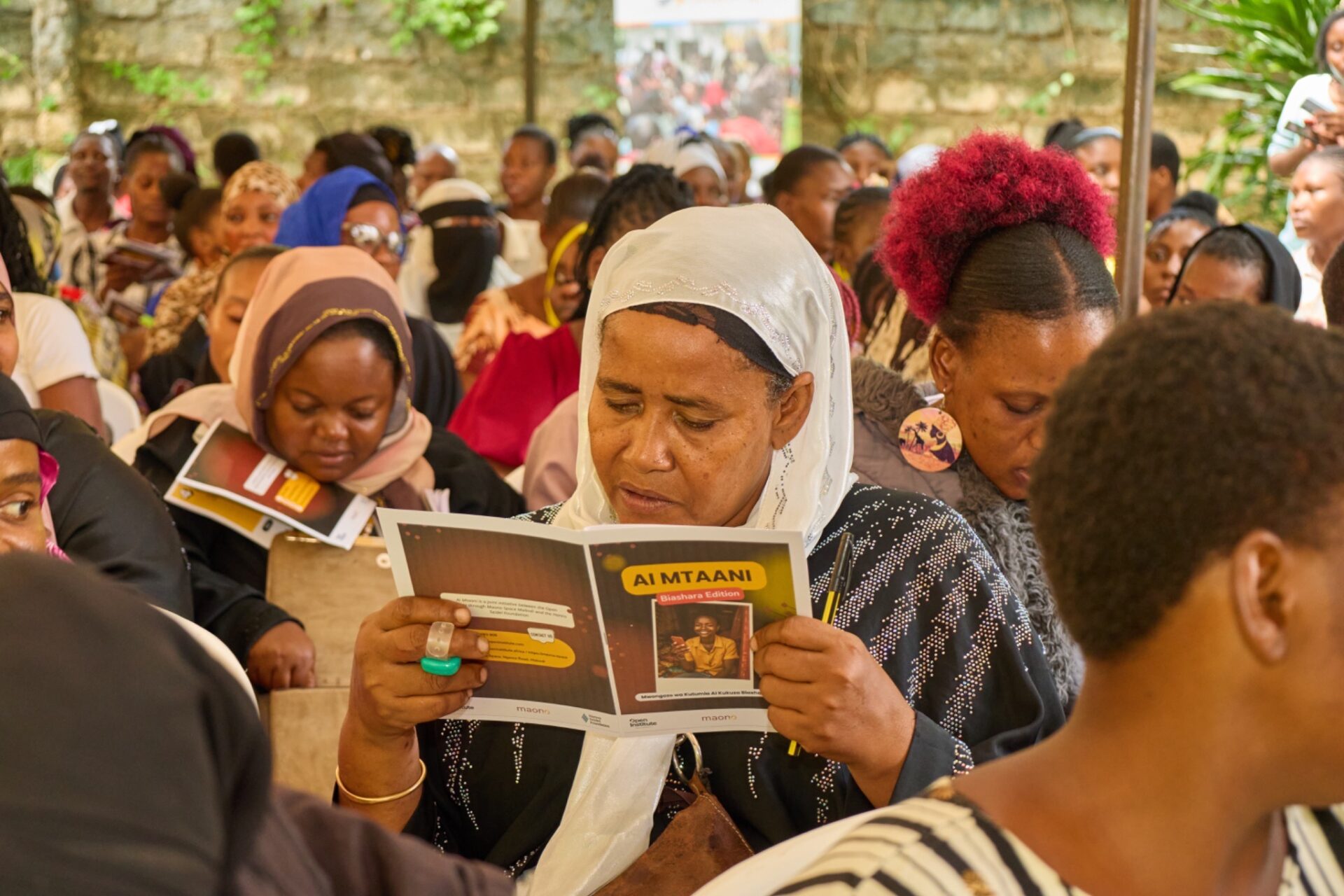
Over the past year, in partnership with the Association of Freelance Journalists and the Media Society of Kenya, we worked closely with grassroots journalists in Kilifi County. This engagement went beyond short-term training. It involved sustained mentorship, shared workspaces, peer learning, and direct engagement with the conditions under which county-level journalism is produced.
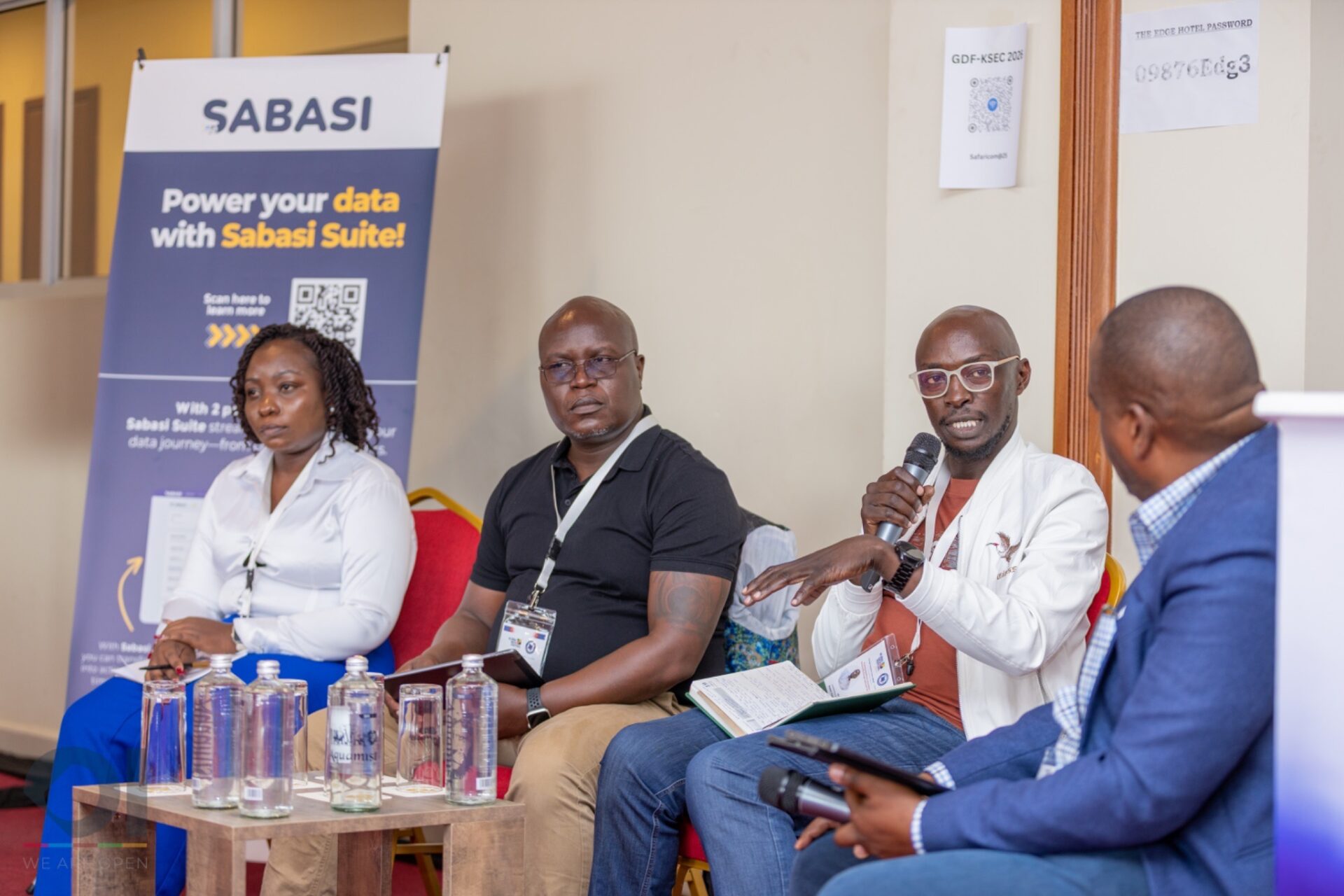
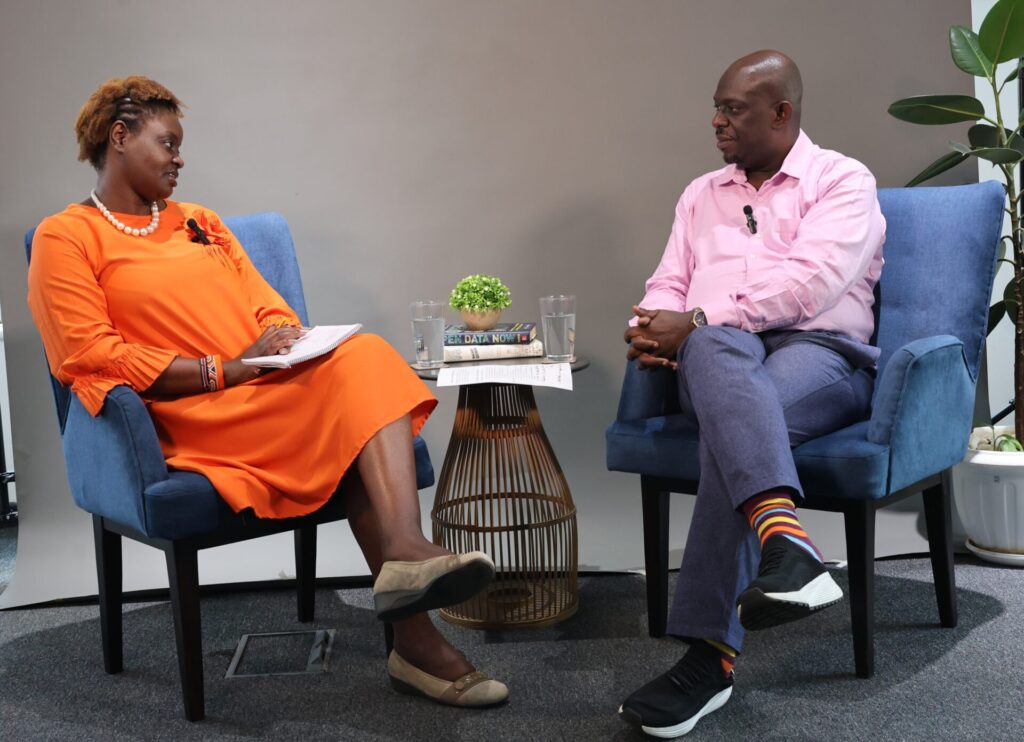
Our new reflection paper, written together with Winnie Kamau, the President of the Association of Freelance Journalists in Kenya, documents what we observed, what changed, and why it matters for journalism, civic participation, and democratic accountability in Kenya. Through conversations with local journalists, media experts, and community members, we explore the realities of reporting under pressure, the ways narrative shapes civic life, and the opportunities for strengthening journalism as a public good. We reflect on the lessons learned from Kilifi and examine the broader challenges facing grassroots reporting across the country.
The Context: County Journalism Under Pressure
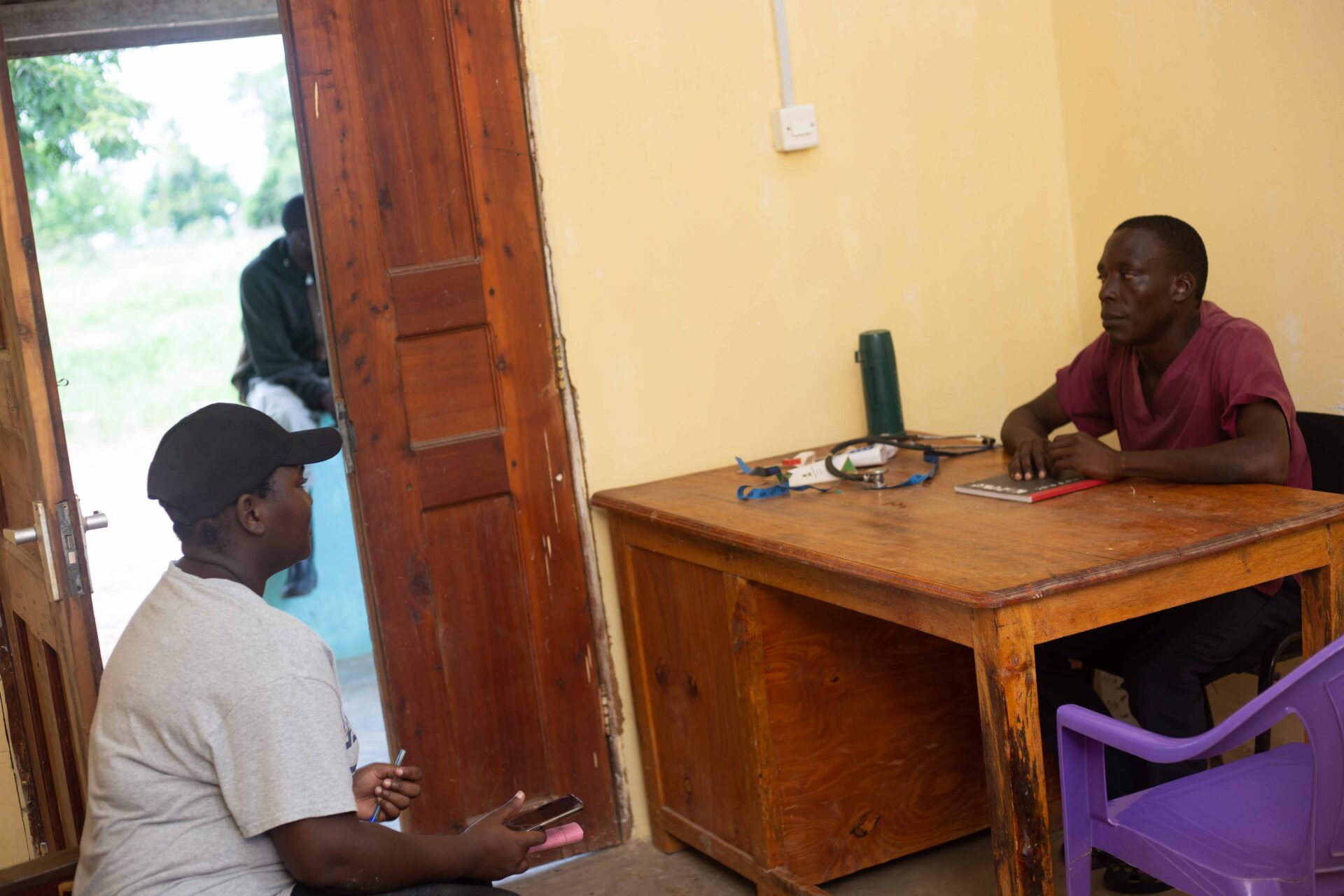
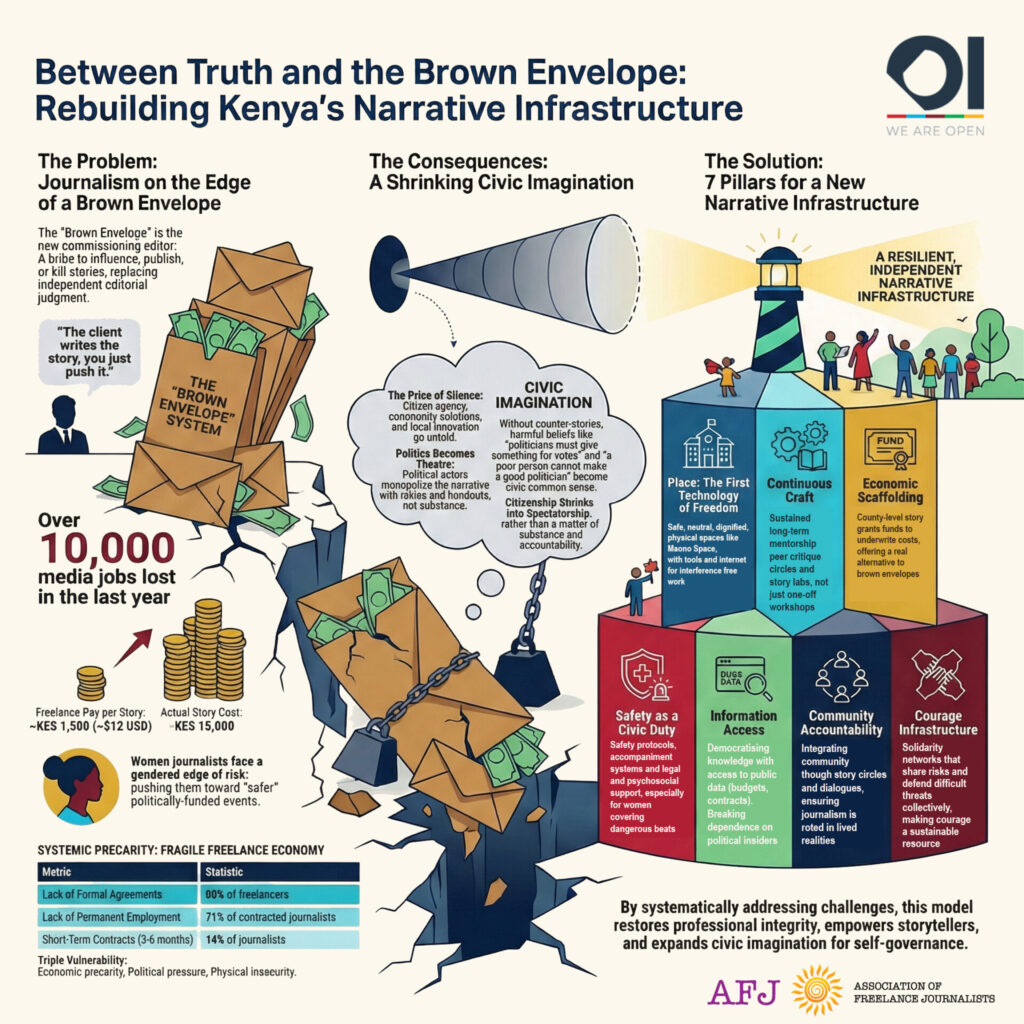
County-level journalism in Kenya faces persistent pressures that shape both what gets reported and how communities understand their world. In Kilifi, journalists work under structural constraints that include low and unpredictable pay, which is often insufficient to cover reporting costs, unsafe and politically sensitive reporting environments, limited access to public information and usable data, and a lack of physical workspaces, reliable internet, or editorial support. These challenges reveal systemic conditions that determine whose voices are amplified, which stories are told, and how those stories are framed.
Narrative Infrastructure: A Practical Framework
To understand these dynamics, the paper introduces the concept of narrative infrastructure. This framework goes beyond individual capacity, highlighting the interconnected systems that enable or constrain storytelling. We envision seven pillars that form the narrative infrastructure:
- Place: Provide safe, equipped, and neutral spaces for journalists to work with dignity.
- Continuous Craft: Build long-term skills through mentorship, peer review, and sustained practice.
- Economic Scaffolding: Ensure fair pay and financial support so journalists can pursue investigative work.
- Safety: Protect journalists, especially women, with protocols, legal support, and trauma-informed practices.
- Information Access: Give journalists access to public data, budgets, and records to reduce dependence on insiders.
- Community Accountability: Engage citizens as co-creators of stories through dialogues, review sessions, and story circles.
- Courage Infrastructure: Foster solidarity networks so journalists can take risks safely and confidently.
All of these conditions interact to shape journalistic practice. Where these systems are weak, journalism becomes precarious; where they are strengthened, storytelling grows more independent, contextual, and accountable.
The Maono Media Centre in Kilifi
In Kilifi, the establishment of the Maono Media Centre provided a practical test of these ideas. The centre created a shared environment where journalists could work with stability and support. Over time, reporting shifted from event-driven coverage to contextual, issue-based stories. Editorial discussions became more rigorous, with greater attention to source verification and framing, while community voices increasingly shaped story angles. Peer review and mentorship became normalised, fostering consistency, confidence, and professional growth. These changes were not the result of one-off workshops but emerged through continuity, proximity, and trust.

Journalism and Citizenship
The paper argues that journalism plays a central role in shaping how citizens understand their place in public life. When stories focus on elite performance and political spectacle, citizens appear as passive recipients, but when stories centre on lived experience, local problem-solving, and collective action, citizenship expands.
In Kilifi, improved narrative conditions allowed journalists to spotlight community responses to governance challenges, local accountability in health, land, and service delivery, and everyday civic action beyond formal politics. This work strengthened public understanding of how power operates at the county level.
Accountability and Power
Stronger narrative infrastructure also increases accountability. It turns isolated incidents into documented patterns, links policy decisions to real-world consequences, and reduces dependence on political insiders for information. When information is accessible and stories are sustained over time, the cost of impunity rises, creating space for citizens to engage with governance more effectively.
This reflection challenges approaches that focus solely on skills training. Journalism resilience requires long-term investment in the conditions that enable reporters to do their work safely, stably, and with access to the tools and information they need. Supporting grassroots journalism is therefore an investment in civic participation, public accountability, and democratic culture.
What comes next
The insights from Kilifi offer a practical model for strengthening county-level journalism across Kenya. They invite partnerships to expand narrative infrastructure beyond Kilifi, support sustained mentorship and editorial ecosystems, improve access to data and investigative resources, and build safer, more resilient environments for journalists. For funders, practitioners, and institutions committed to media freedom and democratic accountability, these findings provide both evidence and inspiration for how investing in journalism strengthens the foundations of citizenship itself.
We invite partners to join us in expanding this work. By supporting initiatives like the Maono Media Centre, funders can help build the capacity of local journalists, strengthen the flow of reliable information, and reinforce democracy from the ground up. Together, we can ensure that every county has storytellers equipped to shine light on truths that matter.