The brown envelope is quietly reorganising Kenya’s journalism, deciding what stories get told and which ones stay silent. Our recent reflection paper, Between Truth and the Brown Envelope: Rebuilding Kenya’s Narrative Infrastructure by our Executive Director, Al Kags and the Association of Freelance Journalists (AFJ) president Winnie Kamau, unearths cold truths. It says out loud what many have been whispering: the brown envelope is running things in Kenya’s media landscape.
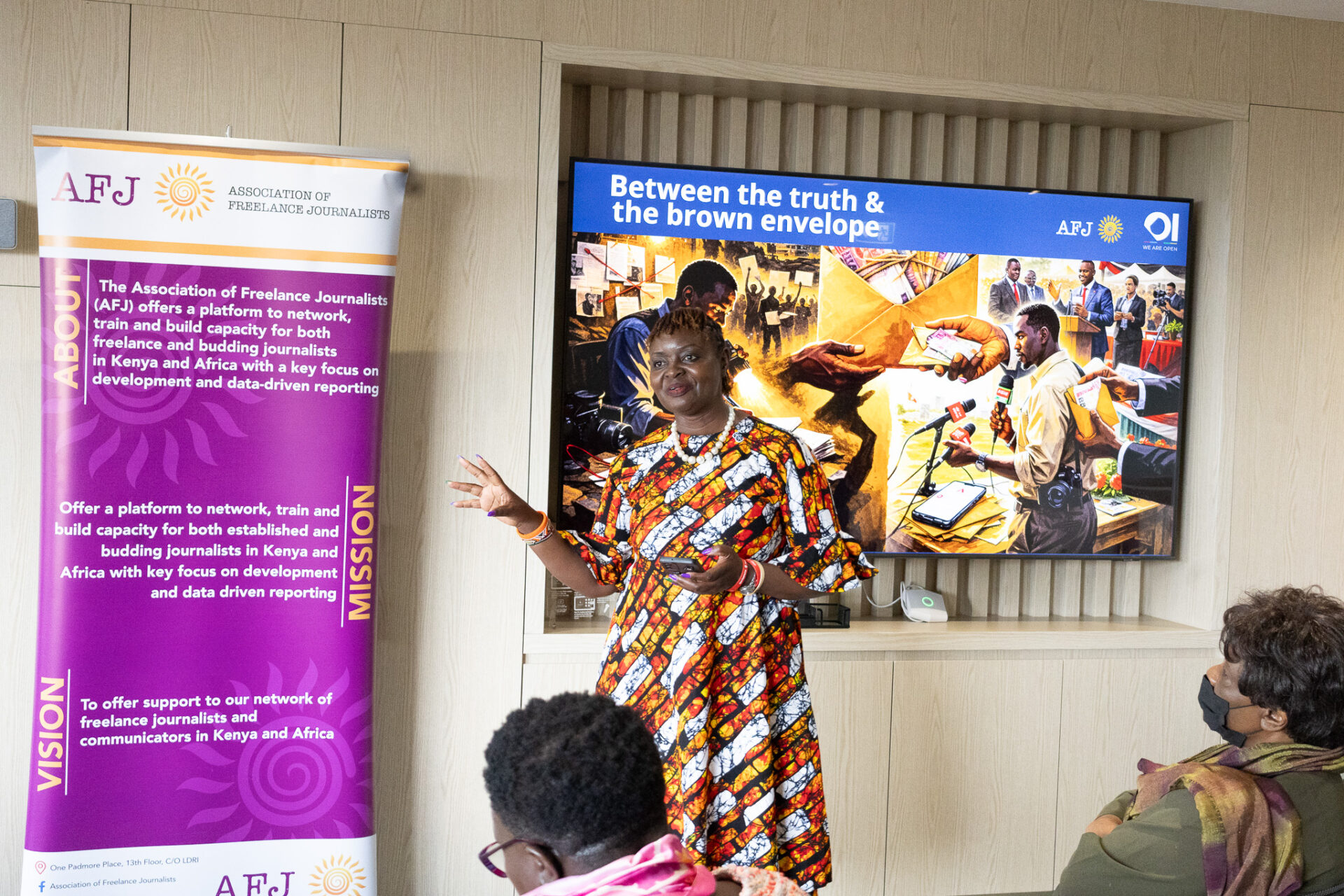
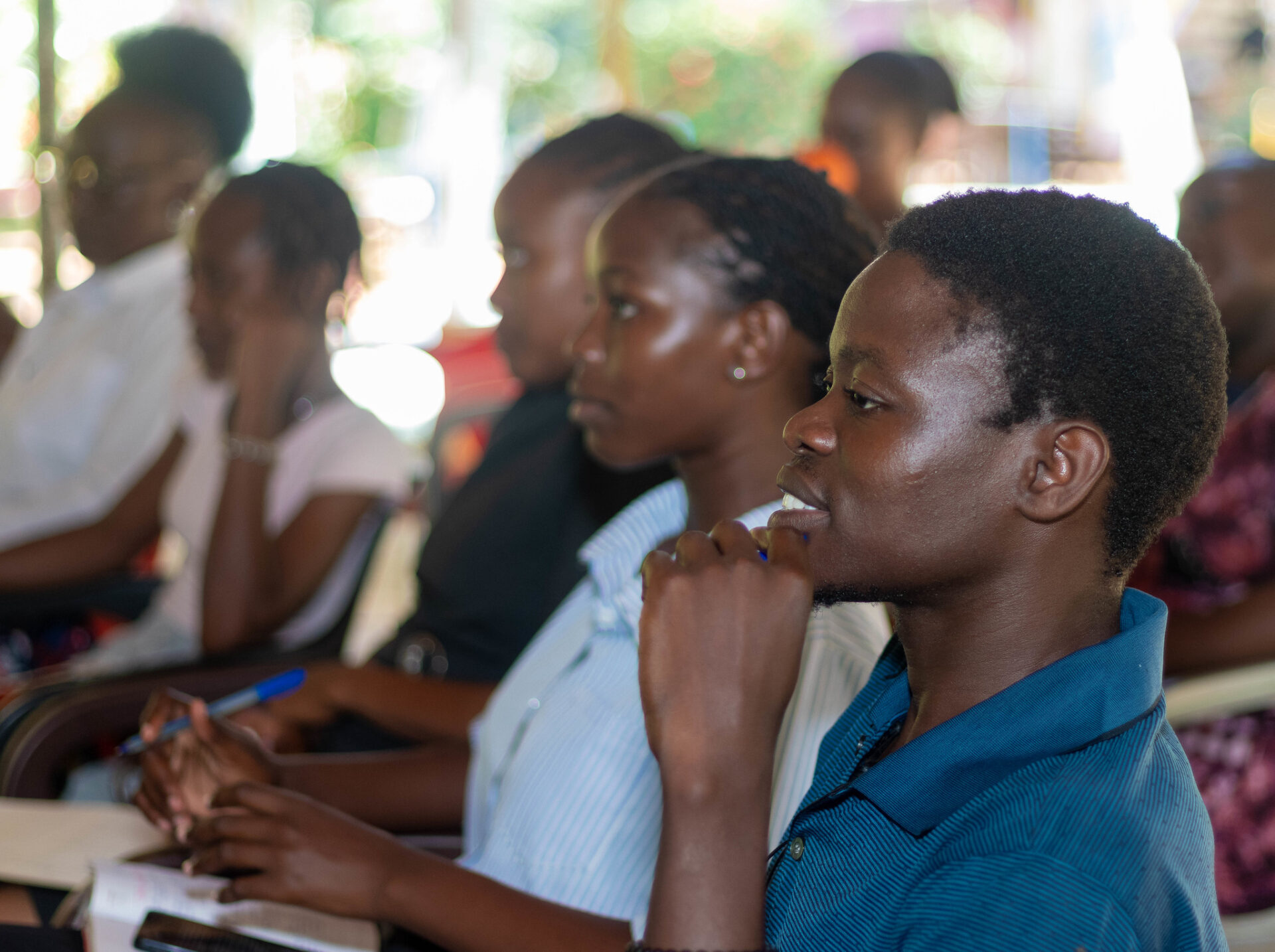
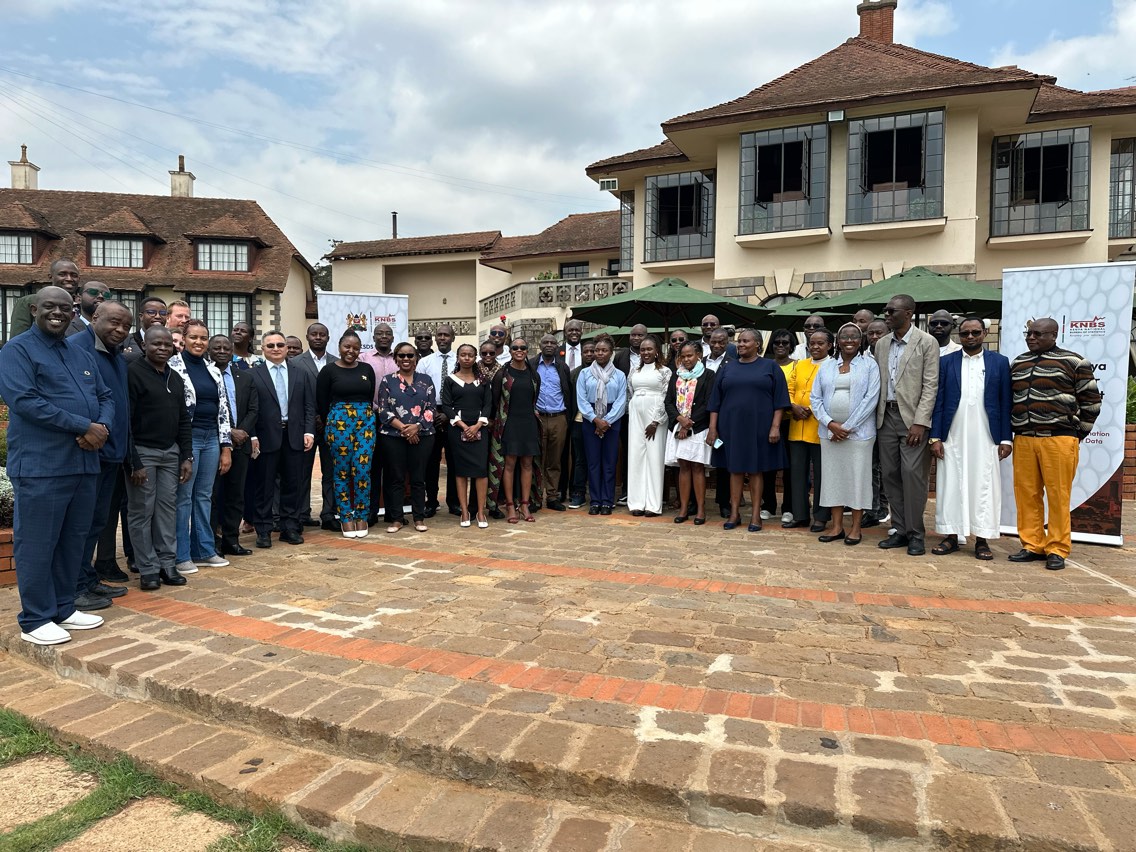
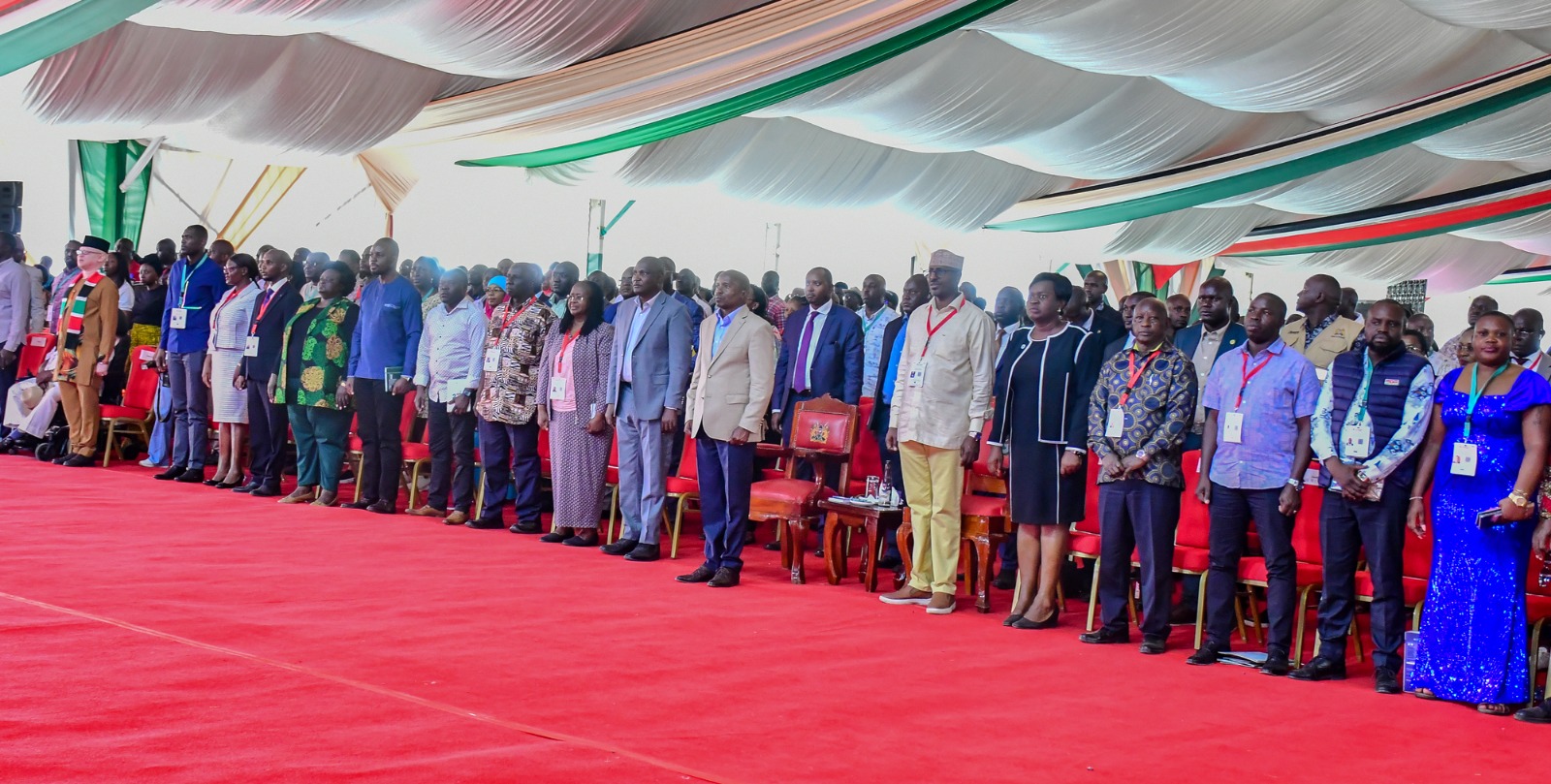
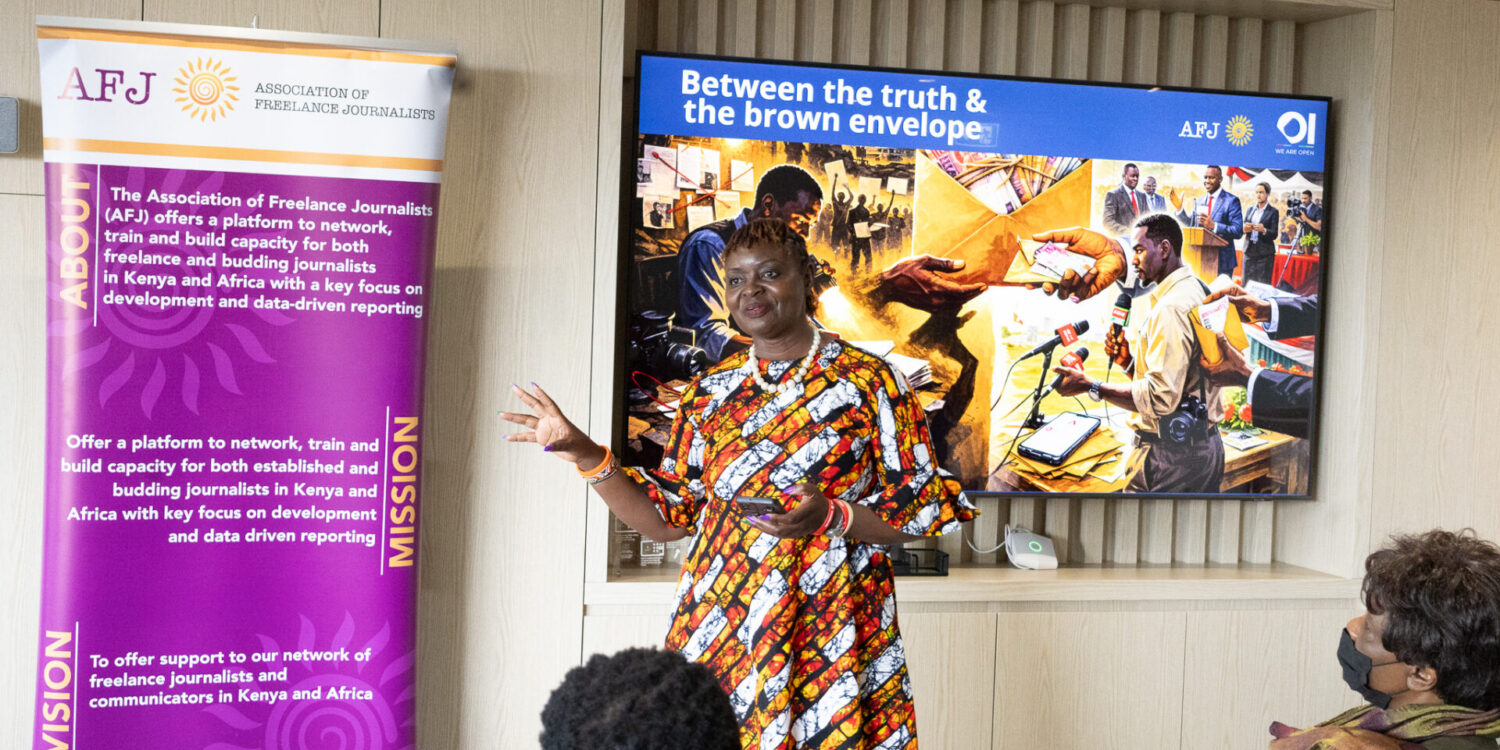
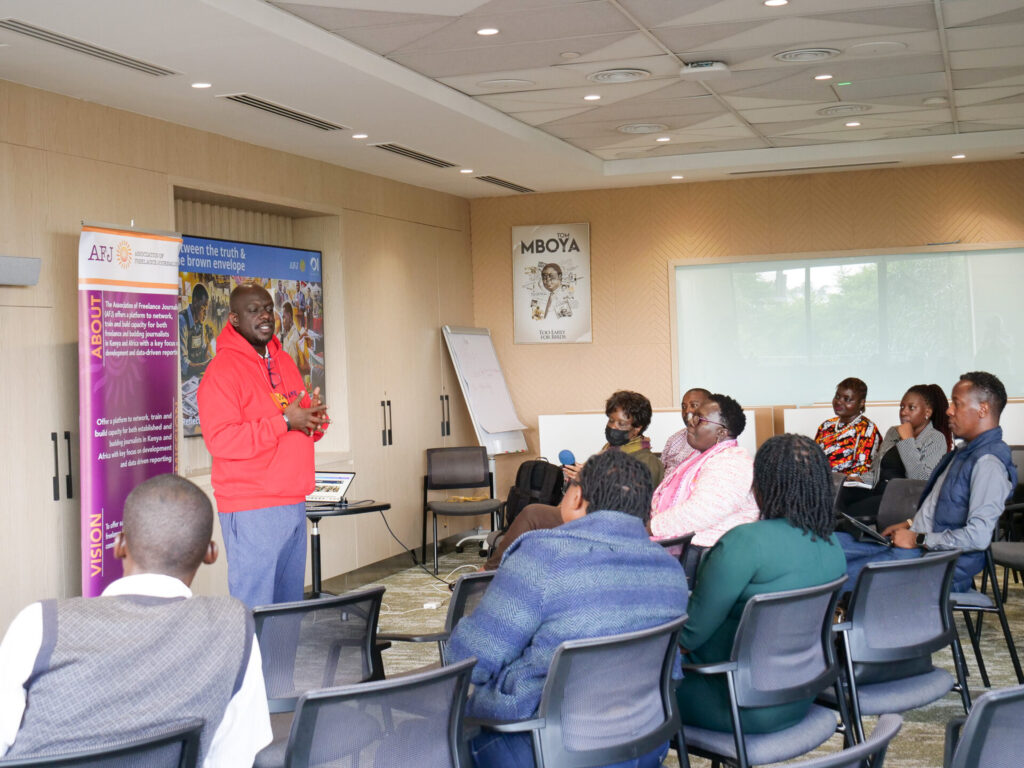
On Thursday, 19th February, in collaboration with the AFJ, we convened a gathering of media professionals, freelance journalists, civil society actors, storytellers, and officials from the Media Council of Kenya to engage on the growing influence of the brown envelope, which is shaping what is reported, how stories are framed, and how citizens remain visible or unheard. From the onset, it was evident that Kenya’s media landscape is undergoing a turbulent season. Data from AFJ showed a sharp decline in students pursuing journalism, while many trained journalists are shifting into fields such as public relations. The media professionals in the room also noted the thousands of job losses experienced in recent years, resulting in the industry losing some of its most experienced journalists. So where do they go? Many are pushed into freelancing or entirely different professions, rendering journalism a less attractive career path for upcoming storytellers.
“Kuna Mboka?”: Brown Envelope as a Survival Model
The concept of brown envelope journalism isn’t new, but now it’s showing up more boldly and more visibly. Brown Envelope Journalism can be broadly described as an incentive (money) to influence what is reported or killed by a journalist. The problem begins when the envelope starts deciding what gets reported, twisted or quietly buried.
Journalists, like many Kenyans, are navigating hard times. For many struggling reporters, especially freelancers earning as little as KES 200–300 per story, choosing between ethics and survival becomes a painfully real debate. One freelancer described a “survival strategy”: attend as many political events as possible, coordinate through WhatsApp groups to track events, and cultivate relationships with hotel event managers for conference alerts, all to piece together income like a treasure hunter following scattered clues.
The government’s perspective was equally revealing. A senior communications officer from the Ministry of Interior explained that budgets are routinely set aside whenever journalists are invited to events. In some cases, the ministry drafts the story, edits it, and sends it to journalists to publish. Journalists become the final stop on a conveyor belt: press “publish” and move on. Low pay, delayed salaries and limited job security create a vulnerability that allows political and business actors to steer the news agenda with relative ease.
More than Money: The Silent Struggles
Money is not the only problem. The industry is also battling a persistent and deeply troubling reality: sexual harassment and intimidation.
One participant shared the story of a female reporter investigating a local politician who received threats intended to silence her. She eventually went into hiding until the situation calmed down. It is one example among many that rarely get reported or documented.
Even with a justice system that appears strong on paper, threats, especially against journalists who challenge powerful figures, often succeed in shrinking their space. The emotional toll is significant. Psychosocial support is urgently needed yet remains difficult to access. Many journalists cope alone.

For freelancers, the challenges multiply. In many remote areas, dignified workspaces are scarce. While the internet has opened new possibilities, it has also intensified competition from untrained “quacks” chasing quick clicks rather than ethical reporting. With little grounding in professional standards, they rush to break stories, accurate or not, making it harder for trained journalists to sustain quality work.
All these pressures make it increasingly difficult to produce deep public-interest reporting, particularly at the grassroots, where impact matters most. The result is a media environment in which essential stories struggle to be told, and those who tell them operate under constant strain.
Why Should We Care?
Brown envelope journalism erodes the foundations of free and independent reporting, weakening the depth, rigour, and curiosity required for meaningful investigative work. It compromises the very essence of journalism, a profession built on trust, public interest, and the responsibility to hold power accountable. When financial gain dictates what gets covered and what is ignored, journalism loses its role as society’s mirror and watchdog, replacing truth-seeking with transactional storytelling.
When credibility is compromised, civic space begins to shrink, and public imagination narrows because citizens no longer have access to accurate, reliable information that enables informed participation. Politics then transforms into a spectacle rather than a process of accountability, reducing the public to passive spectators. As a result, harmful narratives go unchallenged, misinformation thrives, and human-centred stories, especially those rooted in grassroots realities, struggle to be told or heard.
What we can do
Together, the room proposed ways we can support true journalism in practical ways. At the top of the list was financial reform. As long as journalists remain underpaid, overstretched and dependent on facilitation, political patronage will continue to shape coverage. Any sustainable model must cover the true cost of reporting: transport, research, safety equipment, time in the field and the emotional labour of navigating crisis and conflict. Fair and dignified pay creates the conditions for independence and reduces susceptibility to influence. It also offers a pathway towards rebuilding trust and strengthening public-interest reporting.
Beyond funding, participants proposed:
- Mentorship and Peer Learning
Emerging storytellers, particularly at the grassroots, need long-term professional guidance, editors and mentors who help refine judgment and standards. - Safe Workspaces
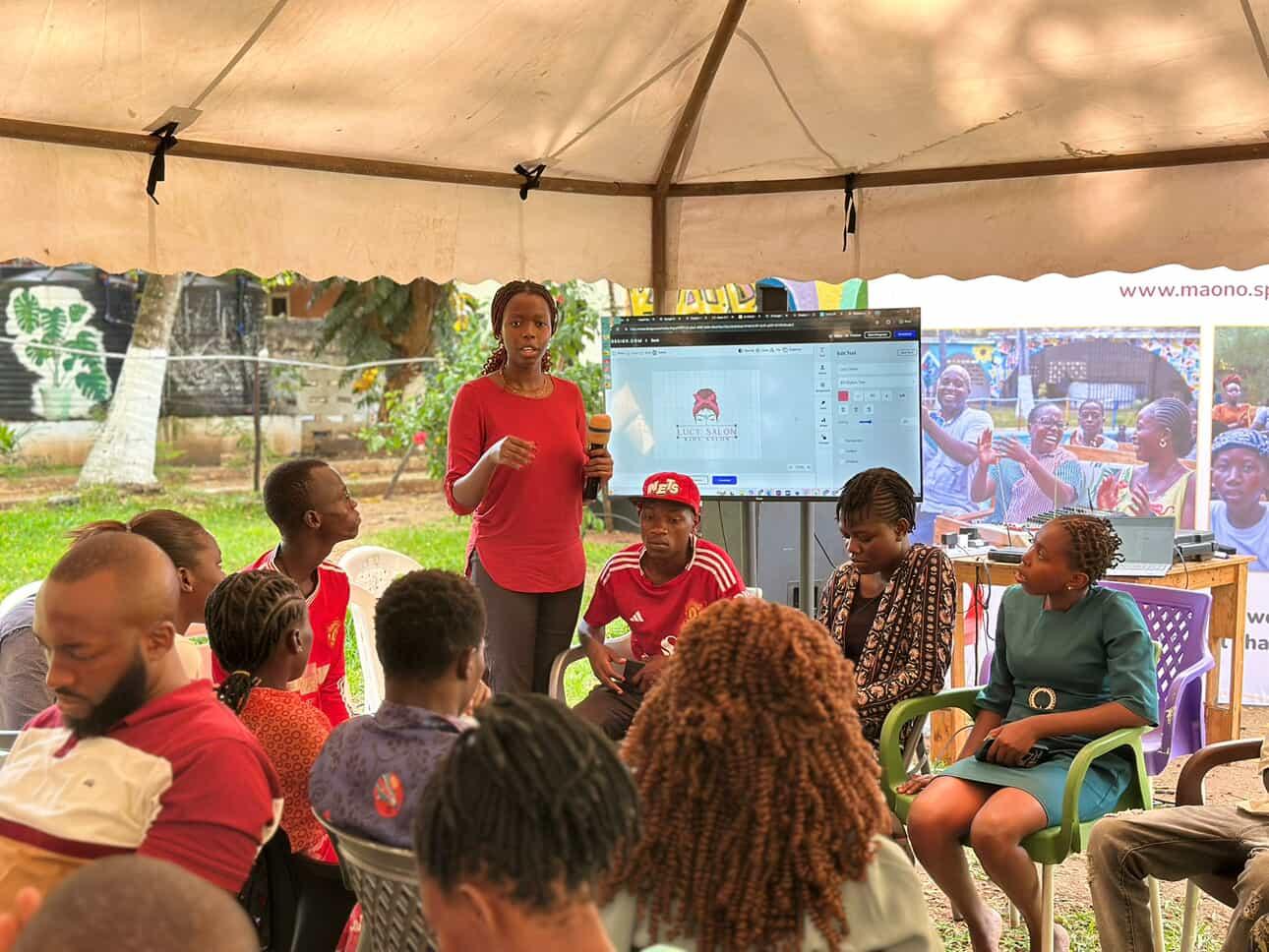
Rural journalists require dignified physical and digital environments. Spaces such as Maono offer a practical starting point. - Cleaning Up the Media Landscape
The Media Council was urged to address the growing number of untrained actors distorting journalistic practice. - Psychosocial and Legal Support
Journalists are often first responders to tragedy, sometimes arriving before police. Structured emotional and legal support is essential, especially for those covering high-risk beats. - Access to Public Information
Counties and government offices can ease the burden by providing timely access to budgets, tenders and contracts rather than deferring requests indefinitely. - Standing Together
When one journalist is threatened, a collective response must follow. Silence only deepens vulnerability. - Platform Accountability
If global technology companies profit from news content, revenue-sharing mechanisms, such as those adopted in Canada and Australia, deserve serious consideration.
Why You Should Join This Conversation
Strengthening journalism is a shared responsibility. Journalists, media owners, civil society organisations, regulators, and the public must work together to rebuild an ecosystem where integrity is not an option but a standard.
When journalism works, democracy works. Let us commit to supporting independent storytelling, protecting journalists, and ensuring that Kenya’s media remains a vital pillar of democracy.
Additional resources
Reflection paper: https://whitepaper.openinstitute.africa/
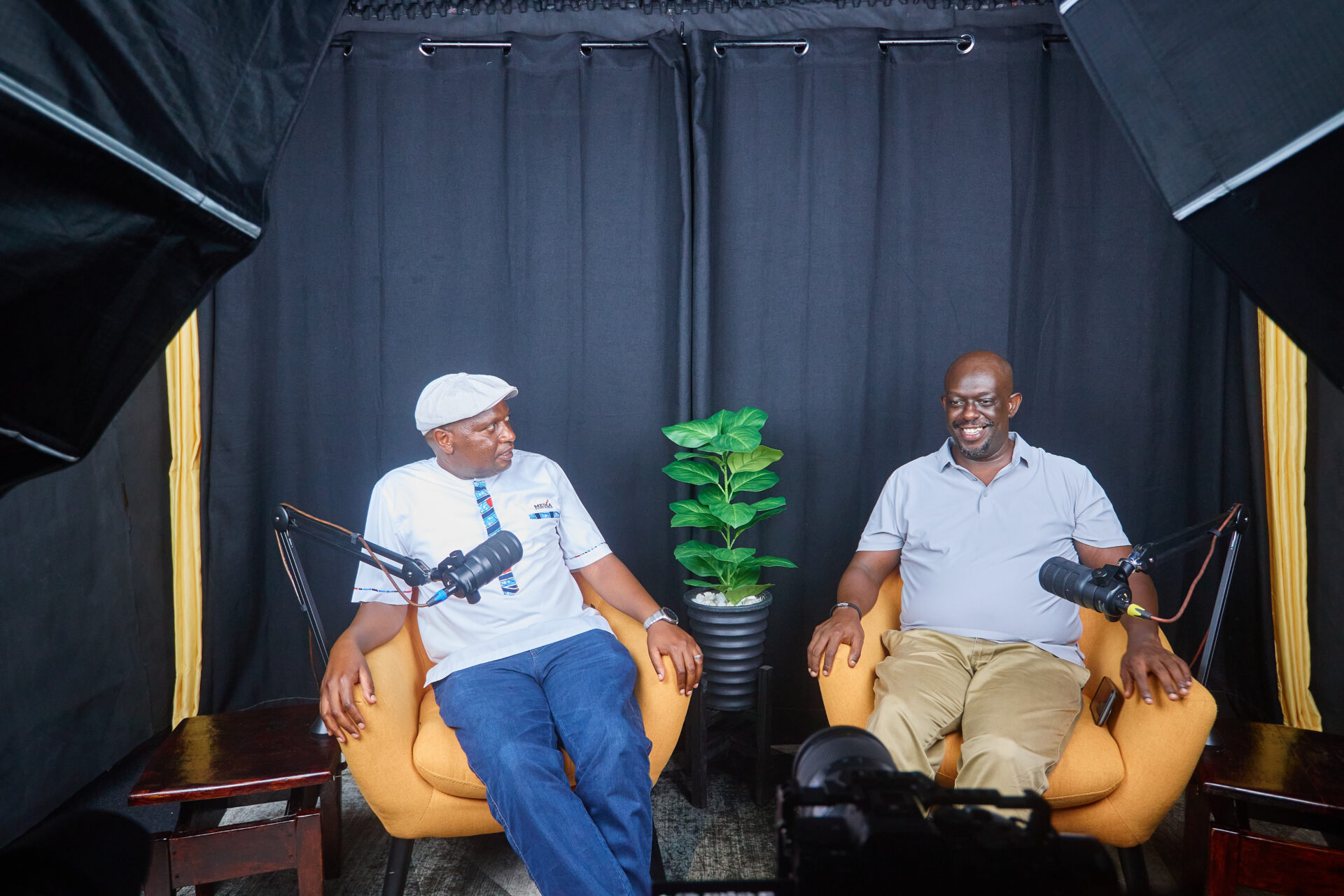
Podcast: https://www.youtube.com/watch?v=ZkOLaAveUqE
Event presentation: https://drive.google.com/file/d/10WgLnI_OjK0ntcmIqxGAuAxhZmq9dcaV/view