By Christine Ajulu
In New Delhi, I joined a global conversation on designing rights-respecting AI systems. The discussion focused on privacy across the AI lifecycle — from data collection and model training to deployment and downstream use. We explored safeguards, accountability, and regulatory evolution. As the conversation deepened, a foundational truth became clear: ethical AI rests on participation.
AI adoption today follows measurable patterns. In China, hundreds of millions use generative AI tools, representing roughly half of adults. In the United States, a majority of adults have interacted with AI systems. In parts of Latin America, usage rates in several countries exceed 50%. In Africa, current estimates place adoption closer to one in five adults. These figures reveal how unevenly the digital future is being shaped.
Usage generates data, and data trains models that influence representation and decision-making at scale. When participation concentrates in some regions and remains thinner in others, AI systems naturally reflect that imbalance. Models absorb what appears most frequently and gradually elevate repetition into a norm. The societies that use AI most intensively shape the defaults others inherit.
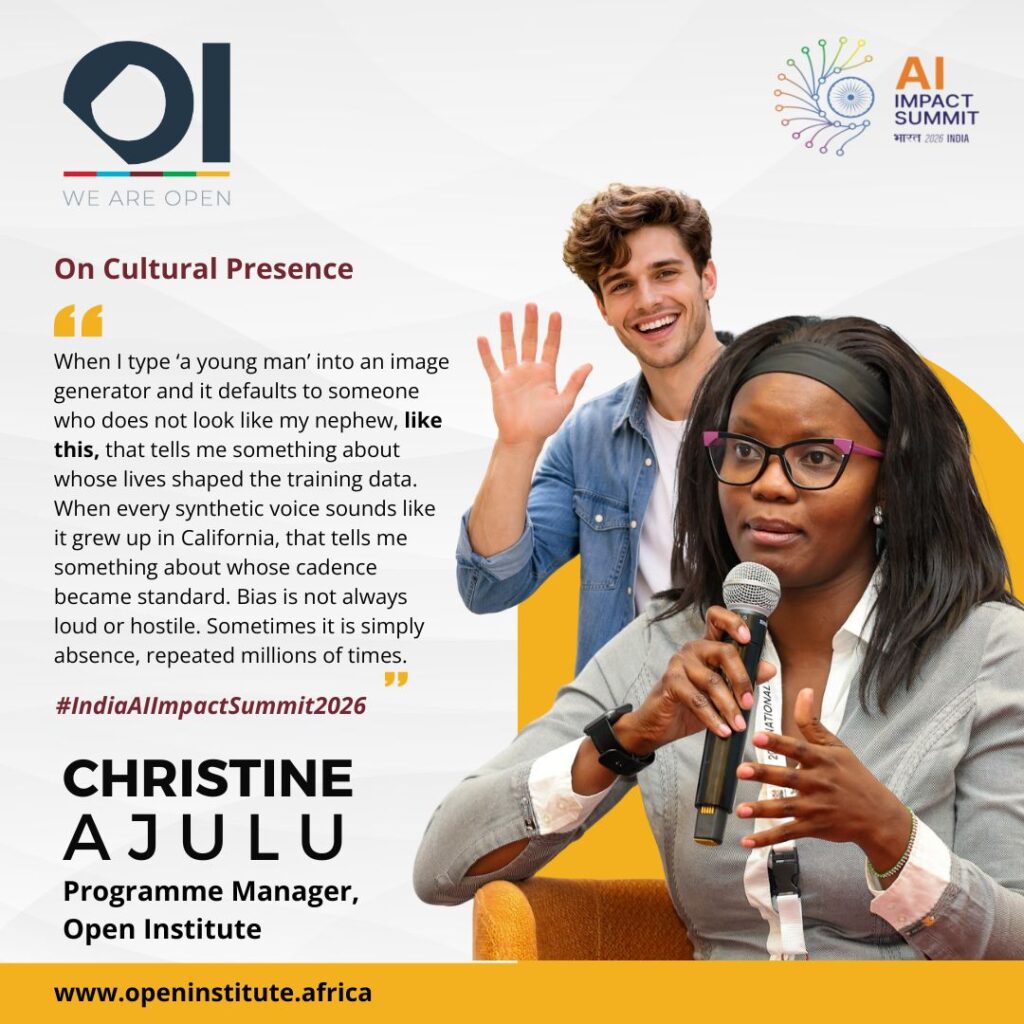
Ngũgĩ wa Thiong’o reminds us that language carries culture, and culture carries the values through which we understand ourselves and our place in the world. AI systems now mediate language at a planetary scale. They generate text, images, and voices that shape imagination itself. When I type “a young man” into an image generator, and it produces someone who does not resemble my nephew, the system is revealing the statistical centre of its training world. When synthetic voices consistently carry an American cadence, the model expresses where participation has been densest.
Chimamanda Ngozi Adichie warns of the danger of a single story. AI systems trained on skewed participation scale that single-stories globally and instantaneously. Cultural absence accumulates authority through repetition.
This insight leads directly to AI evangelisation.
At the Open Institute, we have spent more than a decade strengthening Active Citizenship, Responsive Government, and Data Governance. We helped establish subnational Data Desks inside county governments so that data capacity lives where decisions are made. We drove the #FichaUchi campaign to strengthen public awareness of data protection. We built tools such as Sabasi to enable context-sensitive data collection across diverse African settings. Each of these initiatives rests on a shared principle: systems become legitimate when people participate in shaping them.
AI evangelisation extends that principle into a new technological era.
In 2022, we launched Maono Space in Kilifi County as an experiment in locally led development. The model combined physical space, shared services, catalytic funding, and capacity-building to strengthen grassroots actors. By mid-2025, Maono had grown to 800 individual members and more than 100 Community-Based Organisations. That growth reflected confidence and collective ambition taking root.
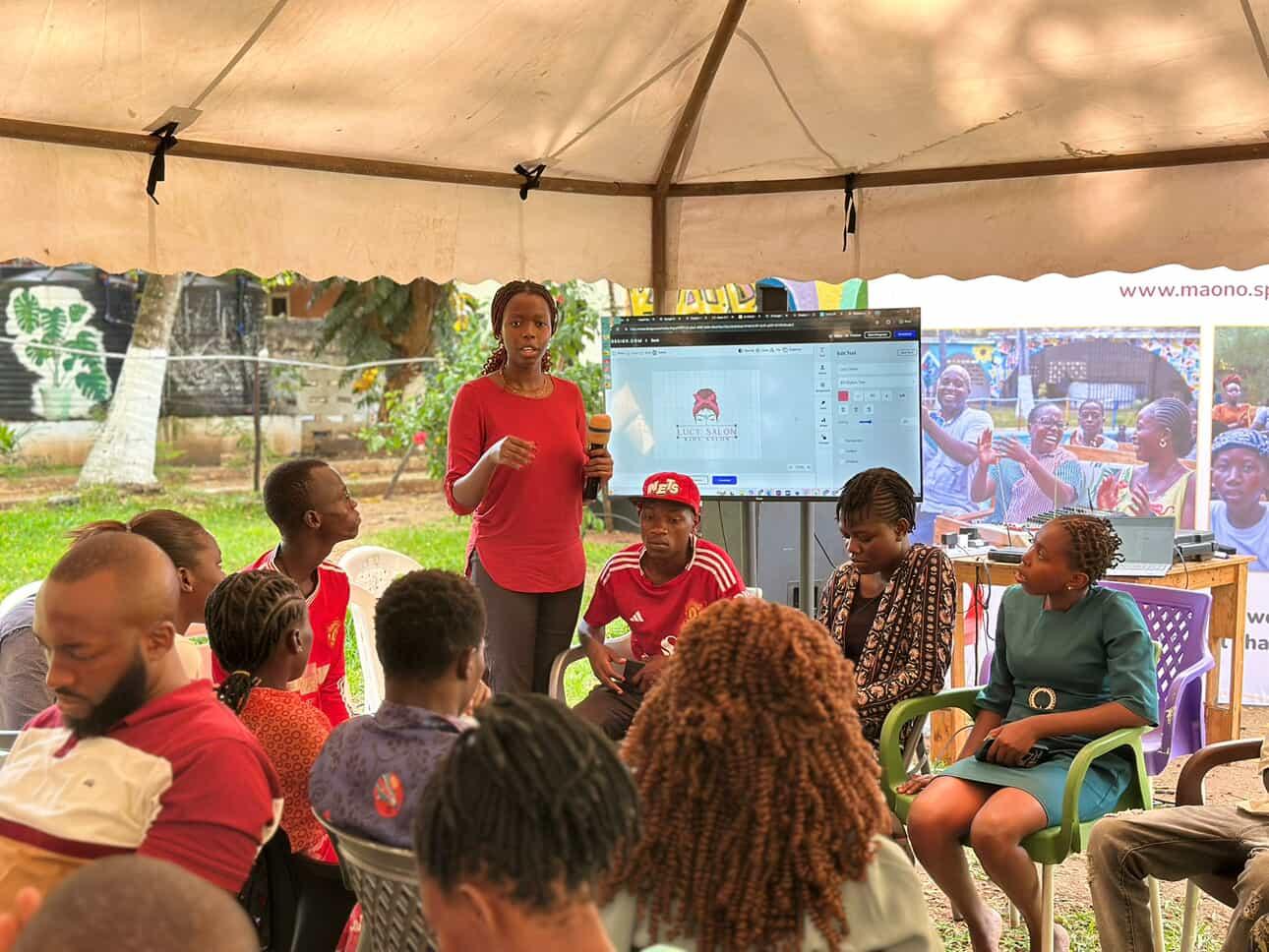
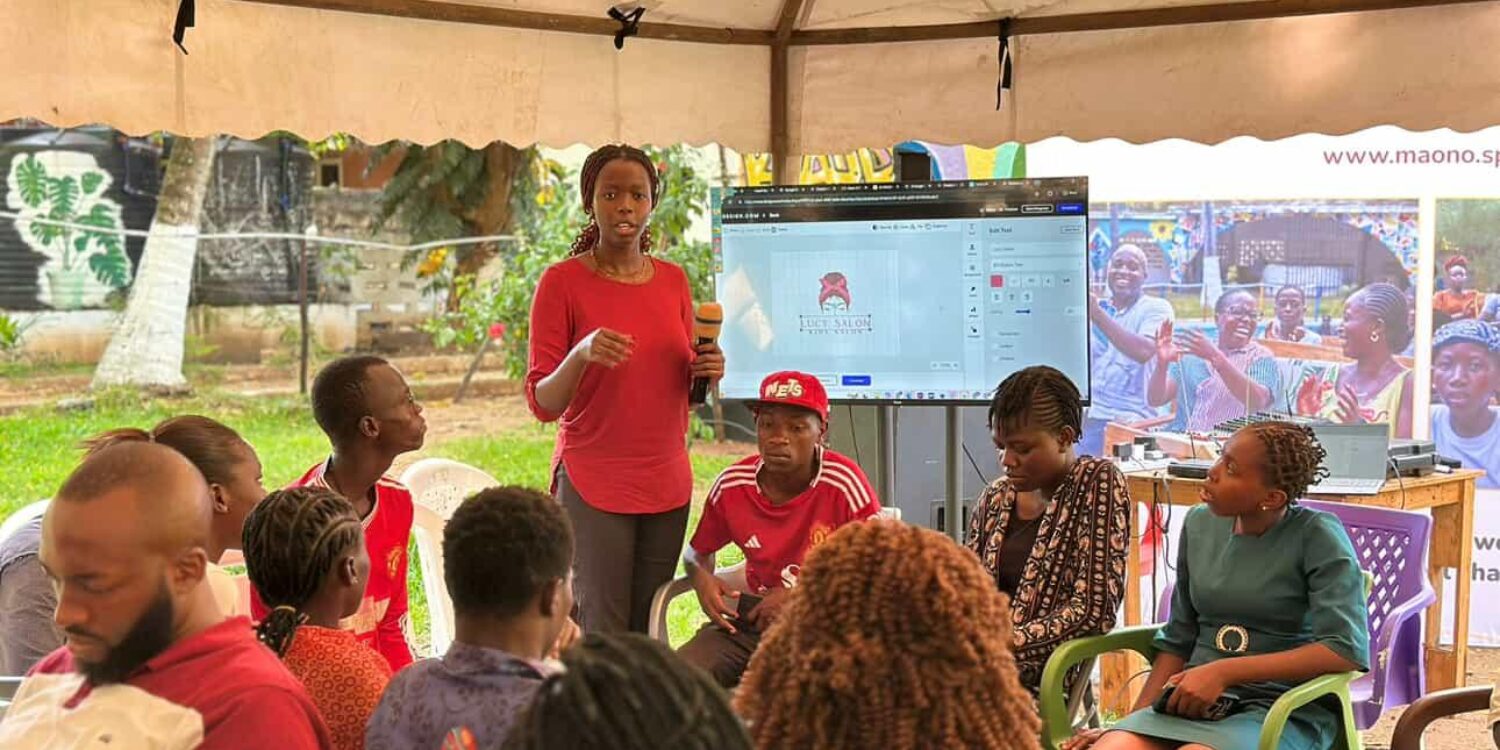
Recently, the Maono team organised an open forum in Malindi titled AI Mtaani (AI in the neighbourhood). They anticipated a modest turnout. More than 150 people registered. College students arrived eager to explore possibilities. Small business owners came seeking practical insight. Ameqwi, our tech officer, demonstrated how tools such as ChatGPT and Gemini could generate adverts, refine copy, build simple websites, and prototype ideas within minutes. The energy in the room revealed appetite, curiosity, and readiness.
AI Readiness depends on skill and knowledge
AI evangelisation in rural Kenya grows from the same spirit that once sent literacy teachers into villages with chalk and resolve. AI increasingly functions as a layer of the global operating system. The first people who explain it clearly in a small town influence that town’s economic trajectory and imaginative horizon.
Teachers anchor this moment. In many rural communities, teachers guide exam preparation, advise on agricultural practices, interpret public services, and support everyday decision-making. When a teacher understands AI, an entire community gains a bridge to contemporary knowledge systems. A teacher can ask a model to simplify climate-smart irrigation techniques, outline the economics of coconut value-addition, or explain a medical concept to a concerned parent. Students begin to envision careers in robotics, creative technology, digital production, and remote work. Ambition expands organically.
Entrepreneurs stand at a similar threshold. A shopkeeper in Ganze, analysing inventory patterns with AI, strengthens margins and reduces waste. A boda association in Mariakani, examining fuel consumption trends, improves safety and efficiency. These tools refine discipline and extend local enterprise into wider markets.
Evangelisation strengthens governance. Privacy frameworks built around collection and consent remain vital, and AI systems operate through inference, prediction, and probabilistic classification that require expanded oversight. Rights-respecting design embeds impact assessments, audit mechanisms, and redress pathways before deployment in high-stakes domains such as welfare targeting, credit scoring, and policing. Participation strengthens legitimacy, and governance protects that legitimacy.
Achille Mbembe writes about visibility as a form of power. AI systems now mediate visibility at algorithmic speed. Expanding participation ensures that visibility reflects plural realities and diverse cadences rather than a narrow training history.
Africa entered the AI era later than some regions, and timing influences defaults. Deliberate participation reshapes those defaults over time. Infrastructure enables that participation.
We have set a clear ambition for 2026: to reach 10,000 high school students, 1,000 teachers, and 10,000 small business owners in Kilifi County alone. Literacy will culminate in production — local-language prompts, community datasets, civic workflows, and entrepreneurial tools rooted in lived realities. Production deepens representation, and representation strengthens legitimacy.
Ethical AI flourishes where participation widens. Participation flourishes where infrastructure exists. AI evangelisation builds that infrastructure patiently and practically.
The future is being trained now, and we have begun contributing to that future.